|
Product |
Platform and rating as displayed (checked Oct 30, 2026) |
|
Scribenote |
G2 listing with 0 reviews; Apple App Store 4.5 from 13 ratings for the current app; no Capterra, GetApp or Software Advice listing found |
|
ScribbleVet |
G2 5.0 from 2 reviews; Apple App Store 4.7 from 29 ratings, no written reviews; no Capterra listing found |
|
VetRec |
Trustpilot 4.7 from 42 reviews; Capterra 0 reviews; G2 no reviews; Apple App Store no rating shown |
|
Otto |
G2 4.9 from 6 reviews (platform-level, with review text); Apple App Store 4.6 from 8 ratings for the Otto AI Scribe app; no Capterra listing found |
|
CoVet |
Trustpilot 4.5 from 67 reviews; Apple App Store 4.7 from 48 ratings; Google Play 4.3 from 41 reviews; G2 5.0 from 6 reviews (all flagged as seller-solicited); Capterra 0 reviews |
|
HappyDoc |
G2 5.0 from 6 reviews; Apple App Store 4.5 from 15 ratings; Capterra 0 reviews |
|
Talkatoo |
Capterra 4.7 from 221 reviews (same 221 mirrored on Software Advice and GetApp); G2 4.4 from 12 reviews; Apple App Store 4.7 from 37 ratings |
|
VetSOAP |
Google Play 0 reviews shown; no Capterra, G2, Trustpilot or App Store listing found |
Veterinary AI Scribe Reviews 2027: What Practices Say
Veterinary AI scribe reviews 2027: what practices say about Scribenote, ScribbleVet, VetRec, Otto, CoVet, HappyDoc, Talkatoo and VetSOAP, and how to verify it.

It is 9:10 on a Tuesday night and the practice manager of a four-doctor hospital has eleven browser tabs open. Three are Capterra pages. Two are Reddit threads with titles like "anyone actually using an AI scribe?" One is a vendor homepage promising to give every doctor an hour back per day. She has a demo request form half filled in for two products and a text from her medical director asking which one he should try first. What she wants is simple: a straight answer to whether the thing works, from people who are not selling it. What she has is a pile of veterinary AI scribe reviews that contradict each other, and no good way to tell which ones describe a practice like hers.
A veterinary AI scribe listens to an exam room conversation, transcribes it, and turns it into a structured medical record, usually a SOAP note, that the doctor edits and signs. Most products run on a phone or a browser, most push the finished note into the practice management system (PIMS) through an integration or a copy-and-paste workflow, and most charge per user per month. The AI scribe buyer's guide explains how the products are built, and the accuracy guide covers how to judge transcription quality. This article does not re-explain either.
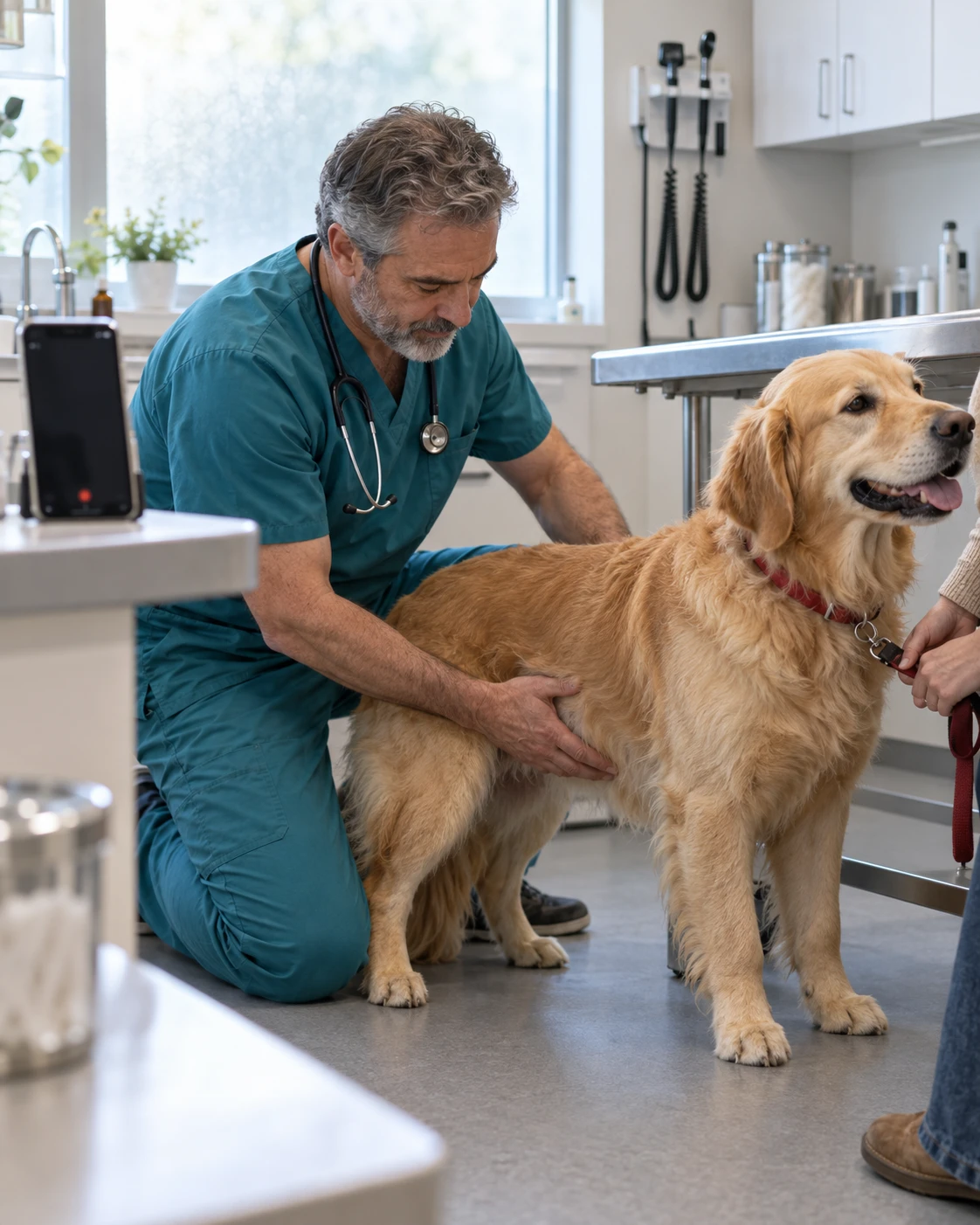
What it does is narrower. It reports what practices say in public about eight scribes, and then it shows you how to check those claims yourself before you sign anything. The products covered in depth are Scribenote, ScribbleVet, VetRec, Otto, CoVet, HappyDoc, Talkatoo, and VetSOAP. The eight were chosen on the same signal VetSoftwareHub uses for every category piece: North American standalone scribes with the most search traffic, listing views and shortlists on the site over the past year. A handful of PIMS-bundled and smaller scribes get brief mentions. VetSoftwareHub does not rate products; it summarizes what reviewers said, names where they said it, and leaves the verdict to you.
This article is published by VetSoftwareHub, an independent vendor-neutral directory with no financial relationship with any of the companies covered here. We do not accept referral fees or equity positions, and we do not steer practices toward any particular product. What follows is a plain-language overview of the landscape.
Reviews were gathered from Capterra, G2, Software Advice, GetApp, the Apple App Store and Google Play, public Reddit threads, public Facebook group posts, and trade press coverage, all checked on October 30, 2026;.VIN discussions are paywalled and were not used. Browser-extension ratings in the Chrome Web Store were excluded because they rate a PIMS connector rather than the scribe, and they run from one to six ratings each.
Where veterinary AI scribe reviews come from

The honest answer is that the public review record for this category is thin and uneven, and that fact matters more than any individual rating. Of the eight products, only Talkatoo has a review base large enough to show patterns with any statistical weight. CoVet has more than 150 ratings and reviews across Trustpilot, the app stores and G2, and VetRec has a few dozen on Trustpilot. The remaining five have somewhere between zero and a couple dozen ratings scattered across app stores and G2, and in one case (VetSOAP) there is no readable, independent user review text anywhere we could find. Here is what each platform showed on October 30, 2026.
Three things about this table deserve a warning label. First, a search for "Scribenote" or "ScribbleVet" on Capterra, GetApp, or Software Advice returns listings for ScribVet, an unrelated product with a similar name, so any roundup citing a Capterra rating for either is probably citing the wrong company. Second, G2 marks the CoVet and HappyDoc reviews as seller-solicited, which does not make them false but does mean the sample is the vendor's chosen customers. Third, a 4.7 from 42 reviews and a 4.7 from 221 reviews are different kinds of evidence, and a 5.0 from 2 reviews is barely evidence at all.
Reddit added less than you would expect: one r/veterinaryprofession thread on dictation and scribe software held the only firsthand comments we found, a handful of short posts covering Scribenote, ScribbleVet, VetRec, HappyDoc, and Talkatoo. Trade press from DVM360 and Today's Veterinary Business covers launches and acquisitions, some of it sponsored or vendor-authored, so it was used for facts about the products rather than opinions about them.
The four things veterinary AI scribe reviews argue about

Read enough scribe reviews and the same four arguments show up regardless of product. Keeping them in mind makes the vendor sections easier to compare, because a complaint that sounds damning for one product often turns out to be the category's shared problem rather than a defect unique to that vendor.
The first is accuracy on drug names and dosages. This is the complaint practices worry about most and, strangely, the one reviewers write about least. Across every platform we checked, only Talkatoo reviewers raised medication names and dosing in their own words; for the other seven products, silence is absence of evidence, not evidence of accuracy. The industry-wide signal is loud, though: the Digitail and AAHA benchmark survey published by DVM360 in October 2026 found clinical documentation to be the top AI use in practices and accuracy and reliability the top concern, cited by roughly two thirds of respondents.
The second is PIMS integration quality. Reviewers split sharply here, and the split almost always tracks which PIMS they run. A practice on a system the scribe writes to directly calls the integration seamless; a practice on anything else describes copy and paste, a browser extension, or a floating widget. The same product earns opposite reviews from two clinics for this reason alone.
The third is time actually saved per appointment. Reviewer claims range from a few minutes per visit to several hours per day, and both can be true. A doctor who used to write notes at 9 pm saves hours; a doctor who already charted in the room saves minutes and may spend some of them editing. Vendor marketing uses the first doctor's number. Reviews from the second doctor show the realistic floor.
The fourth is support responsiveness. For some products it is the single most praised attribute; for others the most criticized, and sometimes both on different platforms. Support reviews also cluster around the first month, when onboarding is intense and the vendor is paying attention. The useful question is what support looks like in month four, which is why the verification section sends you to references for that answer.
Scribenote reviews
Scribenote is a standalone scribe with a free tier and a paid Pro tier, and it has almost no footprint on the major review platforms. The firsthand material we found consists of three comments in the r/veterinaryprofession thread, and vendor testimonials, which we did not treat as reviews.
What reviewers praise
The recurring theme is getting records finished during the day. One Reddit commenter whose clinic uses it said she would not practice without it and singled out the AI SOAP generation as the useful part, with plain dictation available when needed. The free tier comes up repeatedly as a low-risk way to try the category, and roundups and the VetSoftwareHub listing both note that team members are free under paid doctor seats. A commenter in IT who had worked with the company mentioned that the founding team includes veterinarians and vet students.
What reviewers complain about
The one substantive complaint, from the same Reddit thread, was the lack of a native PIMS integration at the time, which meant staff copied and pasted notes. That is partly dated: Scribenote now offers PIMSPal, a browser extension for Covetrus Pulse and ezyVet available on the Pro tier, with a widget mode for everything else, so the complaint has narrowed to practices on other systems. The other criticism, from the VetSoftwareHub listing and roundups, is that custom templates and human support are locked to the Pro tier. Nobody we found discussed drug-name accuracy from experience.
Who the reviews suggest it fits
The evidence points to general practice, and in particular to solo doctors or small teams who want to start at no cost before committing. Vendor testimonials include an emergency clinician and a shelter, but no independent reviewer described either setting. Practices on Pulse or ezyVet will find the integration question answered; everyone else should test the widget workflow in a trial.
ScribbleVet reviews
ScribbleVet was acquired by Instinct Science in January 2026 and continues to be sold as a standalone product that works with multiple PIMS. Its public review record is small: two G2 reviews, 29 App Store ratings with no written text, and two positive Reddit comments. The ScribbleVet pricing article covers cost.
What reviewers praise
A G2 reviewer with over a year on the product put draft accuracy at roughly 90 percent, said client emails and discharge instructions needed little editing, and reported finishing notes on time through busy emergency shifts; the same reviewer used the dental charting, lecture, and SOAP features regularly and called setup easy. One Reddit user with more than a year on it called it transformative, and a second simply liked it. Vendor testimonials add hands-free exams and better client eye contact; those are claims to test, not reviews.
What reviewers complain about
The only firsthand criticism was that dental scoring is often inaccurate, from the same G2 reviewer who otherwise rated it highly. Secondhand criticism comes from competitor comparison pages, which is worth discounting: pricing not published, per-doctor cost adding up, and template changes historically routed through support before a self-serve editor arrived in early 2025. Some PIMS vendors have also raised the question of what the Instinct acquisition means for practices not on Instinct; Instinct's public position is that multi-PIMS support continues.
Who the reviews suggest it fits
The little evidence available skews toward emergency and specialty settings and toward dental-heavy practices, with the dental scoring caveat. The Browser Companion's one-click transfer currently covers Covetrus Pulse, ezyVet, Vetspire, Instinct, DaySmart, and Rhapsody, with Instinct integration deepening post-acquisition, so practices on those systems have the simplest path. Spanish and French speaking teams appear in vendor materials, not in reviews.
VetRec reviews
VetRec is a standalone platform whose Trustpilot page holds 42 reviews, 95 percent of them five stars, nearly all dated between April and October 2026. Capterra and G2 listings exist but are empty. The VetRec pricing breakdown covers cost.
What reviewers praise
Support responsiveness dominates the Trustpilot reviews more than any product feature. Reviewers describe quick, friendly chat support, name individual staff, and in one case note that the company posted a banner about processing delays before users had to ask. Time saved is the second theme, including an emergency-floor user and a six-month daily user who both describe hours recovered. Several single out the records summarization feature, with one describing roughly a thousand pages of history condensed in minutes and queried for specifics such as when a steroid was last given. Multi-pet mode, customizable templates, and easy onboarding for new technicians round out the praise.
What reviewers complain about
Complaints are mild and mostly embedded in positive reviews: summaries sometimes padded with unnecessary wording, unclear audio that requires proofreading, a learning curve, and one note that went missing before support recovered it. One four-star veterinarian in May 2026 said it still needs work but is improving. A single Reddit commenter tried it and disliked it without saying why. An equine roundup (with affiliate links, so treat accordingly) notes that the direct ezyVet integration carries an unpublished monthly clinic fee. Reviews clustering around support chats suggests they may be prompted after support interactions, which is common and worth knowing.
Who the reviews suggest it fits
Emergency and high-history caseloads come up most, which fits the records-summary praise. Reviewers also include a teaching hospital user and new technicians, and the VetSoftwareHub listing covers general practice, specialty, equine, university, and corporate groups. No reviewer named their PIMS, so integration quality is untested in the public record.
Otto AI scribe reviews
Otto, formerly TeleVet, sells its scribe both standalone and bundled inside its Flow client communication platform. G2 shows 4.9 from 6 reviews for the Otto platform , and the Otto AI Scribe app has 4.6 from 8 App Store ratings with four short written reviews from August 2025. That is a thin record for a product this widely marketed, and most of it is platform-level rather than scribe-specific. The Otto pricing breakdown covers cost.
What reviewers praise
The four App Store reviews are short and positive, praising how the AI handles veterinary terminology and how easy the app is to use. Everything else positive we found is vendor-sourced: testimonials on otto.vet describe more detailed notes finished before the next client, notes that drop noise without manual formatting, and nursing staff capturing details they would not have thought to document. The one structural claim worth noting is overnight sync of notes into the PIMS without copy and paste, which Otto announced in April 2025 for Avimark, Cornerstone, Impromed, Neo, eVetPractice, ezyVet, and Instinct. That writeback is tied to the Flow bundle rather than the standalone scribe.
What reviewers complain about
The one scribe-specific user comment in public is a G2 reviewer who said the AI recap has been fine but lacks the customization that would make it shine. The closest material is a competitor's alternatives page citing former Otto customers on slow support responses and extra front-desk steps, which is platform-level, competitor-sourced, and should be weighted accordingly. From our own reading of the Otto scribe page, the standalone product's FAQ describes copy and paste or emailing notes to yourself for PIMS entry.
Who the reviews suggest it fits
With no reviewer evidence, the fit question falls back to how the product is sold: the standalone tier at individual doctors and two-user clinics, the Team tier clinic-wide, and the Flow bundle at practices that want client communication and scribing in one platform with PIMS writeback. Since December 2025 the scribe has been free to Hill's Connect and TVC member clinics, so a reference call to a clinic in either program is the fastest way to get the firsthand account the review sites lack.
CoVet AI scribe reviews
CoVet has the second-largest review base in this roundup and the most mixed one: Trustpilot 4.5 from 67 reviews, App Store 4.7 from 48 ratings, Google Play 4.3 from 41 reviews, and six seller-solicited G2 reviews. IDEXX announced its acquisition of CoVet on September 16, 2026, stating that CoVet will continue to integrate with non-IDEXX practice management systems. Reviews predate the deal.
What reviewers praise
Time savings lead, with several Trustpilot and App Store reviewers saying SOAP time dropped by about half or that they now leave on time. Record quality is next: detailed, well-organized notes that need little editing. Support is described as fast and personal, with staff named by reviewers across all three consumer platforms. Reviewers also credit a rapid feature cadence, including AI template design and French and English support, and value the tools beyond SOAPs, such as call documentation, discharge handouts, and visit summaries.
What reviewers complain about
Roughly one in five reviews we read carried a real complaint, and the complaints concentrate on mobile reliability. Google Play and App Store reviewers describe recordings that fail to save, uploads failing with no error shown, recording stopping when the phone locks, and an Android version that lags well behind iOS, with frequent updates that sometimes made things worse. Accuracy complaints on Trustpilot and G2 are about attribution rather than terminology: pet names misspelled despite correct entry, an owner's own health problems attributed to the pet, missed words when speakers switch languages, and occasional patient mix-ups. Two one-star reviews cited no training at onboarding and a date-defaulting bug. No reviewer raised drug names or dosages.
Who the reviews suggest it fits
Reviewers rarely state their practice type. The mobile reliability complaints, and an equine ambulatory user who described a copy-and-paste workflow, suggest mobile teams should test recording on their actual phones in their actual trucks. A competitor comparison claims a steeper learning curve for less technical teams; treat that as a hypothesis for the demo. CoVet launched a certified two-way ezyVet integration in August 2026, before the deal, and the IDEXX acquisition makes it the product to watch for Neo and Cornerstone shops as well, though reviews cannot yet speak to any of that.
HappyDoc reviews
HappyDoc is a standalone scribe sold on flat, clinic-level pricing with unlimited users, and its public review volume is small: six G2 reviews, 15 App Store ratings, and an empty Capterra listing. One Reddit commenter said their hospital uses it, the doctors like it, and it integrates with their PIMS.
What reviewers praise
G2 reviewers, mostly practice owners and operations leads, say notes need little editing for routine visits and that nightly catch-up charting is gone. Standardized, consistent records are framed as a compliance benefit. An App Store reviewer describes a smooth Cornerstone integration and fast developer response. Multi-site owners cite the flat pricing with unlimited users as the reason they chose it.
What reviewers complain about
Complaints appear as cons inside positive reviews rather than as negative reviews. The notable one is setup time: one owner reported roughly 45 days to get integrations and templates configured and called it anything but an instant rollout. Others mention template work across locations where doctors chart differently, wording that varies between notes, and post-update bugs that were later fixed. No reviewer discussed drug names or described a failed PIMS push.
Who the reviews suggest it fits
The evidence points to multi-doctor and multi-location companion animal general practices, especially on Avimark and Cornerstone, where reviewers describe two-way integrations and where per-doctor pricing elsewhere would add up. The 45-day setup report is the detail to ask references about. There is no reviewer evidence for emergency, specialty, equine, or mobile use.
Talkatoo reviews
Talkatoo is the only product here with a review base large enough to read as data: Capterra, Software Advice, and GetApp share the same 221 reviews at 4.7, with about 76 percent five-star, 22 percent four-star, and 2 percent at three stars or below. G2 adds 12 reviews at 4.4 and the App Store 37 ratings at 4.7. It began as veterinary dictation and added an ambient AI scribe, which shapes the reviews.
What reviewers praise
Time saved is the most precisely quantified of any product: one solo doctor cut nightly charting by about three hours, another finishes documentation for 20 to 25 patients in about 30 minutes, one estimates five minutes saved per appointment, and one reports a 60 percent reduction in record time. Support and training earn the highest sub-rating on Capterra, with trainers named repeatedly and fast fixes in response to feedback. Reviewers credit its handling of veterinary vocabulary and the custom dictionary, thorough auto-generated SOAPs and call summaries, and the fact that it works in any text field on phone or desktop.
What reviewers complain about
Talkatoo is the only product where reviewers explicitly discuss medication names and dosing. Some say certain drug names produce odd output and one is still working to get doses right; others report misspelled pet and owner names, merged pets, wrong sex or species, and misheard abbreviations, with one reviewer estimating 90 to 95 percent accuracy. A second cluster concerns AI verbosity: repetitive assessment and plan sections, client small talk landing in the exam, a boilerplate normal-limits line that did not update, and one claim that it makes things up. Stability complaints include crashes, dropped sessions, lost transcriptions, and microphone trouble. Integration complaints describe copy and paste into ezyVet, a Shepherd integration that disappointed one reviewer, and Cornerstone formatting not fully working; GetApp's integration sub-ratings run from 3.5 for Shepherd to 5.0 for ClienTrax on one or two reviews each. Price and billing round it out, including one unwanted auto-renewal. A minority of G2 reviewers report slow support, the opposite of the Capterra consensus.
Who the reviews suggest it fits
Reviewers span busy general practice, emergency (including a CSR and a doctor at an ER), equine (one dictates while driving), and solo practitioners, mostly in the two to 50 employee range. Several say custom templates are hard for specialized practices. The consistent thread is that it suits doctors who want to control note structure through dictation as much as ambient capture, and who accept a copy-and-paste or type-into-field workflow on most PIMS.
VetSOAP reviews
VetSOAP is a standalone scribe built by two University of Illinois veterinary alumni, and the honest answer on reviews is that there are none to report. Google Play shows the app with no reviews, and there is no Capterra, G2, Trustpilot, or App Store listing we could find. The University of Illinois teaching hospital provides it to faculty, staff, house officers, and students, the only institutional adoption signal in public.
What reviewers praise
Nothing from reviewers. The descriptive material comes from a 2024 university alumni feature describing a focus on new-graduate support and differential guidance, and from Play Store release notes mentioning improved phone-call recording, audio recovery, and dental charting.
What reviewers complain about
Nothing from reviewers, which cuts both ways. A product with several hundred monthly searches on its name and no public review record is a product whose buyers are relying entirely on demos and word of mouth.
Who the reviews suggest it fits
Vendor positioning points to general practice and new graduates, and the Illinois arrangement suggests teaching settings. The Chrome companion extension moves notes into ezyVet-type systems through an intermediate step, so the PIMS push should be tested early. Without reviews, a reference call with a current customer is not optional here; it is the only evidence available.
Scribes bundled inside a PIMS, and the smaller standalones
The eight products above are all sold as standalone subscriptions. A growing share of practices will instead meet a scribe inside the PIMS they already own, and the public review record for those is close to empty, which is itself worth knowing before you compare a bundled scribe to a standalone on the strength of reviews.
Digitail is the exception. Its Tails AI dictation is native to the PIMS, and five Digitail Capterra reviews from 2026 mention it: four strongly positive on time saved and details captured, and one from June 2026 saying transcription was noticeably less accurate on an iPad than on a laptop, which Digitail acknowledged in its reply. ezyVet has an AI consultation feature in beta, free for now, with no user reviews of it yet. Shepherd's TranscribeAI is a paid add-on, confirmed by a July 2025 Capterra reviewer who rated the PIMS five stars but objected to the extra fee. Provet Cloud's AI Scribe is free up to a monthly minute cap with a paid subscription for unlimited use, and none of its 88 Capterra reviews mention it. Covetrus Pulse now includes a scribe at no extra cost; the one AI mention in its reviews, from October 2026, said the new AI features slowed the program. Vetspire has a native scribe with no public reviews. Instinct has no native scribe and instead owns ScribbleVet, so the ScribbleVet reviews above are the relevant evidence for Instinct customers.
Among smaller standalones, VetGeni shows 4.8 from 8 App Store ratings, with a few short reviews praising ease of use, and no listing on Capterra or G2. PawfectNotes has Capterra and G2 listings with zero reviews each. noctune, a newer standalone with a pay-per-note pricing option, has no public reviews we could find. None of the three has enough public evidence to characterize.
The practical point: if your PIMS vendor bundles a scribe, the reviews of the PIMS tell you almost nothing about the scribe. You will be relying on the trial, the demo tests below, and references who actually use the feature daily.
How veterinary AI scribe reviews compare across vendors

Put the eight review records side by side and three categories of product emerge, defined not by quality but by how much the public record can tell you.
The first category is products with enough reviews to show a pattern: Talkatoo, CoVet, and to a lesser degree VetRec. For these, praise and complaints are consistent enough across platforms to form a hypothesis before the demo. Talkatoo reviewers praise time savings and training and complain about terminology accuracy, verbosity, stability, and integration gaps, in roughly that order. CoVet reviewers praise speed, record quality, and support and complain about mobile reliability and attribution errors. VetRec reviewers praise support above all and raise only mild complaints about padding and proofreading. In each case the complaint pattern is specific enough to turn into a test.
The second category is products with a handful of reviews that are all positive: ScribbleVet, HappyDoc, Scribenote. Two to six five-star reviews plus a few Reddit comments is not a pattern, and the single criticisms that do appear (dental scoring, a 45-day setup, copy and paste on unsupported PIMS) are more useful than the stars because they are concrete. For these products the review record tells you where to look, not what you will find.
The third category is products with almost no readable independent reviews: Otto and VetSOAP. Otto is heavily marketed and partnered, yet its public record is six platform-level G2 reviews and four short App Store reviews; VetSOAP is a smaller company with a university relationship and no review footprint. Neither fact says anything about whether the notes are good. Both say you will be doing all of the evidence gathering yourself.
Across all three categories, two patterns repeat. Support is praised more often than any product feature, which suggests reviewers often write during or just after onboarding, when the vendor is most attentive. And integration satisfaction tracks the reviewer's PIMS more than the scribe, with the same product earning seamless and clunky from different clinics. The bundled scribes add a fourth consideration: they have no review record of their own, so a PIMS with 500 reviews may still have a scribe nobody has publicly evaluated.
Pricing context
Price shows up in reviews less than you would expect, and when it does it is usually about structure rather than the number: per-doctor pricing that adds up as a practice grows (a ScribbleVet and Talkatoo theme), flat clinic-level pricing with unlimited users (why several HappyDoc reviewers chose it), a free tier as an entry point (Scribenote), and unpublished fees for a direct integration (a VetRec note). Billing surprises appear in a few Talkatoo reviews. Published list prices across the category run from free tiers to a few hundred dollars per month, with the lowest paid entry at $29 and most paid doctor seats landing roughly between $40 and $150 per month depending on term and volume. The AI scribe pricing comparison lays out current list pricing, and the breakdowns linked in the ScribbleVet, VetRec, and Otto sections go deeper. Use reviews for the structural questions and verify the numbers against the price page and the contract.
How to verify what reviewers say before you buy
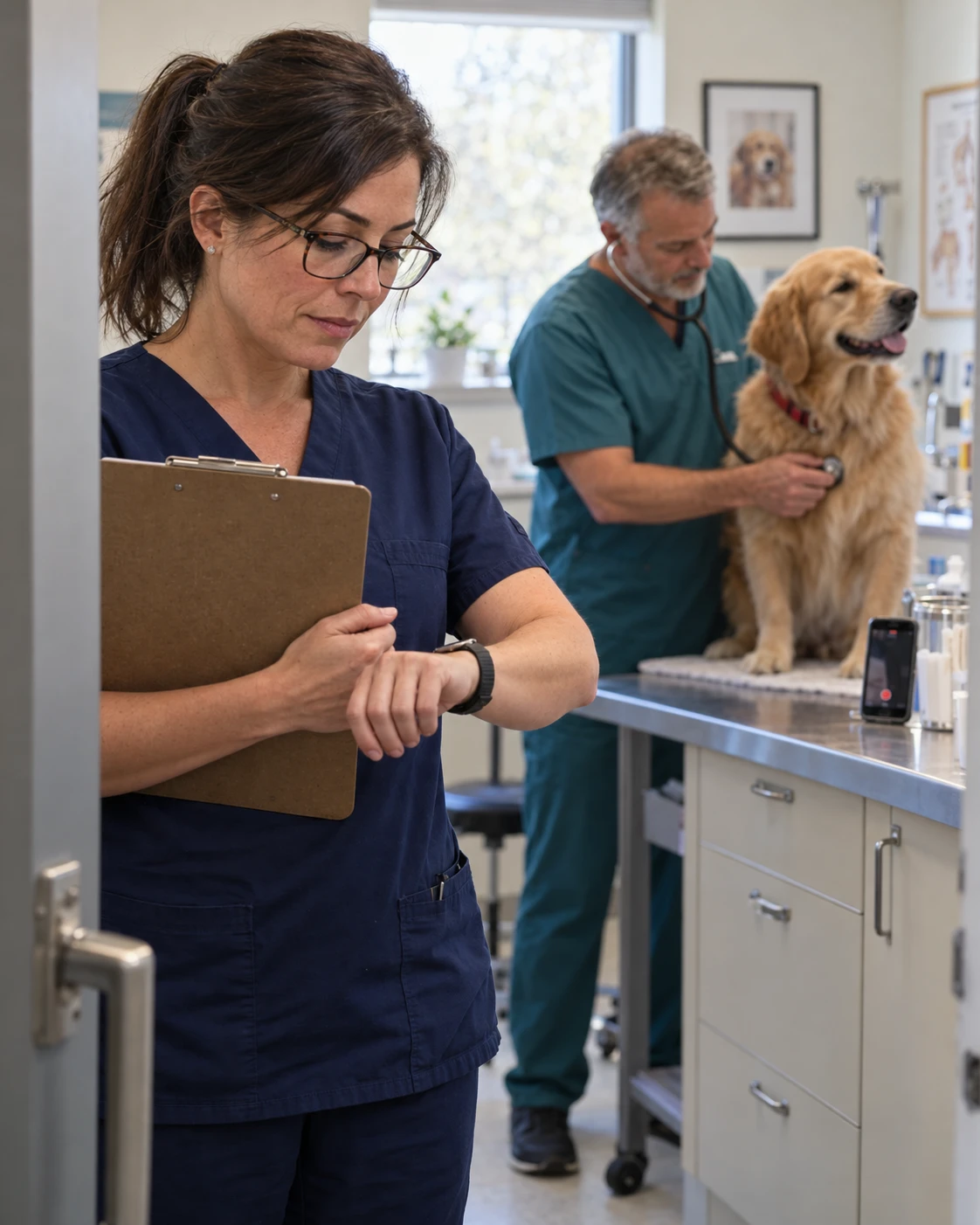
Every complaint above maps to a test you can run in a trial or a demo, and every piece of praise maps to a question you can ask a reference. This is where VetSoftwareHub adds what the review sites cannot: a way to turn other people's experience into evidence about your own practice. Run these in order, on your own cases, with your own PIMS.
-
Record a real appointment, not the vendor's sample. Ask for a trial account and use it on an actual wellness visit with client consent. Vendor demo audio is clean and scripted; your exam rooms have a barking dog, a talkative owner, and a technician reading a temperature over the doctor's shoulder. Reviewers who complain about accuracy are almost always describing the second environment.
-
Check the finished SOAP note against the audio, line by line. Read for facts, not tone: the correct weight, the correct limb, the correct duration of the complaint. Count the corrections you had to make. Reviewers who say they spend as long editing as they used to spend writing are describing a correction count that never dropped.
-
Run a drug-name-heavy case through it. Pick a chronic patient on four or more medications with doses, frequencies, and refills discussed out loud, and confirm every drug name, dose, and unit in the note. This is the most common accuracy worry in the category and the easiest to test in ten minutes.
-
Test the PIMS push on your actual PIMS. If the vendor claims an integration, watch the note land in the right patient, the right visit, and the right field with formatting intact. If the workflow is copy and paste, time it. Reviewers who praise integrations and reviewers who complain about them are usually on different PIMS, so the only integration review that matters is the one you run.
-
Time three full appointments, start to signed note, with and without the scribe, using the same doctor and comparable visit types. Reviewer claims about time saved range from minutes per visit to hours per day, and the difference is mostly the doctor's starting baseline, which you can measure.
-
Open a support ticket during the trial and note the response time. Ask something specific, such as how to change a template section. A trial is the only time you can test support before you are a paying customer.
-
Ask references about month four, not week one. Use the reference-checking guide and add three scribe-specific questions: how many doctors still use it daily, what template changes they made after go-live, and whether the integration has broken after a PIMS update.
-
Read the contract for what reviews cannot tell you: term length, auto-renewal, per-user versus per-location pricing, data retention after cancellation, and whether recordings are stored.
Veterinary AI scribe reviews: frequently asked questions
Is Scribenote legit?
Yes. Scribenote is an operating company with a free tier, a paid Pro tier, and a PIMSPal browser extension for Covetrus Pulse and ezyVet on the Pro tier. What it lacks is a public review footprint: no Capterra listing, an empty G2 listing, 13 App Store ratings, and only a few Reddit comments, which were positive. Be careful not to confuse it with ScribVet, a different product that does appear on Capterra.
Is ScribbleVet worth it?
Reviews cannot answer that for your practice because there are only a handful of them. The firsthand accounts that exist describe roughly 90 percent draft accuracy, little editing on client communications, and one complaint about dental scoring. ScribbleVet was acquired by Instinct Science in January 2026 and continues to support multiple PIMS. A trial on your own cases will tell you more than the reviews can.
What do vets say about VetRec?
On Trustpilot, 42 reviewers rate it 4.7 and the dominant praise is support responsiveness, followed by time saved and the records summarization feature. Complaints are mild: padded summaries, proofreading after unclear audio, and a learning curve. No reviewer named the PIMS they use, so integration quality is untested in public.
Is Otto AI scribe any good?
Independent reviews of Otto's scribe are scarce: four short App Store reviews and one G2 comment on the AI recap are all we found. Otto's PIMS writeback is tied to its Flow bundle, and the standalone scribe uses copy and paste or email for PIMS entry. The scribe is free to Hill's Connect and TVC member clinics, which makes finding a reference relatively easy.
What do practices say about CoVet, HappyDoc, Talkatoo, and VetSOAP?
CoVet reviewers praise time savings and support and complain about mobile recording reliability and name or attribution errors; IDEXX acquired CoVet in September 2026. HappyDoc's small set of reviews is positive, with a 45-day setup reported by one owner. Talkatoo has 221 Capterra reviews at 4.7, with the most detailed praise on time saved and the most detailed complaints on terminology accuracy and stability. VetSOAP has no public reviews.
Reviews are evidence, not a verdict

The practice manager with eleven tabs open at 9 pm is not going to find her answer in a star rating, and after reading this far you know why: the category's public review record is too thin, too uneven, and too tilted toward the first month of ownership to decide anything on its own. What reviews can do is tell you where to point your flashlight. A product whose reviewers complain about drug names gets the medication-heavy test case first. A product whose reviewers argue about integrations gets the PIMS push tested on your system before anything else. A product with no reviews at all gets a longer trial and a harder reference call. Treat every rating in this article as a lead to follow rather than a conclusion to adopt, and the decision becomes yours again instead of a stranger's.
If you are evaluating a scribe alongside a larger PIMS decision, or you want a structured process for running the tests above across several vendors, the PIMS Selection Navigator is a fixed-fee engagement that does exactly that work on the practice's side of the table.
About the Author

Adam Wysocki
Contributor
Adam Wysocki, founder of VetSoftwareHub, has over 35 years in software and almost 10 years focused on veterinary SaaS. He creates practical frameworks that help practices evaluate vendors and avoid costly mistakes.
Connect with Adam on LinkedIn


