AI Scribes for Veterinary Medicine in 2026: Accuracy, Risks, and How to Buy
Vendor-neutral guide to AI scribes for veterinary hospitals. Covers SOAP note accuracy, data privacy, medication safety, and how to run a 30-day pilot.

A vendor-neutral buyer's guide built for skeptics (SOAP notes, exam-room transcription, privacy, and how to run a pilot that produces real evidence)
If you have been to a veterinary conference lately, or spent even ten minutes on LinkedIn, you have seen it: AI scribes everywhere. "Ambient documentation." "SOAP notes in seconds." "Cut your charting time in half." "Your new virtual scribe, no training required."
Some of these tools are genuinely useful. Some are still rough. And the reason AI scribes are controversial is not because veterinarians are "behind", it's because documentation is one of the most sensitive and high-stakes workflows in your hospital.
This guide is written for practice managers, owners, clinicians, and consolidator buyers who want to be highly informed before signing a contract. It borrows the best evaluation patterns from human healthcare and dental (where this category is more mature), then adapts them to veterinary reality: short appointments, noisy rooms, team-based care, and a lot of abbreviations and medication talk.
One quick note before we start: this article is educational, not legal advice. Recording consent and privacy obligations vary by location, and your counsel should review your policies and contracts.
What Is an "Ambient AI Scribe," in Plain Language
A modern AI scribe is usually a pipeline, not one magical model. Audio is captured during the exam through a phone, tablet, workstation mic, or room device. That audio goes through speech-to-text transcription. Then the transcript is structured and summarized, often using a large language model, to draft a clinical note. Your team reviews and edits the draft, and the final note is stored in your system of record, whether that's a PIMS, document store, or EMR-like record.
If you remember one thing, make it this: an AI scribe drafts notes; your clinicians own the final record. That distinction matters clinically, operationally, and legally.
Why These Tools Are Exploding, and Why Skepticism Is the Right Default
The upside is obvious: documentation burden is real, and the promise of getting time back is attractive.
In human healthcare, physician organizations have leaned into AI tools as potential relief for burnout, but with a consistent emphasis on transparency, accuracy, privacy, and governance. The American Medical Association has repeatedly framed responsible adoption around evidence, accountability, and strong organizational policy.
Dental organizations and journals are similar: excited about efficiency, cautious about confidentiality, compliance, and workflow integration.
Veterinary medicine is now in the same wave, just with fewer guardrails, fewer shared standards, and more marketing noise. So skepticism is not anti-technology. It is the beginning of responsible buying.
The three categories of veterinary AI scribe
The market looks crowded, but most tools sort into three categories based on how they capture and structure information. Understanding which category a product belongs to tells you a great deal about how it will behave on accuracy before you ever run a pilot.
The first category is the ambient, veterinary-specific scribe. These tools run a microphone during the consultation, capture the natural conversation, and generate a structured note afterward, and they were built for veterinary language rather than adapted from a human medical product. Most of the market lives here. CoVet emphasizes team-based workflows, a large template library, and the ability to document multiple patients from a single consultation, and points to an in-house medical team of DVMs and RVTs behind its output. VetRec has leaned into enterprise and specialty adoption, with reference customers among large hospital groups. HappyDoc positions on accuracy and integration depth and uses a demo-first onboarding so the PIMS connection is configured before you evaluate. ScribbleVet emphasizes speed and simplicity, along with client-facing extras like recap emails and dental charting. VetGeni and VetSoap compete hard on price while bundling clinical extras, with VetGeni notably packaging a drug database and licensed reference content alongside the note generation. PawfectNotes runs through a browser extension with broad PIMS coverage and multilingual output, and Otto offers flat, unlimited-user pricing with a long free trial. The common thread is ambient capture built for the exam room; the differences are in template depth, integration, clinical references, and team features.
The second category is the dictation-first tool with AI formatting on top. These come out of the speech-recognition world, where the clinician narrates observations explicitly and the software transcribes and then structures them. Talkatoo is the clearest example, with deep roots in veterinary dictation, a large installed base, and AI note formatting layered onto that foundation. The tradeoff is control versus effort: dictation-first tools require the clinician to say what should go in the note, which reduces the chance of the software inventing content but asks for a behavior change and more active narration. For practitioners who already dictate or who want explicit control over every line that enters the record, this model can produce very clean, very predictable results.
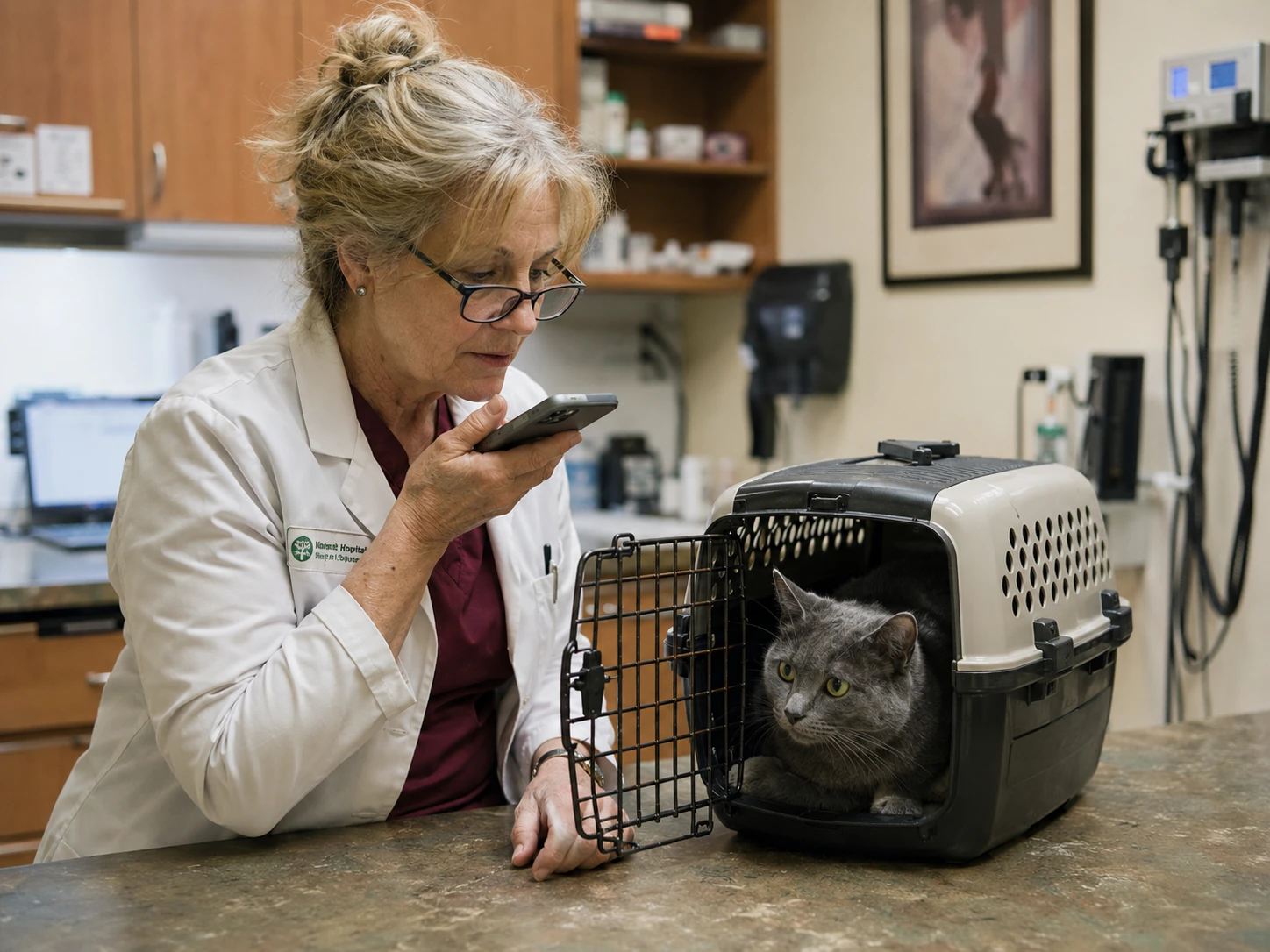
The third category is the hybrid, human-in-the-loop review service. Here the AI produces a draft and a human editor checks it before it comes back to the clinician. This is a smaller slice of the market, and the tradeoff is obvious: you gain a second set of eyes on accuracy and lose some of the speed, since the turnaround is minutes to hours rather than seconds. For a practice that is deeply risk-averse about documentation, or that is easing into AI-assisted charting, the human review model can be a reasonable on-ramp. Just be clear about turnaround time and about who that human reviewer is.
No category is inherently more accurate than the others. Each makes a different bet about where to spend effort, and the right bet depends on your caseload, your tolerance for editing, and how your clinicians like to work.
What AI Scribes Can Realistically Improve in a Veterinary Hospital
Let's be honest about where the value tends to show up.
Less after-hours charting. The most common "win" is time moved from evenings and weekends back into the workday. A randomized trial in human healthcare evaluating AI scribes looked at documentation time and clinician experience, reflecting the broader interest in whether scribes reduce burden without creating new risks. In veterinary hospitals, this can matter even more because many practices run lean and visit volume is unforgiving.
More consistent note structure. Even good clinicians are inconsistent note writers under pressure. A scribe can help standardize headings, prompt for missing sections, and keep the SOAP format predictable.
Better recall of small details. A tool that captures the little things, diet change, compliance issues, client questions, behavior notes, can improve continuity and reduce "what did we say last time?" moments.
Changes to the exam room dynamic. Some AI scribes generate a clinical note rather than a transcript, so they often ignore friendly small talk (weather, local sports, weekend plans) and capture only exam-related content. That is usually good for clean documentation, but it can surprise teams who expect the note to reflect the tone of the visit. In your pilot, include a few normal rapport-heavy visits and decide what should be preserved (client concerns, emotional context, behavior observations) versus excluded (pure small talk). If staff start "performing for the scribe" or avoiding natural conversation, treat that as a workflow red flag and adjust settings or reconsider the tool.
Faster first drafts for discharge summaries or instructions. If your workflow supports it, a scribe can produce the draft faster than a human can type it. The caution is that client-facing text must be reviewed with the same seriousness as the medical record.
Now, the hard part.
How accurate are veterinary AI scribes in 2026?
There is no independent, published accuracy benchmark for veterinary AI scribes, and any single percentage a vendor quotes is their own measurement on their own terms. Accuracy in this market is not one number. It is a profile across specific error types, and a tool can be excellent on four of them while failing dangerously on the fifth. That distinction matters more than price: a scribe that is cheap and wrong is not a bargain, it is a liability with a low monthly invoice.
Why Accuracy Is Harder Than It Looks
Four structural realities make veterinary scribing harder than the human medical scribing these models often grew up on.
The exam room is a hostile audio environment. A veterinary exam frequently has two dogs from the same household, a client, a technician, a barking patient next door, clippers running, and a clinician who steps out mid-visit to check a lab result. Before the software can write anything, it has to decide who is speaking and which utterances are clinical versus small talk.
The vocabulary is broader and stranger than human medicine. Veterinary medicine spans dozens of species, hundreds of breeds, drug names that sound almost identical, and dosing that is routinely weight-based and off-label. A model trained primarily on human medicine will confidently mishear a drug it has never seen in a veterinary context, and confidence is exactly what makes that dangerous.
Transcription is only half the job. Even a perfect transcript still has to be classified into the right SOAP sections, and a finding filed under the wrong heading changes the clinical meaning of the record.
The output is a legal document. A licensed professional has to stand behind every note. "Mostly accurate" is not a safety standard when the inaccurate fraction can contain a dose.
The Five Errors That Actually Matter
When you evaluate accuracy, score these five categories separately. Overall impressions hide exactly the failures you most need to see.
- Drug name and dose hallucination. The scribe invents or alters a medication, a concentration, a route, or a dose the clinician did not say. This is the highest-stakes error class, and any tool that produces it should trigger the stop rules in the pilot below.
- Multi-pet visit confusion. Findings, history, or plan items attributed to the wrong animal in a two-patient household appointment, or two patients blended into a single muddled note.
- Ambiguous terminology resolution. Whether the model resolves casual exam room phrasing into the right clinical term, or trips over abbreviations and sound-alike drug pairs.
- Section misclassification. Content filed into the wrong SOAP section. This rarely creates acute danger, but it degrades the record's usefulness over time.
- Omission. The scribe simply leaves something out: a declined recommendation, a verbal estimate, an owner compliance concern. Omissions are the quiet error class, because the note looks complete right up until the day you need the missing line.
The rest of this guide is built around this profile. The risk map that follows covers the failure modes beyond accuracy, the seven features section explains what actually predicts performance on these five categories, and the 30-day pilot is how you measure them on your own patients instead of taking anyone's word for it.
The Risk Map: What Can Go Wrong (and Why It Is Not Hypothetical)

There are two layers of risk: transcription risk (older) and generative risk (newer).
Transcription Errors
Speech recognition errors can be clinically significant. The Joint Commission has published safety guidance describing how speech recognition errors can translate into patient risk, including serious harm scenarios.
Veterinary medicine is not human medicine, but the lesson transfers cleanly: if a tool mishears a medication, dose, allergy, or instruction, the downstream consequences can be real.
LLM-Specific Failure Modes
Ambient AI scribes built on LLMs can have relatively low overall error rates, yet introduce distinct failure modes such as hallucinations (plausible-sounding invented content), critical omissions, speaker misattribution, and contextual misunderstandings.
This is why "it sounds fluent" is not a quality metric.
The most dangerous errors are often the quiet ones. A typo is obvious. A wrong but plausible statement in a note is not. A clinician might be credited with giving instructions they did not give. A medication plan might be "smoothed" into something standard, but not what happened. A key negative might be omitted (no vomiting, no diarrhea), which changes clinical interpretation later.
Your evaluation must be built to catch these.
The Veterinary-Specific Landmine: Abbreviations, Drug Names, and Dosing
Veterinary visits are full of abbreviations that vary by clinician, hospital, and region. They include brand names, generics, compounded meds, preventives, and parasiticides. They involve weight-based dosing, concentration assumptions, and units (mg vs mL vs mcg). And they feature quick verbal instructions said while restraining a patient or answering a client question.
This is where many scribes fall apart, even when the transcription looks "pretty good."
Why Abbreviations Break
Abbreviations are context-dependent. "SID" and "q24h" might be expanded correctly, but others are ambiguous—route abbreviations (SQ/SC, IM), shorthand for formulations and concentrations, and clinic-specific acronyms for services, plans, and internal protocols. If the scribe expands an abbreviation incorrectly, you can end up with a note that looks polished and is wrong.
Why Medication Recognition Breaks
Medication errors happen for predictable reasons. Similar-sounding names are confused, especially in noisy rooms. Brand and generic names get mismatched—"I said the brand, it wrote the generic," or vice versa. Sometimes the model "helpfully" converts something into a common human medication pattern.
Speech recognition safety literature has highlighted medication-related errors as a known risk area for voice-based documentation.
Why Dosing Is the Red Zone

Weight-based dosing creates a perfect storm of numeric transcription mistakes, unit mistakes, concentration assumptions, and route and frequency confusion.
If you are buying an AI scribe, you should assume that medication and dosing errors are possible until proven otherwise by your own testing.
The features that drive veterinary AI scribe accuracy
Once you understand the error categories and the three tool types, you can evaluate on the differentiators that actually predict output quality in your practice. Seven of them do most of the work.
Post-edit time is the single most honest productivity metric, and almost no vendor markets on it. Draft speed is easy to advertise and nearly meaningless on its own. A scribe that produces a note in thirty seconds but requires three minutes of correction and reorganization is not faster than a clinician who types quickly. The real number is time from end of visit to a signed, correct note. Measure that, not the draft-generation speed, and you will cut through most of the marketing at once.

Veterinary-specific training is the next lever. Tools built on veterinary language tend to handle drug names, breeds, and species-specific terminology more reliably than generic medical models pointed at animals. This does not guarantee accuracy, but it changes the base rate of the vocabulary errors that matter most.
Clinical grounding is a related differentiator. Some tools now pair note generation with a drug database or licensed reference content, which can reduce medication-related hallucination by anchoring the model to real formulary data rather than letting it free-associate. Ask what actually powers the clinical content, because "trained on veterinary data" and "checks output against a licensed drug reference" are very different claims.
Multi-pet and multi-patient handling deserves its own line item if your practice sees households with more than one animal. Some tools can split a single consultation into separate patient records cleanly; others cannot. This is a pass-or-fail capability for many practices, and it is easy to test.
PIMS integration and write-back determine whether the accuracy you achieved in the app survives the trip into the medical record. A note that is perfect in the scribe but has to be copy-pasted by hand invites transcription errors and erases part of the time savings. Deep integration reads patient context from the PIMS and pushes the finished note back; partial integration is one-directional; no integration means manual paste in both directions. If you are still weighing your underlying practice management system, our cloud PIMS guide covers how these integrations tend to work in practice.
Template depth and customizability affect both accuracy and adoption. A tool with a rich, editable template library can be shaped to your clinical style and your species mix, which reduces the reformatting that inflates post-edit time. Thin templates force the clinician to restructure every note, which is where the productivity leaks out.
Audio and mobility handling rounds out the list. How the tool performs in a noisy room, on a phone in a stall or a barn, or during a home visit varies widely, and a scribe that is accurate at a quiet desk can degrade badly in the field. If your practice works outside the exam room, test it there. Our mobile veterinary software guide digs into what changes when the work moves off a desktop.
Data Privacy and "Training Data": What Happens to Your Audio and Notes
This is the part where you slow down, because this is where a lot of marketing claims get slippery.
Even if veterinary clinics are not HIPAA-covered entities in the same way human healthcare practices are, HIPAA guidance is still a strong framework for thinking about de-identification, risk, and controls. The U.S. Department of Health & Human Services explains that HIPAA de-identification can be achieved via Safe Harbor or Expert Determination, and the guidance is explicit that de-identification is a method with defined requirements and limitations.
The key lesson for veterinary buyers: if a vendor says "we de-identify data," you still need to ask how, where, and what that actually means in practice.
Start with a Data Lifecycle Map

Ask the vendor to walk through, in plain English, the complete journey of your data. You need to know where audio is captured (device, app, browser), whether audio is stored or streamed and discarded, and where transcription happens (their service, third party, or on-device). Find out where the LLM runs—their hosted environment or a third-party model provider. Clarify what is stored: raw audio, transcript, note draft, or metadata. Ask how long each artifact is retained, who can access it (your staff, their staff, subprocessors), and whether you can export and delete everything with guaranteed deletion.
The Model Training Question Set
You are not being paranoid. You are doing procurement.
Ask directly whether any customer data (audio, transcripts, drafts, final notes) is used to improve models. If yes, find out whether that is opt-in or opt-out, and where it is stated contractually. If a third-party LLM is involved, clarify whether that third party can use the data for training. Ask if the vendor is willing to put "no training on our data" in writing if that is your requirement. Find out whether they publish a subprocessor list and whether they notify customers when it changes.
Dental associations have cautioned that generative AI systems can raise privacy and security issues, and practices should ensure AI use aligns with privacy laws.
Consent and Recording Disclosure
Recording consent laws vary by state and country. More importantly, even where legal, the ethics and trust dimension matters.
Recent litigation in human healthcare and dental has focused on alleged unauthorized recordings and transmission of patient conversations to third-party vendors, raising legal and reputational risk. Reuters reported on cases involving Sharp HealthCare and Heartland Dental that highlight why clear disclosure and strong agreements matter.
You do not need to be in human healthcare to learn from that. The lesson is simple: decide your disclosure and consent process before you scale.

Governance: Who Is Accountable When an AI Scribe Is Wrong?
In real hospitals, tools fail. The difference between "manageable" and "disaster" is governance.
Human healthcare organizations have increasingly emphasized that AI adoption should include defined accountability, policy, and oversight. Here is a practical governance model for veterinary settings.
Assign an Owner
A practice manager, medical director, or ops lead should own configuration changes, vocabulary updates, audit sampling, incident tracking, and vendor escalations. This needs to be a person, not a committee. If no one owns it, the tool becomes "that app we used for three weeks."
Define an Internal Policy
Your policy should be short, usable, and enforced. It needs to cover when recording is allowed (and when it is not), how clients are informed, where recordings and transcripts are stored, who can access them, how long they are retained, clinician responsibilities for review and sign-off, and how errors are reported and corrected.
This is not bureaucracy. It is operational safety.
Establish a Minimum Review Standard
A defensible stance is that the clinician reviews every note draft before signing, high-risk sections get extra scrutiny (meds, dosing, diagnostics, follow-up instructions), and if the clinician cannot review, the scribe is not used for that visit type.
This aligns with the broader principle that technology does not replace clinical responsibility.
How to Evaluate an AI Scribe in Your Clinic: A 30-Day Pilot That Produces Evidence
You do not need to evaluate twelve tools. You need a repeatable way to get from the full field to a confident decision. The pilot below combines a controlled live trial with blind, error-category scoring, so at the end of 30 days you are choosing based on evidence from your own patients, not on which demo felt smoothest.

Before Day 1: Narrow the Field and Set the Rules
Do not pilot everything. Cut the field to two or three candidates using the three tool categories (ambient veterinary-specific, dictation-first, hybrid human review), PIMS integration fit, and cost. A full pilot is expensive in attention; spend it only on tools that could plausibly win.
Then define the pilot's scope before anyone records a single visit: one to two clinicians, one to two appointment types (for example, wellness and sick visits), and a clear start and stop date.
Pick your success metrics now, not after you have opinions:
- Time saved per appointment note, including post-edit time (the honest number, not the vendor's)
- Clinician satisfaction on a 1 to 5 scale
- Error rate by category: medication and dosing hallucinations, multi-pet confusion, terminology resolution, section misclassification, and omissions
Finally, write down your non-negotiable stop rules in advance. Decide before you start what level of medication error is disqualifying (for most practices, any invented dose should be), what pattern of invented findings ends the trial, what post-edit time makes a tool not worth adopting, and whether the tool must reliably distinguish speakers in your real environment. Stop rules set after the fact always bend toward the tool you already like.
Before Day 1, Continued: Build a Shared Test Set
Alongside the live pilot, build a fixed test set of 10 to 15 real consultations that deliberately stress the system: multi-pet visits, weight-based dosing, sound-alike drugs, your practice's common abbreviations, and at least a few noisy or field recordings. Every candidate tool processes the same set, which is what makes comparison meaningful. The Abbreviations and Medication Test Pack in the next section is the deep-dive version of this: a critical-terms list and 20 scripted encounters focused specifically on drug names and dosing.
Weeks 1 and 2: The Controlled Pilot
Run each tool in a limited slice of real work, then audit aggressively. Two documents carry the whole pilot:
The issue log. Every problem gets a row: what happened, severity, the workaround applied, and how fast the vendor responded. Vendor response time during a pilot is the best preview of vendor response time after you have paid.
The scorecard. Score weekly across workflow fit, note quality, safety, privacy, and adoption readiness. For note quality, score by error category rather than by overall impression. A note can read fluently and still contain an invented dose; category scoring is how you catch the dangerous tool that happens to write nicely.
Also run your shared test set through each candidate this fortnight and score it blind: the reviewer should not know which tool produced which output.
Weeks 3 and 4: Test Reality
Calm exam rooms flatter every tool. In the back half of the pilot, deliberately include the conditions that break transcription: busy windows, interruptions, overlapping speakers, noisy rooms, fast medication discussions, and clients asking multiple questions at once. If it only works on calm days, it fails.
Day 30: The Decision
Put the scorecards, the issue log, and the blind test-set results side by side. First apply the stop rules: any tool that tripped one is out, regardless of how it scored elsewhere. Among the survivors, the winner is not the one with the most polished output or the most enthusiastic champion. It is the one that made the fewest dangerous errors and required the least editing on your own patients. If no tool clears your bar, that is also evidence: the correct decision this cycle is to wait, keep the test set, and re-run the pilot against the next generation of tools in six months.
The Abbreviations and Medication Test Pack
This is how you out-evaluate the hype. Here is a practical protocol that fits veterinary reality and stands up to expert scrutiny.
Step 1: Build a Critical Terms List
In 60 minutes, build your top 50 to 100 abbreviations, your top 100 medication and product terms (include preventives, compounded meds, brand plus generic), and your common dosing patterns and units.
Step 2: Create 20 Scripted Encounters
Each script should be short, realistic, and nasty. Include at least 3 abbreviations, at least 2 medication or product mentions, at least 1 weight-based dosing statement, multi-speaker dialog, one interruption, and one "background noise" moment.
Do not be theatrical. Make them normal.
Step 3: Score Errors by Category and Severity
Track drug name accuracy, dose and unit accuracy, route and frequency accuracy, abbreviation expansions, speaker attribution, and omissions of key negatives.
Tag severity as cosmetic (annoying), workflow-impacting (slows staff), or clinically significant (unsafe or misleading).
Step 4: Require Mitigation Before Rollout
Ask whether the tool supports custom dictionaries, preferred abbreviation expansions, highlighting of critical terms (meds, doses) for verification, and easy correction workflows that do not erase time savings.
If the vendor cannot materially improve this area, you should be cautious about scaling.
Questions to Ask Vendors: In the Demo and Before You Sign
Two rules make this list work. First, ask for demonstrations, not descriptions: a vendor telling you the tool handles multi-pet visits is marketing, while a vendor splitting a live two-dog visit into two correct records is evidence. Second, get the answers that matter (integration fees, data terms, deletion guarantees) in writing before you sign anything.
The Model and Its Accuracy
- What was your model trained on, and is it veterinary-specific or a human medical product adapted for animals? Push for specifics on how the approaches differ.
- How do you handle drug names and doses, and do you check medication output against a licensed formulary or drug database? Listen for whether the system grounds itself in actual reference material or just transcribes what it thinks it heard.
- What is your typical post-edit time, and how do you measure it? Challenge any answer that only cites draft-generation speed; the number that matters is clinician minutes spent fixing the draft.
- What are your known failure modes, and what mitigations exist for each? A vendor who claims none is telling you they have not looked.
Prove It Live
- Show me a multi-pet household visit, live, split into two correct patient records.
- Show me how the tool handles multiple speakers, interruptions, and a client asking questions mid-exam.
- How does it perform in a noisy room or in the field, and can I test exactly those conditions during the trial?
Workflow and Integration
- How does recording start and stop, and what does the workflow look like during busy periods?
- What happens when the tool fails mid-visit, and can it degrade gracefully if Wi-Fi drops?
- How does the finished note get into my PIMS, is write-back included, and are there integration or setup fees? Get this one in writing.
- Can I customize templates, dictionaries, and preferred expansions to my clinical style and species mix, and how deep does that customization go?
Data and Privacy
- Where are audio and transcripts stored, and for how long?
- Who can access them: my staff, your staff, or subcontractors? Request a current subprocessor list and ask how you are notified of changes.
- Is any of my data used to train or improve your models, and is that opt-in or on by default? How is consent handled?
Commercial Terms and the Exit
- Who owns the data, explicitly?
- Can I export everything (notes, transcripts, metadata) if I leave, and can I enforce deletion with contractual guarantees?
- What support SLAs exist, and what is your incident response plan?
- What is your trial length and structure, and can I run it as a structured blind pilot rather than a casual test? (See the 30-day pilot above; a vendor who resists structured evaluation is answering the question anyway.)
- When the scribe gets something wrong, what is my recourse, and how do you handle accuracy complaints from existing customers? Then ask for two reference practices similar to yours in size and species mix, and actually call them.
Pricing and ROI: "Time Saved" Minus "Risk Added"
In 2026, veterinary AI scribe vendors typically charge through one of a few models: monthly per-provider fees, per-user seat licensing, per-minute audio processing, or tiered plans based on capabilities and data retention. The full range runs from free tiers with real limitations up through flat per-clinic plans and per-user models that climb past $400 per month and add up quickly for multi-doctor practices. Transparency varies just as widely: some vendors publish clean pricing, others hide every number behind a demo request.

Here is the finding that should shape how you shop: cost and quality are not correlated in this market. Higher price does not reliably buy better notes, and some of the lower-priced tools perform well on the error categories that matter. So do not use price as a quality signal in either direction, and do not let a free tier or a premium sticker skip a tool past the pilot process described above.
For current numbers by vendor, plan tier, and pricing model, see our regularly updated veterinary AI scribe pricing comparison. We keep the table there so it stays current; this guide focuses on how to decide whether any price is worth paying.
That decision comes down to one calculation. The real benefit of a scribe is time saved by automation minus the time added back for review, correction, workflow adjustment, and administrative oversight. If the tool saves 6 minutes per visit but adds 4 minutes of review and cleanup, the real gain is 2 minutes, and that is before considering risk and cognitive load.
To turn that into dollars, take the fully loaded value of a clinician's hour and multiply it by the time the scribe genuinely recovers per day. Recovered means after editing, not before; vendor time-savings claims are almost always the before number. Compare that figure to the monthly cost. For most practices with a reasonable caseload, a scribe that lands in the light-editing zone pays for itself easily, and a scribe that requires heavy editing fails this math at any price, including free.
Your 30-day pilot produces both inputs for this calculation: measured post-edit time from the scorecard and your real error rates. Run the numbers on your own data, not the vendor's.
Common evaluation mistakes
Five patterns show up again and again, and each one undermines the evaluation.
The first is running a casual trial instead of a structured one. A clinician uses the tool for a handful of appointments, forms a gut impression, and commits or abandons on thin evidence. Gut feel rewards the tool that feels smoothest in the moment, which is not the same as the tool that is most accurate on drug doses. Structure beats vibe every time.
The second is grading on general fluency rather than categorized errors. The notes read well, so they must be good. But fluent and accurate are different properties, and a confident, well-written hallucinated dose is more dangerous than an obvious garble, precisely because it does not trigger suspicion.
The third is ignoring post-edit time. Practices anchor on the thirty-second draft and never measure the editing minutes, then wonder six months later why the promised time savings never materialized. The draft was always the easy part.
The fourth is skipping the multi-pet and field stress tests. Tools are often evaluated only on clean, single-patient, quiet-room visits, which is the scenario every vendor is optimized for. The failures live in the harder cases, so the harder cases are exactly where you should look.
The fifth is treating the clinician review step as optional once the honeymoon wears off. Early on, everyone reads every line. Months in, the notes look reliable and the review gets lazy, which is the moment the signed-off hallucination slips through. The safety model only works if the discipline holds.
Buy Now or Wait: A Practical Decision Guide for 2026
Buy now if you can enforce clinician review standards, you can run a structured pilot with real audits, you have an owner who will manage the tool, and your hospital is stable enough to absorb change.
Wait if your documentation standards are inconsistent across clinicians, you cannot commit to governance and monthly quality sampling, your staff is already at the breaking point and cannot tolerate workflow friction, or you are uncomfortable with the data lifecycle and contract language.
Waiting is not failure. It is risk management.
FAQ (Because Skeptical Buyers Ask These Exact Questions)
How accurate are veterinary AI scribes in 2026?
There is no published, independent accuracy benchmark for veterinary AI scribes, so any single accuracy percentage a vendor quotes is their own measurement on their own terms. Accuracy also is not one number: the failures that matter fall into five categories (invented drugs or doses, multi-pet confusion, terminology errors, SOAP misclassification, and omissions), and a tool can score well on four while failing dangerously on one. The only accuracy figure that predicts your experience is the one you measure on your own patients, which is what the 30-day pilot above is for.
Which veterinary AI scribe is most accurate?
There is no defensible answer that holds for every practice, because accuracy depends on your species mix, exam room noise, accents, abbreviations, and workflow. A tool that excels in a quiet two-doctor small animal clinic can fall apart in a mobile or mixed practice. The honest method is to shortlist two or three tools by category (ambient veterinary-specific, dictation-first, or hybrid human review), run them blind against the same test set of your own hard cases, and score by error category. The most accurate scribe is the one that makes the fewest dangerous errors on your cases, not the one with the best marketing claim.
Do more expensive AI scribes make fewer mistakes?
No. Cost and quality are not correlated in this market. Pricing runs from free tiers to more than $400 per month, and some lower-priced tools perform well on the error categories that matter while some premium tools do not. Treat price as a budgeting input, not a quality signal, and let your pilot results, not the
Closing: The Goal Is Not to "Use AI," It's to Improve Documentation Safely
AI scribes can be a meaningful upgrade for veterinary hospitals in 2026, but only when buyers treat them like clinical tools, not like office gadgets.
If you want a simple north star: demand evidence from your own pilot, treat abbreviations, drug names, and dosing as the primary stress test, get clarity on data flows, retention, and training use, and put governance in place before you scale.
If you do those four things, you will cut through demo theater, and you will end up with an outcome your clinicians trust, your managers can defend, and your patients benefit from.
About the Author

Adam Wysocki
Contributor
Adam Wysocki, founder of VetSoftwareHub, has over 35 years in software and almost 10 years focused on veterinary SaaS. He creates practical frameworks that help practices evaluate vendors and avoid costly mistakes.
Connect with Adam on LinkedIn


