Best Veterinary Practice Management Software in 2026: How to Narrow the Field
Vendor-neutral guide to the best veterinary practice management software in 2026. Real user reviews, honest tradeoffs, and a framework to narrow your shortlist.

Most practices do not decide to evaluate veterinary software on a quiet Tuesday. They arrive at the decision the way anyone arrives at a difficult change: by collecting small frustrations until one day the stack tips. A support call that went nowhere. A server that crashed on a Friday afternoon. A new associate who walked in and said, quietly, that the system looked like it was from a different era. A price increase that felt like a signal.
If you are reading this, you are probably somewhere in that process. Either you are still on the fence and doing early research, or you have already made the decision to look and now need to understand what is actually available in 2026.
This article is published by VetSoftwareHub, an independent, vendor-neutral directory with no financial relationship with any of the companies covered here. We do not accept referral fees or equity positions, and we do not steer practices toward any particular product. What follows is a plain-language overview of the major veterinary practice management systems in the market today, grounded in real user sentiment from verified review platforms, with a framework for narrowing your shortlist before you ever talk to a sales rep.
What the Market Looks Like Right Now
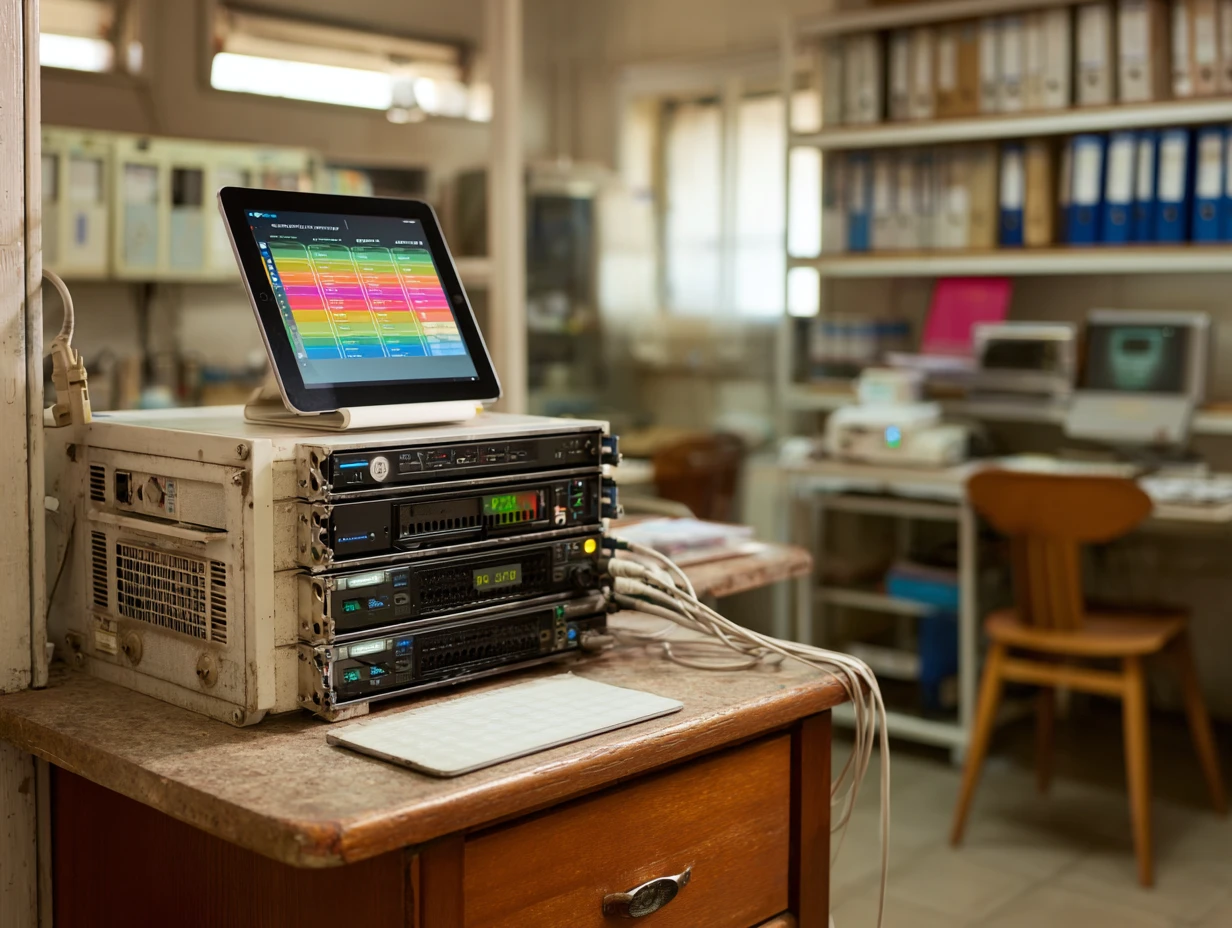
The PIMS market in 2026 is in the middle of a structural shift that has been building for a decade and has meaningfully accelerated in the last two years. The simplest way to describe it is this: the legacy server-based systems that most practices have used for years are aging, and the cloud-native platforms built to replace them have matured to the point where the tradeoffs are now genuinely harder to ignore.
The market currently splits into two broad categories.
Legacy server-based systems are software that runs on a physical server inside your clinic. The three dominant ones in North America are Avimark and Impromed, both owned by Covetrus, and Cornerstone, owned by IDEXX. These systems have enormous installed bases, decades of institutional knowledge, deep integrations with diagnostic equipment, and communities of experienced users who know them inside and out. They also cannot be accessed from home without VPN tunneling, require dedicated IT maintenance, cannot receive automatic updates without planned downtime, and have no natively built AI features.
Cloud-native platforms run in a browser or app, update automatically, and can be accessed from anywhere with an internet connection. The leading options in North America as of 2026 are Shepherd, ezyVet, Covetrus Pulse, Vetspire, Instinct, NectarVet, Provet, DaySmart Vet, and Digitail. These platforms are where essentially all new development is happening. They differ substantially in interface design, pricing, integration depth, AI capabilities, and the practice types they serve best.
There is no universally correct answer about which category is better for your clinic. The right answer depends on your practice size, your team's technical comfort level, how heavily you use IDEXX diagnostics, whether you are in a single location or a growing group, and how much disruption you are willing to absorb during a transition. What follows is an honest summary of each major platform grounded in what users actually report.
A Note on Pricing
Almost every major PIMS in 2026 requires a direct sales conversation to get pricing. That opacity is a legitimate frustration that shows up consistently in user reviews, and it is worth naming directly: when a vendor will not publish pricing on their website, you are entering a negotiation, not a transaction. Always ask for a three-year total cost scenario that includes setup fees, data migration, training, and any per-message or per-transaction fees that are not included in the base subscription.
The Platforms: What Real Users Are Saying
Avimark
Avimark is the most widely installed veterinary practice management system in North America, used by more than 11,000 hospitals. It is server-based, Windows-native, and has been in the market for decades. For a significant portion of its user base, it is the system they learned on, the system their team knows, and the system they are actively deciding whether to leave.
What users consistently praise about Avimark is exactly what you would expect from a mature, deeply familiar product: ease of use, customizability, comprehensive feature coverage, and the ability to keep working when the internet goes down. One longtime user put it plainly: "I love the fact that once I purchase this system, I own the software and can continue to use it without paying a monthly fee other than for Avimark support." That ownership model is a genuine differentiator for independent practices that are wary of recurring SaaS fee escalations.
The recurring complaints are also consistent: the interface looks dated, the icons are not self-explanatory, and in 2026 there are no native AI or voice documentation features. Users who have recently switched to cloud platforms tend to say they miss Avimark's depth while not missing its aesthetics. Users who are still on Avimark and are evaluating options tend to cite one specific moment: the day the server crashed, and they could not see records or check out patients until it came back up.
Avimark is the right system for practices that are stable, not planning to grow aggressively, have a team deeply comfortable with it, and are not yet feeling significant pain from the server architecture or the absence of AI tools. For practices that are hiring new associates who have trained on cloud-native software, or that have experienced a server failure, the calculus is shifting.
Impromed
Impromed, owned by Covetrus and used by more than 4,000 practices, is the third major legacy server-based system alongside Avimark and Cornerstone. It sits in a distinctive position in the market: more deeply customizable than either of its legacy peers, with a level of visual and workflow configurability that longtime users describe as unmatched. One practice manager who has used it for ten years called it "a geek's dream for being able to set it up the way you and your staff will use it," and noted that no other PIMS allows the same degree of visual resource management at a glance.
That depth is also Impromed's most significant usability challenge. The learning curve is steep, the interface is widely described as dated and non-intuitive, and the configuration required to use it well is a meaningful investment of time and expertise. Users who have put in that investment tend to stay loyal. Users who have not tend to describe navigating it as painful. One recurring critique across multiple review platforms is that the screen feels cluttered and that pulling reports is unnecessarily complicated.
The most pointed and consistent complaint about Impromed in recent reviews is support quality degradation following the Covetrus acquisition. Multiple reviewers with five or more years on the platform describe strong support in the early years that has become inconsistent, with response times stretching from what used to be same-day resolution to multi-day waits for tickets, and support staff who are sometimes unfamiliar with the product. One experienced practice manager described knowing what needed to happen but being unable to get help quickly because the technician needed to escalate. This pattern appears repeatedly in reviews from 2024 and 2025.
Impromed is used by practices of all sizes including multi-doctor general practices, equine and large animal clinics, and hospitals with complex inventory requirements. Its 50-plus partner integrations and tight Covetrus ecosystem connectivity are genuine strengths for practices already using Covetrus supply and pharmacy services. Pricing is not publicly listed and requires a direct quote. For practices evaluating a migration path away from Impromed, Covetrus Pulse is the natural in-family option, though the review data on that migration is mixed and worth researching before committing.
IDEXX Cornerstone
Cornerstone is IDEXX's flagship practice management system and is used by over 125,000 professionals at veterinary hospitals across the country. By some accounts, it is the market leader by installed base and the reference point against which most practices compare everything else.
The most consistent praise for Cornerstone centers on its IDEXX integration. The direct connection to IDEXX analyzers and reference laboratories, the automatic population of lab results into patient charts, and the charge capture accuracy that comes from tight diagnostic integration are described repeatedly as genuine workflow advantages. One practice manager who has run five locations on Cornerstone called the lab and imaging integration "outstanding" and cited missed charge reduction as a measurable financial outcome.
The most consistent criticism is age and complexity. Multiple longtime users describe it as software that "started life as a diet calculator, but then features were bolted on over the years," creating a system that is "inconsistent in operation from one screen to the next." The phrases "constantly freezes," "requires a physical server that crashes sometimes," and "cannot access from home" appear across dozens of reviews. Users who have recently switched away from Cornerstone to cloud platforms almost universally say they do not miss the server.
For practices deeply embedded in the IDEXX diagnostic ecosystem, Cornerstone remains a defensible choice, particularly for operations that have the IT resources to maintain the infrastructure. For practices where the server architecture is creating operational pain, or where the team is consistently frustrated by the interface, the migration calculus is worth running.
Covetrus Pulse
Covetrus Pulse, formerly known as eVetPractice, is the cloud-based platform from Covetrus and the primary migration path for practices leaving Avimark or Impromed. It is one of the largest installed-base cloud platforms in veterinary medicine, used by practices ranging from solo practitioners to multi-location corporate groups.
Pulse's core value proposition is the Covetrus ecosystem: tight integration with Covetrus pharmacy, supply distribution, prescription management, and communications tools under one platform. For practices that are already Covetrus customers for supplies and pharmacy, the consolidation is real. The platform also claims over 250 third-party integrations, a real-time treatment board, and AI-powered automation that Covetrus reports reclaims an average of six hours per week per DVM.
User sentiment on Pulse is genuinely mixed in a way that is worth understanding carefully. Positive reviewers consistently cite cloud access, ease of onboarding for new staff, integration with lab equipment, and the time clock functionality. Negative reviewers are pointed about specific issues: too many clicks to complete routine tasks, slow load times, billing and invoicing complexity, reporting limitations, and unexpected price increases. One practice owner wrote that the data migration from Cornerstone "came over in all the wrong categories and mislabeled support staff as doctors among other things." Another described switching away from Pulse as "the best thing we did."
The honest picture on Pulse is that it works well for practices that approach the implementation carefully, take the time to configure it properly, and have support from Covetrus during onboarding. Practices that were promised a plug-and-play migration from Cornerstone and did not receive adequate onboarding support have had significantly worse experiences. The Covetrus supply and pharmacy integration is a genuine differentiator for practices that use those services heavily. Practices that do not may find the value proposition thinner.
Pricing is not publicly listed and requires a direct quote.
Shepherd
Shepherd is a cloud-native PIMS founded by a practicing veterinarian and built on the premise that software should work the way clinicians actually think. It is SOAP-based, meaning the medical record and the invoice build simultaneously as treatments are administered, which users describe as the feature that most visibly reduces missed charges in daily practice.
Shepherd earns some of the highest user satisfaction scores of any platform in this comparison. The phrases that appear most frequently in reviews are "built by a vet," "easiest PIMS I have used in 13 years," "support responds in under two minutes," and "finally went completely paperless after a decade of trying." One practice manager saved over $300 per month by switching from Neo to Shepherd, primarily by eliminating a third-party texting service that Shepherd includes natively.
The legitimate complaints about Shepherd in 2026 center on two things. First, post-update system outages: multiple reviewers reported six or more multi-hour outages in February 2026 alone, which is significant for high-volume practices and walk-in clinics where any downtime creates immediate patient care disruption. Second, prescription entry is described as click-heavy and requiring navigation between tabs that breaks the workflow that is otherwise smooth. Shepherd's support team appears to acknowledge and respond to feedback actively, with multiple reviewers citing specific improvements made based on their suggestions.
Payment processing fees are described as on the higher end. For a practice evaluating the total cost against Neo at approximately $400 per month plus separate texting, the math often favors Shepherd. It is currently best positioned for single-site GP practices and urgent care clinics that want a clean, intuitive system without the complexity of platforms built for enterprise or specialty use.
ezyVet
ezyVet is an IDEXX-owned cloud platform positioned as the most powerful and customizable system in the market, particularly for emergency, specialty, and multi-location practices. It is the platform that attracts the most intense reactions in either direction of any system in this comparison.
Users who have fully configured ezyVet and are running it well describe it as the best software they have ever used. The cloud access, the integration depth, the customizability, the 24-hour emergency reliability, and the connection to IDEXX diagnostics are consistently praised. Practices that switched from Cornerstone specifically to get true cloud access and better IDEXX connectivity are generally satisfied with that trade.
Users who have not gotten there describe the experience in starkly different terms. One relief veterinarian who has used many systems over 12 years called ezyVet "not written with veterinarians in mind" and said it "requires about seven steps for one thing to get done." Another with 30 years of experience said it has "no redeeming features." These are extreme data points, but they are not outliers. The learning curve on ezyVet is real and is the most commonly mentioned challenge in its reviews.
The honest characterization is that ezyVet rewards investment. Practices that budget the time and configuration effort upfront tend to be satisfied long-term. Practices that expect quick adoption comparable to Shepherd or Neo will struggle. It is also worth noting that AI and voice features are not natively included in ezyVet as of 2026, which multiple reviewers specifically called out as a gap they did not expect from a platform at this price point. Pricing requires a direct quote for current figures.
Vetspire
Vetspire is the cloud-native PIMS with a strong footprint in corporate and multi-location groups. It is built around a modern interface, advanced reporting, and the flexibility to support practices with distinct pricing structures for different client segments. It is the platform that several DSO groups have chosen when standardizing across locations.
User feedback on Vetspire is broadly positive on interface and usability, with consistent praise for the two-way client communication tools and the ability to customize workflows. The complaints center on system bugs and glitches, and some users report that billing and invoicing are less flexible than specialized tools. As a newer market entrant, Vetspire is still building its track record, and some reviewers note that support responsiveness can vary.
Pricing for Vetspire is per full-time veterinarian and offers volume discounts for larger networks. Some online claims indicate that their pricing is among the higher per-vet prices in the market, which is reflected in the review base: Vetspire's users tend to be multi-location practices and corporate groups where the reporting and centralization capabilities justify the cost. For a single-location GP practice, the pricing may not pencil out against Shepherd or NectarVet.
Instinct EMR
Instinct has historically been purpose-built for emergency, specialty, and advanced general practices, and it remains a strong option in this comparison for those clinical environments. However, in late 2025 Instinct Science launched Instinct EMR for Primary Care, a dedicated general practice product that brings the same clinical workflow depth, automatic charge capture, and connected records architecture to GP clinics. This is a meaningful expansion that makes Instinct relevant to a much broader range of practices than before.
The core value proposition carries across both products: clinical workflows that automatically build the invoice as treatments are administered, real-time status boards, integrated lab ordering, built-in access to Plumb's drug references and Standards of Care clinical guidance, and the ScribbleVet AI scribe now embedded directly into the platform following the January 2026 acquisition. Instinct claims practices recover 11 percent more revenue than those on manual or legacy systems through automatic charge capture, which is a specific and credible claim worth testing during a demo.
User sentiment for Instinct is among the most consistently positive of any platform in this comparison. Reviewers describe it as "the best software I've ever used in 20 years," "user friendly" from day one, and easy to train new staff on. One associate veterinarian described it as what you would get if Cornerstone and ezyVet had a child: the clinical depth of Cornerstone with modern usability. The primary complaint across reviews is price, which is described as high for smaller or mid-sized practices. Pricing requires a direct conversation and is not publicly listed.
The Primary Care product is still building its track record given its recent launch. Practices evaluating it for GP should ask specifically about the feature parity between the GP and emergency products, what the implementation timeline looks like for a clinic converting from a legacy system, and how the ScribbleVet integration works in a GP workflow compared to an emergency one.
NectarVet
NectarVet is one of the newer cloud-native platforms and has a smaller review base than the systems above, but the early sentiment is strongly positive. Reviewers who have used Impromed, Avimark, and Cornerstone in previous roles describe NectarVet as not falling short of those systems on features while being easier to use and having better support. The built-in AI suite, which includes AI SOAP notes, AI call summaries, AI medical history review, and AI client communication tools, is the most commonly cited differentiator.
The review base is also small enough that the positive sentiment should be weighted with some caution. NectarVet is worth evaluating seriously, particularly for startup or de novo practices that are building their stack from scratch and want AI built in from day one rather than added on later.
Provet
Provet, formerly known as Provet Cloud, is a product of Nordhealth, a Finland-based health software company, and is a strong option in this comparison for multi-location practices with international operations or European regulatory requirements. Its open API is specifically praised by technology-forward practices that want to build custom integrations. The platform supports customizable workflows and a wide range of practice types.
Implementation and data migration are the most consistent complaints, with multiple reviewers noting that switching from older platforms is time-consuming and that support is responsive but not always effective at resolving technical issues during onboarding. Pricing starts around $245 per month per user and scales with practice size.
Digitail
Digitail is the most design-forward platform in this comparison. Its interface is consistently praised for being clean, modern, and easy to navigate. The patient flow board, the client-facing mobile app, and the built-in Tails AI assistant are features that reviewers call out as genuinely useful rather than demo-ware. It is particularly well-suited to practices that treat client experience as a strategic priority alongside clinical operations.
The complaints about Digitail center on inventory and prescription management, which multiple users describe as needing improvement, and support response time inconsistency. Add-on fees for modules like voice dictation can add up, so the total cost of ownership deserves scrutiny beyond the base subscription. Pricing is per veterinarian per month on a subscription model.
DaySmart Vet
DaySmart Vet, formerly Vetter Software, has been in the market since 2011 and is one of the few platforms in this comparison to publish pricing publicly. It starts at $137 per month for one user and scales to $665 per month for 20 users, making it the most accessible entry price in the cloud-native PIMS category. That transparency is worth noting: it is a signal about how the company approaches the buyer relationship.
User sentiment on DaySmart Vet is consistently positive on ease of use, customer support, and affordability. The phrases that appear most frequently in reviews are "very intuitive," "easy to learn," "customer service resolves issues quickly," and "most customizable at its price point." One operations specialist who has used the platform for eight years noted that after evaluating newer options from Patterson and IDEXX, DaySmart Vet still offers a level of robustness the alternatives cannot match for its price. Another mobile practice owner described it as genuinely suited to the realities of a field-based workflow in a way that most clinic-oriented platforms are not.
The honest limitations are also consistent across reviews. Add-on fees for modules including boarding management, wellness plans, and DICOM storage can meaningfully increase the total cost beyond the entry price, which several reviewers flagged as a source of frustration. AI features are a more recent addition and are less mature than the native AI capabilities in Shepherd, NectarVet, or Digitail. Some users note that the platform was not built by veterinary professionals, which shows in certain clinical workflow choices. The appointment scheduling functionality is described by some mobile and high-volume practices as needing improvement.
DaySmart Vet is the strongest fit for small to mid-size practices, startup clinics building a stack on a budget, and mobile practitioners who need a cloud-native solution with IDEXX integration, client communication tools, and a payment processing system that does not require a separate vendor. For practices that need deep AI clinical workflows or enterprise-grade multi-location management, the platform will feel like it has a ceiling. For practices where affordability and ease of adoption are the primary criteria, it is one of the most defensible choices in the market.
These are the systems we think stand out. To see every veterinary practice management system we track, browse the full directory.
How to Think About the Legacy-to-Cloud Decision

If your practice is currently on Avimark, Cornerstone, or Impromed, the question you are probably wrestling with is not really about features. It is about switching costs, risk, and timing.
The switching costs are real. Data migration takes time and sometimes loses data that cannot be migrated cleanly (invoice history, certain report data, and document attachments are common losses depending on the destination platform). Your team will slow down for several weeks during training and adaptation. You will discover configuration you did not know existed in your old system that needs to be rebuilt. All of this is manageable, but pretending it is not there is how practices make the decision and then regret the execution.
The risk is manageable if you plan for it. The practices that have the worst migration experiences are almost universally the ones that underestimated onboarding time, did not involve key staff in the evaluation, or chose a vendor that did not provide adequate implementation support. The practices that have the best experiences are the ones that treated it as a six-month project, not a six-week one.
On timing: the platforms that are receiving the most development investment in 2026 are the cloud-native ones. AI features, modern client communication tools, and integration ecosystems are all being built into cloud platforms first. If you are planning to be in your PIMS for the next ten years, the trajectory of where development is happening matters as much as where the feature set is today.
How to Build Your Shortlist

Before you request a single demo, clarify five things about your own practice.
What type of practice are you? General practice, emergency, specialty, mixed animal, mobile, and multi-location corporate groups all have different needs. Instinct is strong for emergency practices. Vetspire serves corporate groups well. Shepherd, Digitail, Provet, and NectarVet are strong GP choices. ezyVet handles specialty and emergency well. Not every platform is a fit for every practice type.
How deeply embedded are you in the IDEXX diagnostic ecosystem? If IDEXX diagnostics are a core part of your daily clinical workflow, Cornerstone and ezyVet have the deepest native integration. Other platforms support IDEXX integration but at varying depths.
What is your team's technical tolerance? ezyVet and Vetspire reward configuration investment. Shepherd, Digitail, Provet, DaySmart Vet and NectarVet are designed to be usable on day one. If your practice manager is already stretched and cannot dedicate weeks to implementation, that matters.
Are you a single location or planning to grow? Single-location practices have different needs than a practice planning to open a second or third location in two years. Platforms like Vetspire, Provet, DaySmart Vet, and ezyVet are better positioned for multi-site management.
What is your actual budget, including hidden costs? Ask every vendor for a three-year total cost scenario that includes setup, migration, training, per-message fees, payment processing margins, and any module add-ons that are not in the base subscription.
Once you have answered those five questions, you should be able to narrow to two or three platforms that fit. Then run a structured demo with each, ask to see the workflows your clinic runs most often (not the workflows the vendor chooses to show you), talk to practices that have been on the platform for at least twelve months, and ask the data portability question: what happens to your records if you decide to leave.
The Bottom Line
There is no single best veterinary practice management software in 2026. There is a best fit for your practice size, your team, your diagnostic relationships, your budget, and your growth plans. The goal of this article is not to rank these platforms but to give you a clear enough picture of each one that you can have a more informed first conversation with vendors, ask better questions, and make a decision you will still be comfortable with three years from now.
For side-by-side comparisons, user reviews, and pricing information on all of the platforms mentioned in this article, see the Practice Management category on VetSoftwareHub.
If you want help structuring your evaluation process, the VetSoftwareHub PIMS Selection Navigator is a white-glove consulting engagement designed for practice owners and managers who want an independent expert in their corner throughout the entire process. It includes a structured intake framework to define your requirements before any vendor conversations begin, a weighted evaluation matrix to compare platforms on the criteria that matter most to your clinic, and a demo script you can use across every vendor presentation. Beyond the frameworks, the Navigator engagement also includes direct vendor outreach and coordination on your behalf, sitting in on demos with you to ask the questions that are easy to miss in a sales environment, and a thorough review of any contracts before you sign. Reach out through the VetSoftwareHub contact page to learn more or start a conversation about whether it is the right fit for your evaluation.
This article reflects user sentiment from verified review platforms including Capterra, G2, GetApp, and Software Advice, cross-referenced with vendor documentation, as of April 2026. VetSoftwareHub has no financial relationship with any vendor listed in this article and receives no compensation for mentions or coverage. Pricing figures cited reflect publicly available information and should be verified directly with each vendor.
Have a correction or an update? Contact us at vetsoftwarehub.com/contact.
About the Author

Adam Wysocki
Contributor
Adam Wysocki, founder of VetSoftwareHub, has over 35 years in software and almost 10 years focused on veterinary SaaS. He creates practical frameworks that help practices evaluate vendors and avoid costly mistakes.
Connect with Adam on LinkedIn


