|
Platform |
Deployment Type |
Vendor |
|---|---|---|
|
Cloud-Native |
Shepherd Veterinary Software |
|
|
Cloud-Native |
IDEXX |
|
|
Cloud-Native |
Covetrus |
|
|
Cloud-Native |
Vetspire |
|
|
Cloud-Native |
NectarVet |
|
|
Cloud-Native |
Lupa |
|
|
Cloud-Native |
Digitail |
|
|
Cloud-Native |
Provet |
|
|
Cloud-Native |
Instinct Science |
|
|
Cloud-Native |
DaySmart |
|
|
Server-Based |
Covetrus |
|
|
Server-Based |
IDEXX |
|
|
Server-Based |
Covetrus |
Cloud-Based Veterinary Practice Management Software: What You Need to Know
How to evaluate cloud-based veterinary practice management software, with a vendor-neutral comparison of major platforms
April 26, 2026
11 minute read

If your practice is running on server-based software today, you have probably heard the same pitch from at least three different vendors in the past year. The cloud is faster. The cloud is safer. The cloud is the future. Maybe so. But you have also heard horror stories about migrations that went sideways, monthly subscription bills that climbed every renewal, and clinics losing access to their schedule because the internet went down on a Tuesday morning.
The decision to move from a server-based PIMS to a cloud-based veterinary practice management software platform is not small. It changes how your team logs in, how you back up your data, how you handle outages, how you budget for software, and in many cases how you think about your relationship with your vendor. Done well, it can simplify operations and unlock capabilities your current system cannot touch. Done badly, it can create months of disruption and cost your practice money it never planned to spend.
This guide is for practice owners and managers who are at that decision point. The goal is not to sell you on the cloud. The goal is to give you a clear, vendor-neutral picture of what cloud-based veterinary software actually is, who it is right for, where it falls short, and how to evaluate platforms before you sign anything.
What "Cloud-Based" Actually Means in Veterinary PIMS
Walk through the exhibit hall at any veterinary conference and you will see the word "cloud" plastered on every other booth. The term has been stretched to cover so many different deployment models that it has lost most of its useful meaning. Before you can compare platforms intelligently, you need to understand the distinction between cloud-native and cloud-hosted, because vendors will not always volunteer it.
Cloud-native software is built from the ground up to run in a web browser. There is no install. There is no local server humming away in a closet behind reception. Your team logs in through a URL, the application code lives on the vendor's infrastructure, and updates roll out automatically to every customer at the same time. ezyVet, Shepherd, Vetspire, Covetrus Pulse, Digitail, NectarVet, Lupa, Provet, Instinct, and DaySmart Vet were all designed this way.
Cloud-hosted software is a different animal. It is legacy server software, originally built to run on a Windows PC inside your hospital, that has been moved onto a remote server you connect to over the internet. You are still running the same desktop application; it just happens to live somewhere else. Some practices reach this setup through their existing vendor's hosted offering, and some get there through third-party hosting providers. The user experience is closer to remote desktop than to a modern web app. You typically still need to install client software, and the underlying architecture carries all the limitations of the original on-premise product.
Server-based software, the third category, is the traditional on-premise model. The application and database live on a physical machine in your hospital. Workstations connect to that server over your local network. Avimark, Cornerstone, and Impromed are the dominant examples in companion animal practice, though all three vendors now offer cloud-hosted deployment options for the same underlying software.
The reason this distinction matters is that the advantages people associate with the cloud, including automatic updates, browser access from anywhere, and modern integration ecosystems, do not necessarily apply to cloud-hosted deployments of legacy software. If a vendor tells you their product is "in the cloud," ask whether the application itself was designed for the browser or whether you are accessing a hosted Windows desktop. The answer changes what you are buying.
Who Cloud-Based PIMS Is Best Suited For
Cloud-native PIMS is not the right answer for every practice, and pretending otherwise has done real harm to the buying process. There are a few situations where the fit is strong.
Multi-location practice groups, including corporate consolidators and growing independent groups, generally benefit from cloud-native deployment. The ability to log in from any location, see consolidated reporting across hospitals, and avoid managing a server in every clinic is a meaningful operational advantage. Most of the corporate veterinary groups doing serious software evaluation in 2026 have shortlisted only cloud-native platforms.

De novo practices and recent startups are another natural fit. If you are opening a new hospital, you do not need to migrate decades of historical data, you have no existing IT infrastructure to protect, and the lower upfront cost profile of subscription software fits a startup budget better than perpetual licensing plus server hardware.
Practices with strong, reliable internet are good candidates regardless of size. Single-doctor and small-team hospitals can run a cloud-native PIMS just as easily as a 30-doctor referral hospital. The cloud does not require scale to be worthwhile.
Practices with remote work needs, including telemedicine programs, after-hours triage teams, and owners who want to review reports from home, get clear value from cloud-native deployment. The same is true for practices that have struggled with the cost and complexity of maintaining their own server, or that have had a recent failure of on-premise infrastructure that exposed how fragile the current setup actually is.
There are also situations where cloud-native may not be the right move yet. Practices with unreliable internet service, particularly rural hospitals where fiber is years away and cellular backup is the only option, should think hard before committing. Practices deeply invested in custom integrations or modifications that only work with their current server-based platform may find the migration cost prohibitive. Practices with leadership teams who are not ready to absorb the change management cost of any new system should not be pushed into the cloud just because it is in fashion. The right time to switch is when the business case is clear and the practice has the bandwidth to do it well, not when a sales rep happens to call.
The Real Advantages of Cloud-Native PIMS in 2026
The advantages of cloud-native veterinary software are real, but they are also frequently overstated by vendors. Here is an honest look at what you actually get.
Automatic updates are the most underrated benefit. With server-based software, you are responsible for installing new versions, which means many practices run versions that are years behind current. With cloud-native software, every customer is on the same version, and new features arrive without anyone having to schedule downtime. The flip side is that you cannot opt out of changes you do not like, which is a tradeoff some practices feel acutely when a vendor reworks a workflow that the team had finally gotten comfortable with.
Remote access is straightforward and useful. Owners can pull reports from home. Relief veterinarians can log in from a laptop. After-hours teams can triage from a phone. None of this requires VPN configuration or remote desktop setup, and none of it depends on someone in the practice keeping a server reachable from the outside world.
AI feature availability has become a real differentiator in the last 18 months. Cloud-native vendors have shipped AI scribe integration, anomaly detection in lab results, and intelligent scheduling at a much faster pace than server-based vendors, partly because deploying machine learning features to a single cloud environment is simpler than pushing them out to thousands of customer-managed servers. If your practice wants to take advantage of the current generation of veterinary AI tools, a cloud-native PIMS will generally give you more options.
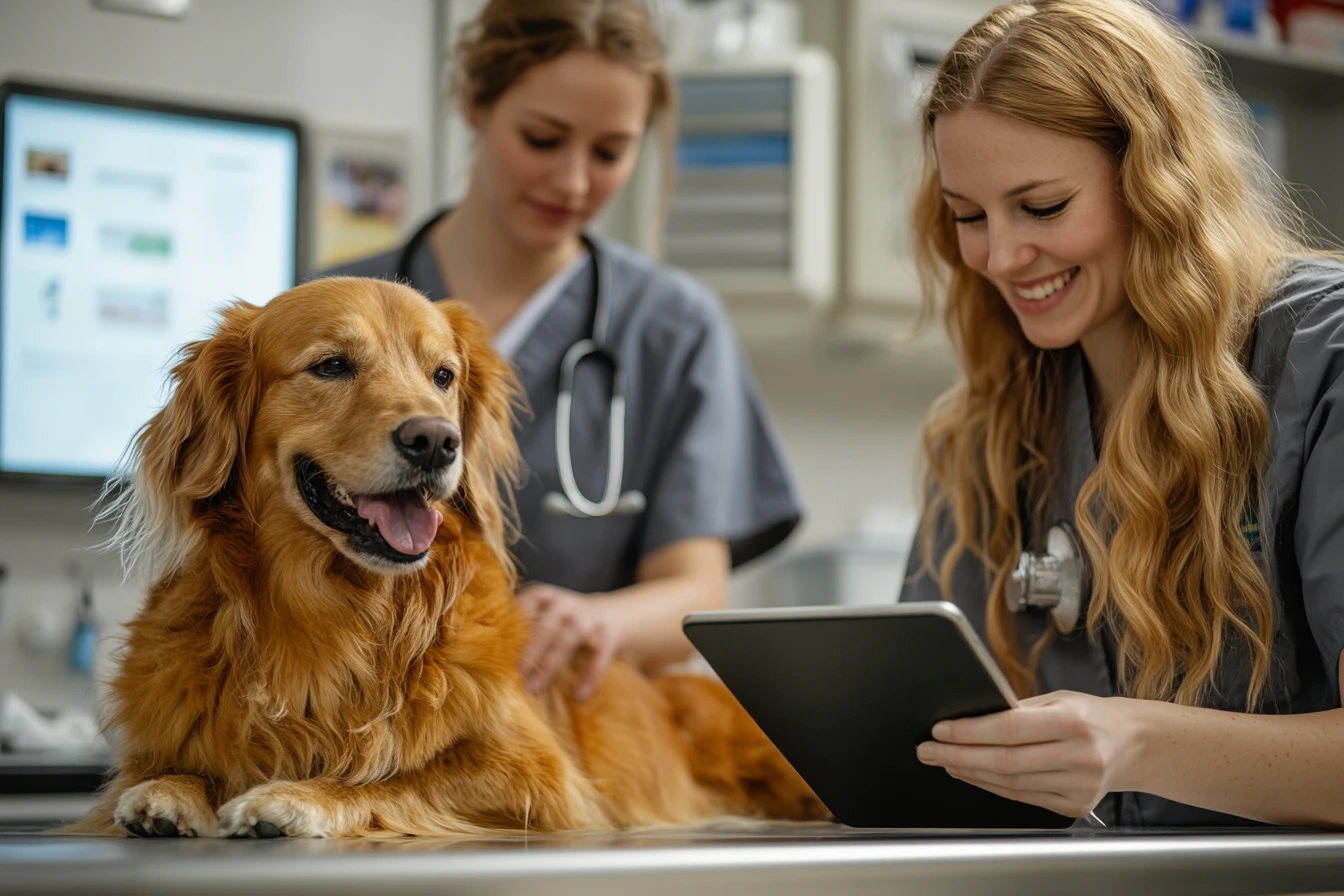
PIMS integration ecosystems matter more every year. Cloud-native platforms with mature APIs make it easier to connect lab equipment, AI scribes, client communication tools, payment processors, and inventory systems. The ecosystem around the leading cloud-native PIMS platforms is meaningfully richer than what is available for legacy server-based products. Recent industry research has documented that around 80 percent of practices want their PIMS to support read access for third-party integrations, and around 75 percent want write-back capability. Most server-based platforms cannot deliver this without significant friction.
Disaster recovery is genuinely better in the cloud, when the vendor takes it seriously. A practice running a cloud-native PIMS does not lose its records if the building floods. A practice running server-based software without offsite backups can lose everything. Most cloud-native vendors maintain redundant infrastructure across multiple data centers. This does not eliminate risk, but it shifts the risk from you to the vendor in ways that generally favor smaller practices that lack dedicated IT staff.
The Legitimate Concerns About Cloud PIMS
The case against cloud-based veterinary software is not paranoia. Practices raise real concerns, and the honest answer is that some of them are valid.
Internet dependency is the concern most practices voice first. If your internet goes down, you cannot run the practice on a cloud-native PIMS. This is true. Mitigation strategies exist, including cellular failover routers, secondary ISPs, and offline-capable mobile clients from some vendors. None of these eliminate the dependency. Practices should plan for outages and ask vendors what offline functionality, if any, is available, and how the system behaves when connectivity is intermittent rather than fully down.
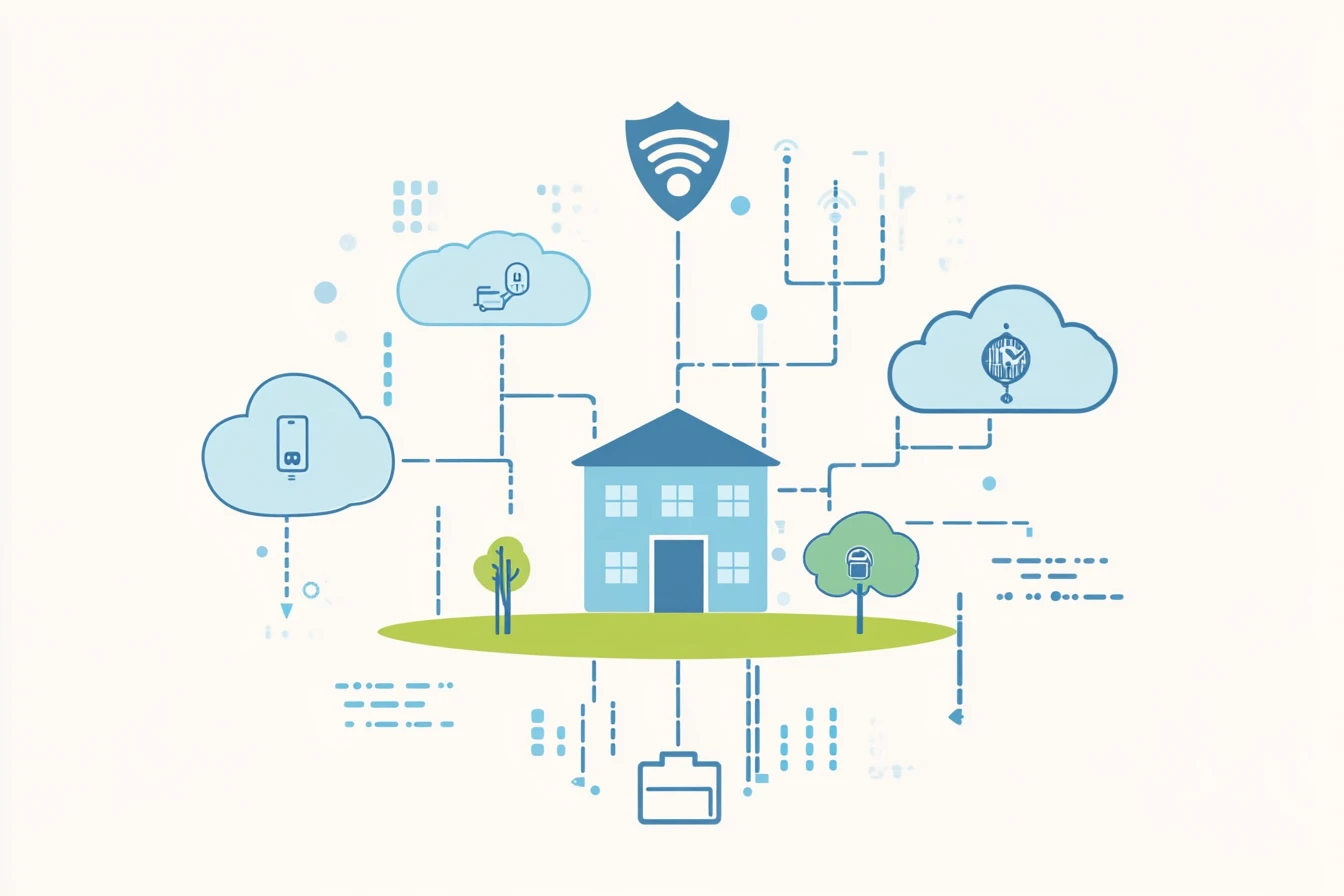
Data security gets framed as a cloud problem when it is really an "every system" problem. Cloud-native vendors typically maintain stronger security controls than the average veterinary practice can implement on its own server. The relevant questions are about the vendor's specific practices: where is your data stored, who has access to it, what encryption is in use, what happens if the vendor is breached, and what is their incident notification policy. A vendor who cannot answer these clearly is a problem regardless of deployment model.
Subscription cost escalation is a legitimate concern, and one that practices often underestimate when they sign their first cloud contract. Most cloud-native vendors charge per user, per workstation, or per location, with annual increases that compound over time. Some vendors have raised prices substantially in recent years, particularly after acquisitions or ownership changes. Before signing any contract, model out what your subscription cost looks like over five years assuming a five to seven percent annual increase. The number is usually larger than expected, and a renewal at year three is not always negotiable in the way the original sale was.
What happens to your records if you leave a vendor is the question that should keep practice owners up at night, and it gets the least attention in the sales process. Cloud-native vendors store your data on their servers. If you decide to switch platforms in three years, you need to be able to export every patient record, every transaction, every image, and every note in a format another platform can ingest. Some vendors make this easy. Some make it deliberately hard. The contract you sign should include explicit data portability rights and a defined process for export at the end of the relationship. If a vendor will not put this in writing, that is information.
Which Major Veterinary PIMS Platforms Are Cloud-Native, Cloud-Hosted, or Server-Based
The veterinary software market in 2026 includes products at every point on the deployment spectrum. The summary below covers the major platforms practice owners will encounter during evaluation. It is not exhaustive, and product strategies can shift, so verify the current state with each vendor before making decisions.
Cloud-native platforms, designed for the browser from the start, include Shepherd, ezyVet, Covetrus Pulse, Vetspire, NectarVet, Lupa, Digitail, Provet, Instinct, and DaySmart Vet. Each has its own positioning and target market. Shepherd has built a strong following among independent general practices. ezyVet has deep penetration in corporate groups and specialty hospitals. Covetrus Pulse is the cloud platform Covetrus has positioned as the future for its customers. Vetspire has gained share in mid-sized and corporate groups. NectarVet is a newer entrant focused on simplifying the daily workflow. Lupa is another newer cloud-native platform that has generated significant conversation among veterinary practitioners as it has rolled out, though its installed base remains smaller than the longer-established platforms on this list. Digitail emphasizes mobile-first design and consumer-facing features. Provet is widely deployed in international markets and has a growing North American presence. Instinct is best understood as a treatment workflow platform that has expanded toward broader PIMS functionality with newer functionality aimed at GPs. DaySmart Vet, formerly Vetter Software, serves the small to mid-sized independent practice market.
The table below summarizes deployment classification for the platforms most commonly evaluated.
How to Evaluate Cloud-Based PIMS Before Committing

The demo is where most evaluations go wrong, because the vendor controls the conversation. The fix is to come into every demo with a structured set of questions and tasks the vendor has to perform live, not a slide deck they can prepare.
During the demo itself, ask the vendor to perform real workflows your team runs every day. Check in a walk-in patient with a complicated history. Process a multi-line invoice with discounts and a controlled drug. Run end-of-day reconciliation. Pull a financial report for the previous month. Try to issue a refund. Try to merge two duplicate client records. If the vendor refuses to demo something or hand-waves it as "in development," treat that as a red flag, not a minor caveat. The features that get hand-waved in the sales process are the ones that will frustrate your team for years.
On uptime SLAs, ask for the vendor's published service level agreement and their actual uptime over the last 12 months. The two numbers are not always the same. Ask how scheduled maintenance is communicated, how long it typically lasts, and whether it can be triggered during your business hours. Ask how outages are communicated to customers in real time, and whether the vendor offers any kind of credit or remediation when uptime falls below the SLA.
On data portability, ask for the export formats available, the cost of an export, the time it takes to produce one, and whether you can run an export at any time or only at the end of the contract. Ask whether images and attachments are included in the standard export. Ask how historical financial data exports. Get the answers in writing in the contract, not just on the sales call.
On internet redundancy, the vendor cannot solve your problem, but they can tell you how their software behaves under degraded conditions. Ask whether there is any offline functionality. Ask whether their mobile clients can queue actions when disconnected. Ask what happens to a half-completed invoice if your connection drops mid-transaction. Practices in areas with marginal internet should also ask the vendor for references from other rural or low-bandwidth practices and call those references directly.
On migration support, ask exactly what the vendor will do versus what you are responsible for. Ask whether they have migrated from your current platform before, how many times, and whether they will provide references from those migrations. Ask what data fields do not migrate cleanly, because there are always some. Ask what happens to historical images, lab results, and document attachments. Ask what the timeline looks like and what it costs. Industry research and recent practitioner surveys have consistently shown that data migration is the single most underrated risk in any PIMS switch, with unexpected costs and lost data fields being near-universal complaints.
Finally, ask the vendor for the names and phone numbers of three customers similar to your practice who have been live for at least one year, and call all three. The reference call is the single highest-value step in the evaluation process and the one most practices skip.
Where to Go From Here

The best cloud based veterinary software for your practice is the one whose architecture, business model, and feature set actually fit how you work, not the one with the loudest booth or the most aggressive sales rep. Cloud-based veterinary practice management software is not a single product category. It is a spectrum, and the right choice depends on your practice's specific situation.
If you are evaluating options, the VetSoftwareHub Practice Management category page lists every major platform with side-by-side feature information, including the cloud-native and cloud-hosted distinctions covered above.
If you would like structured help running an evaluation, including a vendor-neutral matrix, a demo plan, and reference call coordination, contact VetSoftwareHub about the PIMS Selection Navigator engagement. The goal of that work is to make sure you walk into the contract conversation with eyes open and with the right questions already answered.
Pricing, feature sets, and deployment options change frequently. Verify all product details directly with each vendor before making a purchase decision. VetSoftwareHub maintains no financial relationship with any vendor mentioned in this article and does not accept referral fees, affiliate commissions, or paid placements.
Have a correction? Let us know.
About the Author

Adam Wysocki
Contributor
Adam Wysocki, founder of VetSoftwareHub, has over 35 years in software and almost 10 years focused on veterinary SaaS. He creates practical frameworks that help practices evaluate vendors and avoid costly mistakes.
Connect with Adam on LinkedIn


