What Is SignalPET? AI Radiograph Reads Explained (2026)
What is SignalPET? A plain-language look at the AI radiograph service for vet practices: what it reads, how it fits your PIMS, pricing, and demo questions.

It is 6:40 on a Tuesday evening at a one-doctor practice. A nine-year-old Labrador has been vomiting since lunch, the technician has just captured three abdominal views, and the teleradiology read the doctor would normally order will not come back until tomorrow morning. The question in the room is simple: is this a foreign body that needs surgery tonight, or a patient who can go home on fluids and an antiemetic? That moment is the problem SignalPET was built for. So, what is SignalPET? SignalPET (often written SignalPet) is a Dallas-based AI radiograph interpretation service for veterinary practices. The practice sends images from its existing digital radiography system, the service returns an AI-generated read in minutes, and the case can be escalated to a board-certified veterinary radiologist for a signed report when the doctor wants one.
This article is published by VetSoftwareHub, an independent vendor-neutral directory with no financial relationship with any of the companies covered here. We do not accept referral fees or equity positions, and we do not steer practices toward any particular product. What follows is a plain-language overview of the landscape.
What SignalPET does
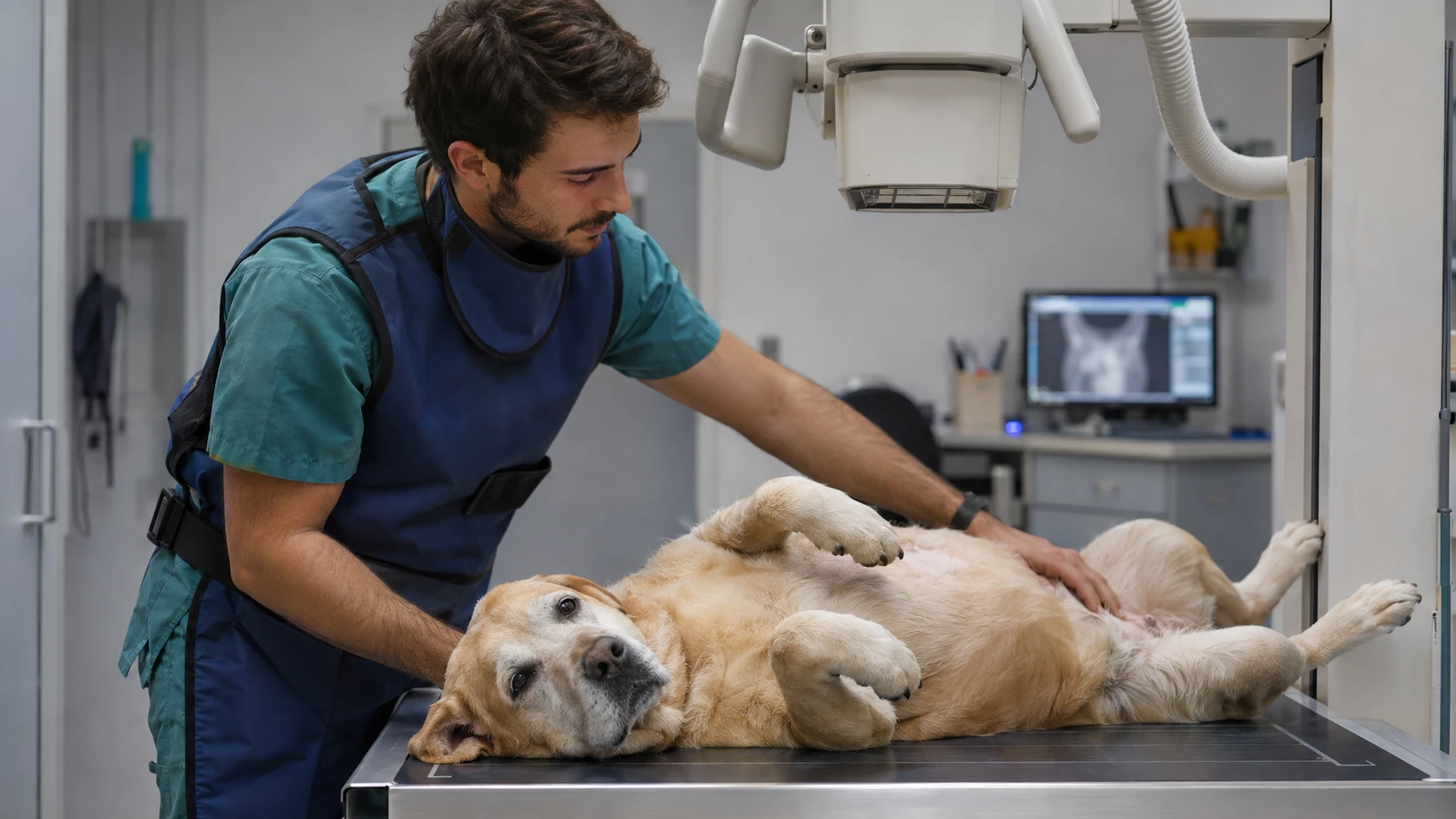
At its core, SignalPET reads radiographs. Images go in as DICOM files, the standard format digital x-ray systems already produce, and the software returns normal and abnormal calls on the radiographic findings general and emergency veterinarians see most often in dogs and cats. The original AI engine was called SignalRAY. The company later added SignalSTAT, a rapid read that paired the AI with human oversight and a 45-minute turnaround, and SignalSMILE for dental radiographs.
In September 2025 those pieces were folded into a single platform called SignalPET 360°. It now offers three levels of report. An Immediate Report is a fast AI screen designed to come back while the patient is still in the building; the SignalPET listing on VetSoftwareHub notes it screens for more than 63 pathologies in under five minutes. A Complete Report adds the patient history and the clinician's question to the images, with a typical turnaround of 20 to 30 minutes. A Radiologist Report is a signed interpretation from SignalPET's radiology team, led by Dr. Eric van Eerde, DACVR, with STAT reads in about an hour and routine reads in about 12 hours. The platform also includes a cloud PACS for storing, viewing, and sharing studies.
The target user is the general practitioner or emergency doctor who reads most of their own films and wants a second set of eyes on every case. One clarification matters: an AI read is not a radiologist's report. It is diagnostic support, and the doctor still owns the interpretation.
How SignalPET fits in the veterinary software stack
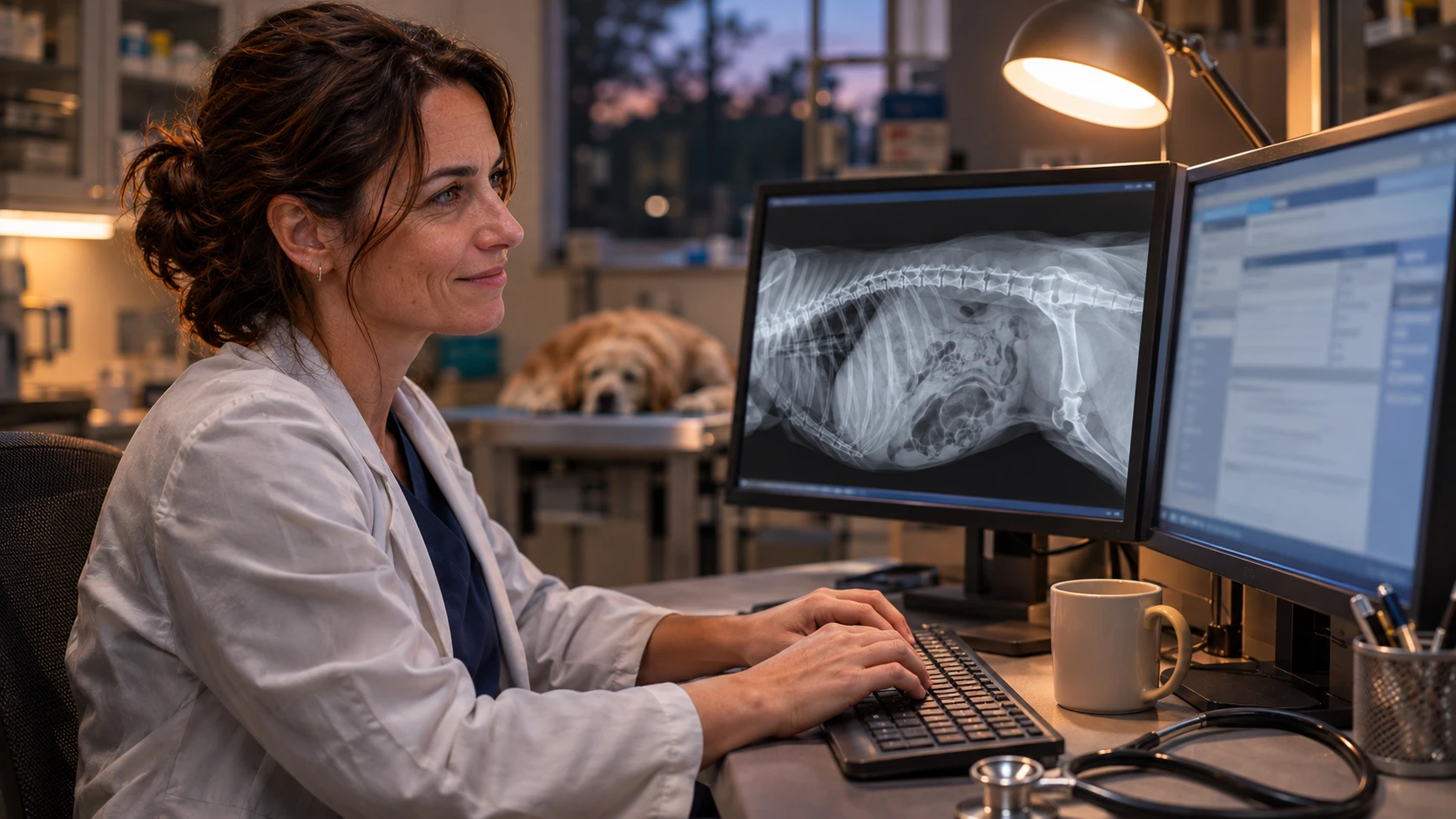
SignalPET is not a practice management system. It does not schedule appointments, hold the medical record, or invoice clients. It sits between your imaging hardware and your PIMS: images come from the DR system, interpretation happens in SignalPET, and the finished report has to land back in the patient's chart.
That last step is where integration matters. SignalPET documents an API integration that pushes reports straight into the patient record in Vetspire, has published an integration with Provet, and announced two more in October 2026: Shepherd, which pulls patient history into the SignalPET submission and sends the completed report back to the matching patient, and Instinct EMR. The company also opened an API to other software vendors in August 2026. If your system is not on that list, ask how reports reach the chart; a PDF attached by hand at 25 studies a week adds up. If you are evaluating a new PIMS at the same time, browse the Practice Management category and put imaging integration on every vendor's question list.
One nuance: older descriptions call SignalPET an AI layer on top of your existing PACS, but SignalPET 360° now includes its own cloud PACS. Practices that already pay for one should decide which system is the archive of record so the same study is not stored and billed twice.
On VetSoftwareHub, SignalPET sits in the Diagnostics category. If you are building an AI clinical stack more broadly, our AI scribe buyer's guide covers the documentation side of the same exam room.
Who SignalPET is suited for
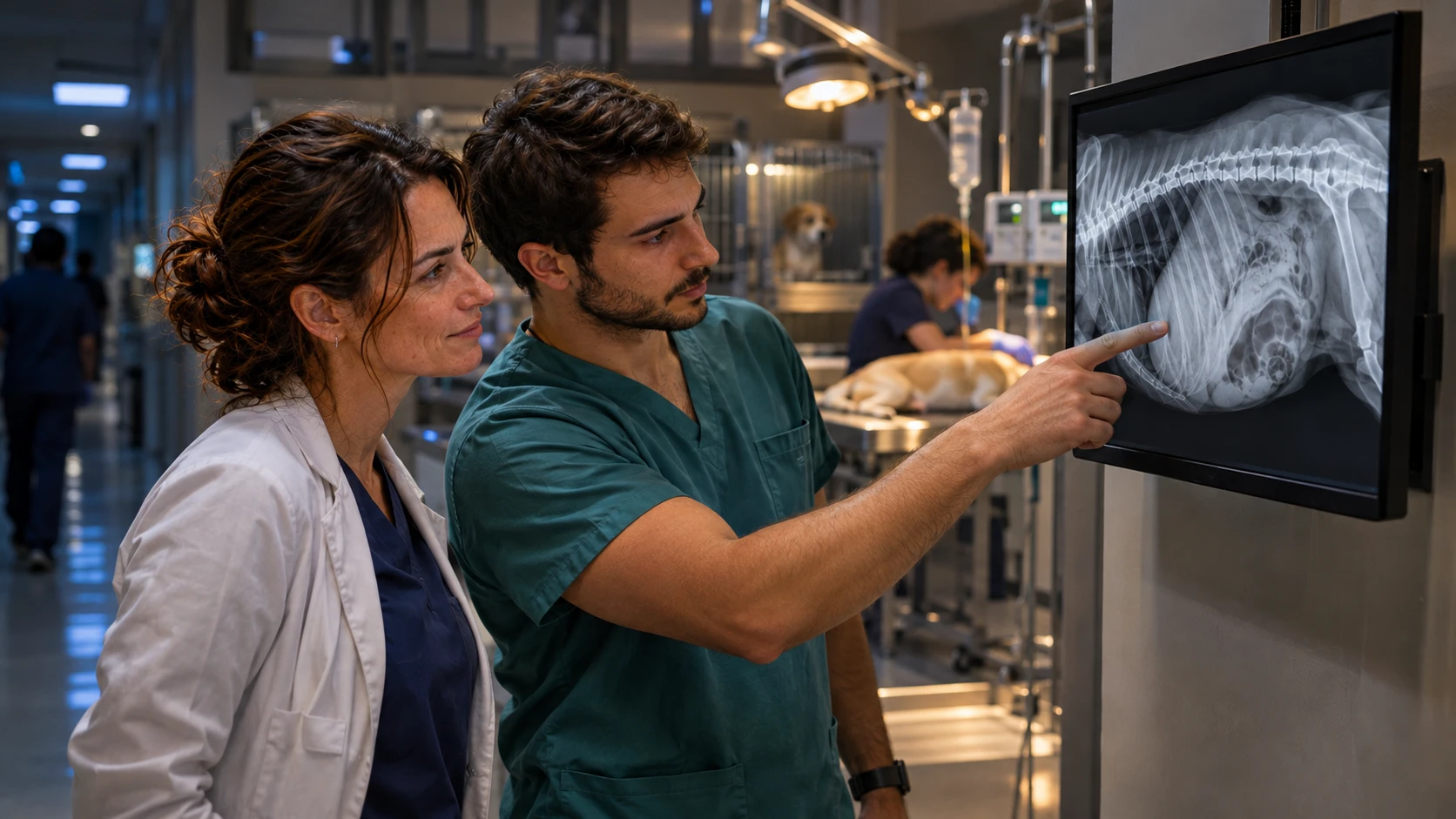
Small general practices are the most obvious fit. A one- or two-doctor clinic rarely sends routine films out because the cost and wait do not make sense for a case the doctor feels fairly sure about. An AI read on every study changes that math and gives newer graduates a consistent check.
Emergency and urgent care hospitals are the second fit. Overnight, radiologist availability is thin, and a fast AI read plus a STAT option in roughly an hour matches how those shifts run.
Multi-location groups are the third. Eight hospitals may have eight habits for when films get sent out; one AI read on every study creates a consistent first pass leadership can review, a theme in our multi-location analytics guide.
The fit is weaker for specialty and referral hospitals with radiologists on staff, where the AI's main value is triage rather than a second opinion. Our specialty and referral hospital software guide covers how imaging workflows differ in that setting.
How SignalPET compares to alternatives
There are three categories of AI radiograph vendors, and SignalPET sits in the first.
The first is independent AI-first companies. SignalPET and Vetology AI both sell AI screening reports with optional teleradiology from board-certified radiologists. Vetology, based in San Diego, has leaned into transparency: in January 2026 it published performance metrics for all of its 89-plus classifiers.
The second is reference-lab AI. Antech RapidRead pairs AI with Antech's board-certified specialists, returns results in about 10 minutes, and automatically routes certain emergent findings to a STAT radiologist review at no extra cost. Because it is tied to your lab relationship, it is a different buying decision from SignalPET.
The third is radiologist-first. IDEXX leads with its Telemedicine Consultants and uses AI inside its Web PACS viewer, while publicly arguing that the future of veterinary radiology depends on radiologists.
The honest answer on accuracy is that no AI read has been shown to replace a radiologist. A 2025 Frontiers in Veterinary Science study compared a 2022 version of SignalRAY with 11 board-certified radiologists across 50 canine and feline studies. The AI's overall accuracy of 0.902 was close to the top radiologist's 0.910, but its sensitivity of 0.688 was lower than most of the radiologists; it was strongest at confirming normal findings. SignalPET helped fund that study. A 2026 JAVMA pilot study tested six commercial platforms, including SignalRAY, on abdominal radiographs from 53 dogs with confirmed diagnoses and concluded that none was yet reliable enough for clinical diagnosis on its own, because all of them missed diagnoses too often. The sample was small and skewed toward complex cases.
What practices say publicly is thin. At the time of writing, SignalPET had one review on G2 (4.5 out of 5) and none on Capterra; most testimonials live on its own site. That makes reference calls with practices like yours more important; our guide on how to check references applies to diagnostic tools as well as PIMS.
SignalPET pricing and how to evaluate

SignalPET does not publish a price list for SignalPET 360°; pricing comes through a demo or a sales conversation. The clearest public figure dates to the SignalSTAT launch in 2024, when the company advertised reads "as low as $60 per study," available around the clock, with no extra charge for after-hours, holidays, or additional body parts on the same patient, and lower rates for higher-volume packages. Expect the current quote to depend on which report levels you use, how many studies you run, and whether you take the PACS. Run the numbers on your actual volume, and check the quote against our hidden fees checklist, because escalations and storage are where AI imaging costs tend to grow.
In the demo, bring a few of your own difficult studies and ask:
-
Which report levels are included in the base price, and what does a radiologist escalation cost per case?
-
Is pricing per study, a monthly subscription, or a package with overage charges?
-
How does a finished report get into our PIMS today, and who supports that integration when it breaks?
-
Which findings does the AI cover for our species and body regions, and where is it weakest?
-
What validation data can you share, and was any of it independent of SignalPET?
-
If we already have a PACS, do we need yours, and what happens to our images if we cancel?
-
What is the contract term, and is there a minimum monthly volume?
The bottom line
SignalPET shows where veterinary AI is heading: less a single clever model, more a workflow that combines a fast AI read, an escalation path to a radiologist, storage, and a report that lands in the chart without retyping. Whether that is worth it for your practice comes down to imaging volume, current teleradiology spend, and how well it connects to the systems you already run. Test it on your own cases, call references, and read the contract. For listing details, see the SignalPET product page. If the bigger decision is your practice management system itself, the PIMS Selection Navigator is our fixed-fee engagement for practices working through that choice, and you can book a discovery call here.
Frequently asked questions
What is SignalPET used for?
SignalPET is used to interpret veterinary radiographs with AI. A practice uploads studies from its digital x-ray system, and SignalPET returns an AI report in minutes, with the option to request a signed report from a board-certified radiologist. It supports the doctor's own read rather than replacing a radiologist's interpretation.
How much does SignalPET cost?
SignalPET does not publish current list pricing; practices get a quote through a demo. When it launched SignalSTAT in 2024, the company advertised reads as low as $60 per study with volume packages available. Current cost depends on report level, monthly study volume, radiologist escalations, and whether the practice uses SignalPET's cloud PACS.
Who owns SignalPET?
SignalPET is a privately held company based in Dallas, Texas. It was co-founded by CEO Lior Kuyer and Dr. Neil Shaw, DACVIM, who serves as chief veterinary officer. The company has not publicly disclosed detailed funding or investor information. Its commercial and operations leadership includes Nitay Gold and Roee Zeiler.
No vendor requested, reviewed, or paid for inclusion in this article. Products appear based on what practices search for, view, and discuss. Read our editorial policy.
About the Author

Adam Wysocki
Contributor
Adam Wysocki, founder of VetSoftwareHub, has over 35 years in software and almost 10 years focused on veterinary SaaS. He creates practical frameworks that help practices evaluate vendors and avoid costly mistakes.
Connect with Adam on LinkedIn