Veterinary Specialist Software 2026: Buyer's Guide
Veterinary specialist software guide for 2026: eRDVM tools, referral inboxes, specialty PIMS, pricing, and ten demo questions for referral hospital teams.

It is 7:42 on a Monday morning at a 14-doctor multi-specialty referral hospital, and the referral coordinator is already behind. Over the weekend, 31 new referrals arrived through five different doors: a fax queue, a shared email inbox, a web form, two voicemails, and a handful of records uploaded to a portal by primary care clinics that remembered the login. Neurology needs MRI slots confirmed. Cardiology has three echo rechecks to fit around a surgeon's schedule. And the phone is ringing because a referring veterinarian wants to know why she still has not received the discharge summary for a patient that went home Saturday afternoon. None of this is clinical work. All of it decides whether the hospital keeps that referring practice. This is the daily reality that veterinary specialist software is supposed to fix, and it is why choosing it is a different exercise than choosing a system for a general practice.
A multi-specialty hospital is structurally a different business than a GP clinic. The patient usually arrives with a history written by someone else. The case often touches three or four departments in a single visit: internal medicine orders imaging, imaging hands off to surgery, surgery hands off to the ICU, and the ICU hands back to internal medicine. Staff roles that barely exist in general practice (referral coordinators, client liaisons, anesthesia technicians, ICU nurses on rotating shifts) are central here. And the hospital has two sets of customers to keep happy: the pet owner in the lobby and the primary care veterinarian who sent them.
That second customer is the one most software overlooks. A specialty or emergency hospital's revenue depends on a steady flow of referrals from primary care practices, and primary care veterinarians keep referring to the hospitals that communicate well. When a referring veterinarian has to chase a discharge summary, or learns about a patient's surgery from the client before hearing from the specialist, that relationship erodes quietly. Nobody sends a formal complaint. The referrals just start going somewhere else.
This is why the software decision carries more weight in specialty and referral medicine than almost anywhere else in veterinary practice. The system is not only the medical record. It is the referral intake desk, the hospital's scheduling engine across departments, the inpatient treatment sheet, the billing system for multi-day hospitalizations, and the communication channel back to every referring practice. When it works, coordinators spend their time coordinating. When it does not, they spend it copying, faxing, and apologizing.
This article is published by VetSoftwareHub, an independent vendor-neutral directory with no financial relationship with any of the companies covered here. We do not accept referral fees or equity positions, and we do not steer practices toward any particular product. What follows is a plain-language overview of the landscape.
Why veterinary specialist software is harder than it looks
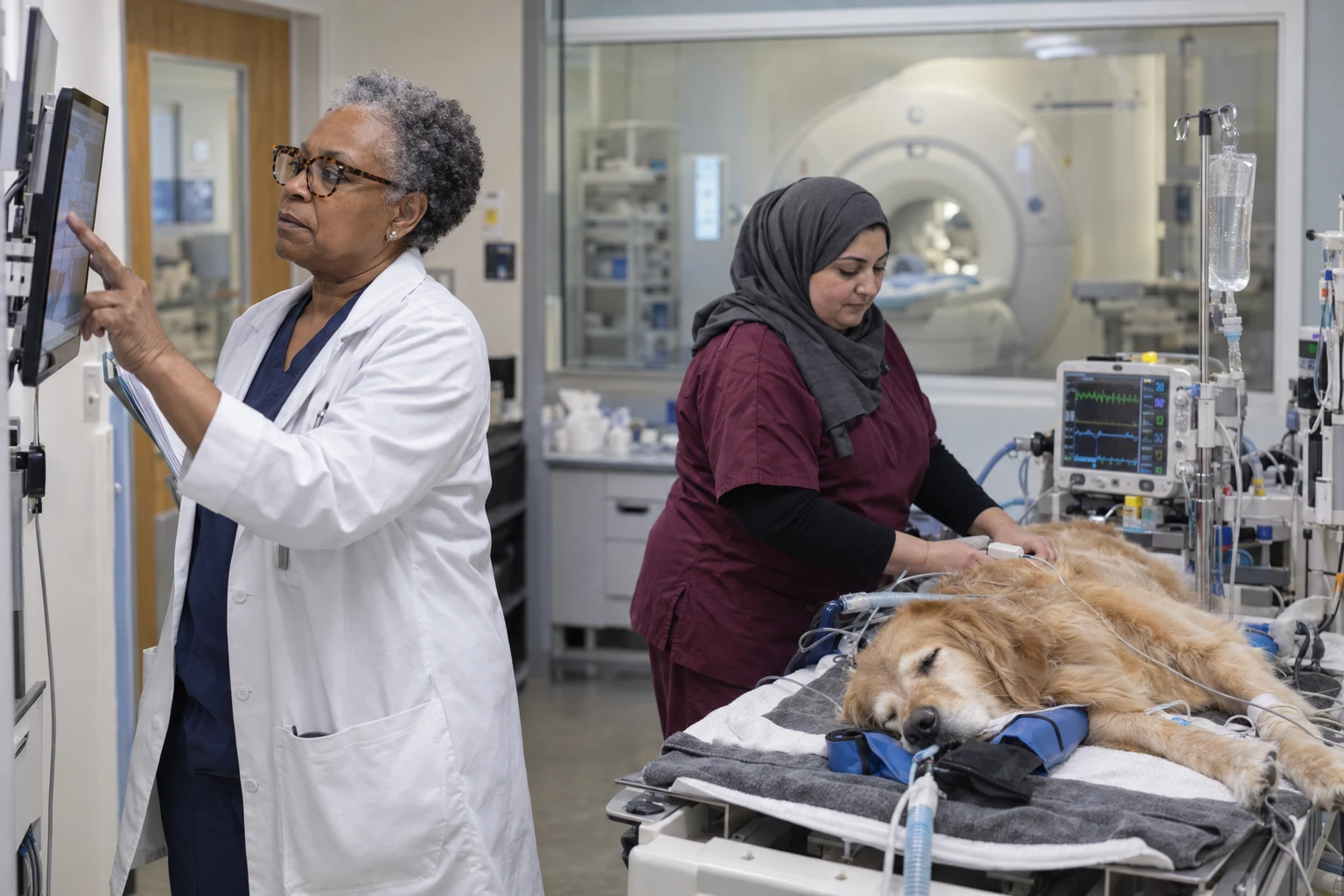
Most practice information management systems were designed around the general practice appointment: one doctor, one patient, one exam room, one invoice, one visit. Specialty medicine breaks nearly every one of those assumptions, and the gaps show up fast when a hospital tries to run on a system built for primary care.
The referral is a workflow, not a document
In general practice, a new patient fills out a form. In a referral hospital, a new patient arrives with a packet: prior records, lab results, radiographs, sometimes a CT study, and a referral letter with a clinical question. That packet has to be received, matched to the right client and patient (who may or may not already exist in the system), triaged by the right department, attached to the record before the appointment, and acknowledged back to the referring veterinarian. Then, after the visit, the loop has to close with a summary sent back.
Ask hospital managers to name their biggest manual tasks and pain points, and referral handling is near the top of almost every list. The reason is simple: in many hospitals, every step above is still manual. Someone downloads the PDF from an email, renames it, uploads it to the patient record, and keys the referring clinic's information by hand. Multiply that by 30 or 40 referrals a day and you have most of a full-time position spent on data entry.
Departments are not exam rooms
A GP schedule is essentially a grid of doctors and time slots. A specialty hospital schedule is a set of interlocking resources: the cardiologist, the echo machine, the anesthesia team, the CT suite, the operating room, the recovery cage, and the client liaison who will walk the owner through the estimate. A neurology workup might require a consult at 9:00, an MRI at 11:00 under anesthesia, and a results conversation at 3:30, with three different departments booking against shared equipment. Software that schedules only by doctor forces staff to manage the rest on whiteboards and spreadsheets.
Hospitalization changes the billing model
General practice billing is mostly point of sale. Hospitalized patients accumulate charges over hours and days: fluids, CRI medications adjusted every few hours, treatments performed by different technicians on different shifts, blood work run in-house at 2:00 a.m., and ICU monitoring billed per day. If the treatment sheet and the invoice are not tightly connected, charges get missed. In a high-acuity hospital, a missed charge on a single overnight ICU patient can easily be several hundred dollars, and it happens quietly enough that most hospitals do not know how much they are losing.
Two audiences for every record
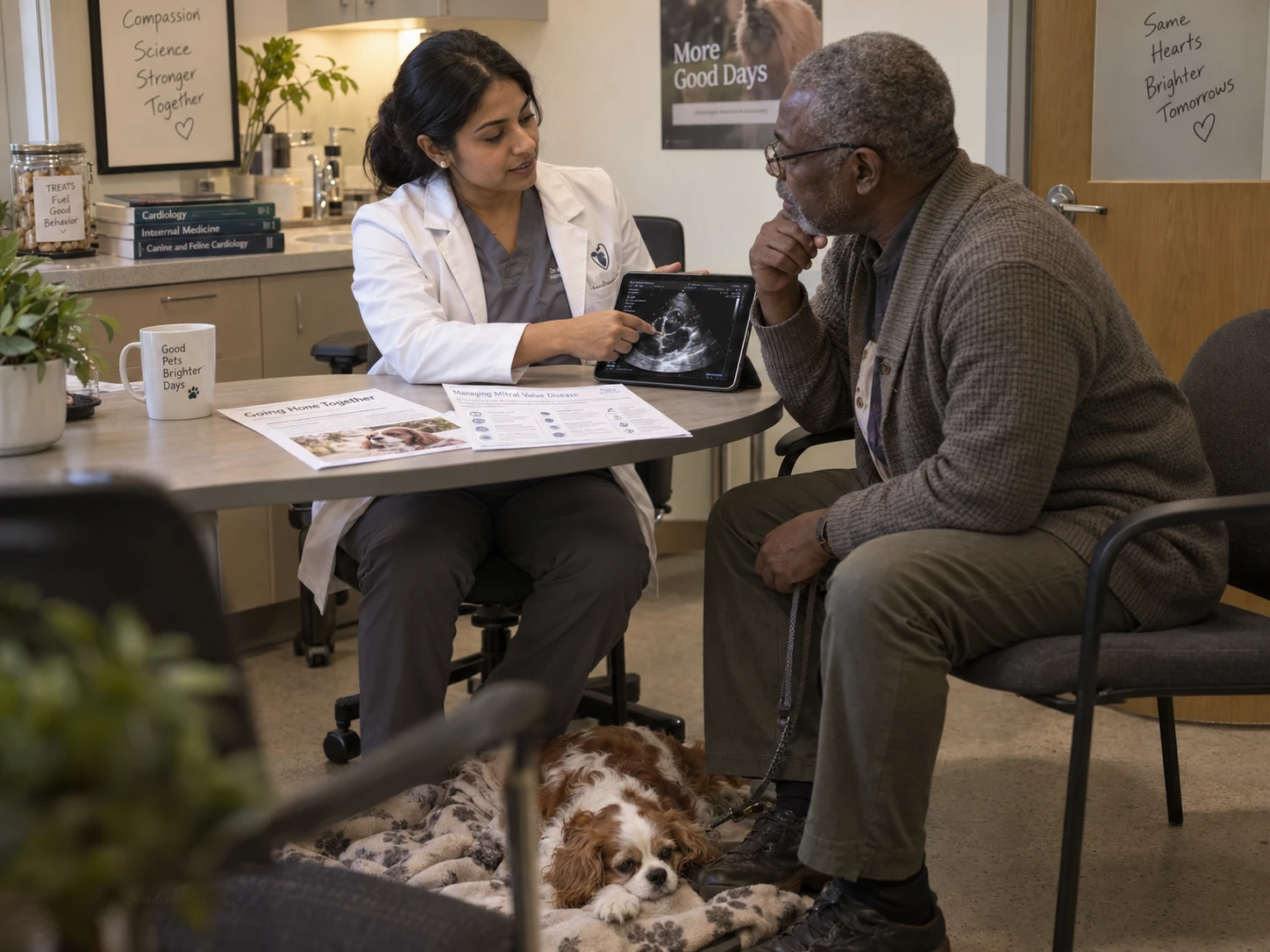
Specialist records serve the hospital, the pet owner, and the referring veterinarian, and each needs something different. The client needs plain-language discharge instructions. The referring veterinarian needs a concise clinical summary with diagnostics, the treatment plan, and clear guidance on who handles follow-up. Specialty templates, whether for a cardiology echo report, an oncology protocol, or a TPLO surgical report, have to produce all of these outputs without the specialist writing the same information three times. Generic SOAP templates rarely get there without significant configuration.
The strategic value of veterinary specialist software to practices
The return on getting this category right shows up in three places: operations, finances, and clinical quality. All three matter, but the one hospital leaders tend to underestimate is the referral relationship itself.
Operational value
The most immediate operational win is reclaimed staff time at the referral desk. If an intake coordinator spends 12 minutes on each manually processed referral (opening the fax or email, matching the patient, uploading attachments, entering the referring clinic, notifying the department), then 30 referrals a day represents six hours of work. A referral inbox that pulls submissions directly into the patient record and auto-matches referring clinics can cut that substantially. One ezyVet specialty customer, describing its referral portal integration, said it would need roughly four additional staff to do the work the integration handles. That is a vendor case study, so treat it as directional, but the scale of the claim is consistent with what hospital managers describe.
The second operational win is cross-department visibility. When surgery can see that a patient is still in imaging, and the ICU can see that a post-op patient is 20 minutes from recovery, hand-offs stop depending on someone walking down the hall.
Financial value
On the financial side, charge capture on inpatient care is the biggest lever. Treatment sheets that post charges automatically when a treatment is marked complete close the gap between what was done and what was billed. Instinct Science, for example, reports that one high-volume ER and specialty customer recovered 10 to 14 percent in previously lost revenue after implementation. Again, that is a vendor-reported figure from a single customer, but even a fraction of it is meaningful. On $2.5 million in annual inpatient billing, recovering 3 percent of leakage is $75,000 a year.
Clinical and relationship value
Clinically, the value is safer hand-offs, clearer treatment orders, and anesthesia and ICU records that are complete and legible. On the relationship side, the math is stark. Consider a primary care practice that refers eight cases a month to your hospital, at an average specialty invoice of $2,500. That single referring relationship is worth $240,000 a year in revenue. If slow communication causes even two or three of those practices to drift to a competitor, the cost dwarfs anything you will spend on software. The honest answer is that communication with referring veterinarians is a revenue system, and it deserves to be evaluated like one.
The three categories of veterinary specialist software
The specialty and referral market sorts into three categories. They overlap at the edges, and several vendors are actively moving between them, but the framework holds up well as a starting point for building a shortlist. For broader context on the cloud versus server question that runs underneath all three, see our guide to cloud-based veterinary practice management software.
Category one: cloud-native generalists with specialty depth
These are full practice management platforms that serve general practice, but have built (or integrated) the tools that specialty and referral hospitals need. Their appeal is that a group can run GP clinics, urgent care, and a referral hospital on one platform with one client record.
Provet Cloud, from Nordhealth, positions itself as handling general practice, specialty referrals, and emergency workflows in one workspace. It includes a native Referral Portal that lets referring veterinarians submit cases and share notes, images, and results, along with a shared inbox for receiving records directly into the patient file. Its referral and university offering is used by teaching hospitals including the University of Cambridge's veterinary school hospital, and its pricing is structured as a monthly fee plus per-user charges, with the referral portal and inpatient treatment planning tied to its higher plans.
ezyVet, owned by IDEXX, has a long track record in large specialty and emergency hospitals and university settings, including Cornell and the Ontario Veterinary College. For referral communication, it integrates with IDEXX rVetLink, and for inpatient workflows it extends into Vet Radar, a dedicated patient care and treatment sheet tool.
Vetspire describes itself as an AI-driven, cloud-based system built for enterprise groups, supporting GP, specialty, urgent care, emergency, and boarding locations under centralized management, with real-time multi-user record editing. It is typically priced per full-time veterinarian, and its customer base leans toward multi-location and corporate groups.
Covetrus Pulse, the cloud platform formerly known as eVetPractice, is broadly deployed in general practice and is also used by some 24/7 emergency hospitals. It has added a real-time Treatment Board for patient status and sits inside a large integration ecosystem tied to Covetrus pharmacy and supply. Hospitals evaluating it for specialty use should look closely at department scheduling, inpatient billing, and referral communication depth during the demo, because its reviewer base skews toward smaller practices.
Category two: specialty-built systems
These platforms were designed from the start around emergency, critical care, and specialty workflows. Their strength is inpatient depth: treatment sheets, status boards, multi-provider charting, and charge capture built for the pace of a 24-hour hospital.
Instinct Science began with Instinct Treatment Plan, a digital treatment sheet used in many ER and specialty hospitals, and later built Instinct EMR, a full cloud practice management system positioned for emergency, specialty referral, multi-service, and teaching hospitals. It includes a built-in portal for referring veterinarians (which Instinct has called Shareville) where referring practices can view and search their referred patients, and in early 2026 it added scheduled notifications to referring hospitals when patient documents are ready. It has also worked with anesthesiologists on anesthesia and surgical documentation. In December 2025, Instinct launched a primary care version of the EMR, so it is now moving into category one territory from the other direction.
SpecVet is a long-standing all-in-one system for specialty and ER practices, developed by people from emergency and hospital management backgrounds. Its RDVM communication features include assigning up to three referring veterinarians to a visit and sending records or referral letters by fax or email with a record of what was sent.
Category three: legacy hospital and academic systems
The third category is the installed base: server-based systems that many specialty hospitals have run for a decade or more, and the custom or heavily configured hospital information systems used in some academic teaching hospitals. These systems often have deep, hard-won configuration for a specific hospital's workflows, and that is both their strength and their trap. They tend to be stable but expensive to change, and their referral communication usually depends on add-ons such as rVetLink, fax servers, or manual processes. Many academic hospitals are now migrating to cloud platforms, and the teaching hospital deals noted above are part of that trend.
The add-on layer
Running alongside all three categories is a layer of specialty add-ons. IDEXX rVetLink is a referral management portal that integrates with ezyVet, Cornerstone, DVMAX, and ImproMed Infinity; the specialty hospital pays a one-time setup fee and a monthly subscription, and referring practices pay nothing. Electronic treatment sheets and whiteboards such as IDEXX SmartFlow, Vet Radar, and Instinct Treatment Plan can sit on top of a PIMS that lacks inpatient depth. Imaging integration (IDEXX Web PACS, Asteris, and other DICOM-based PACS systems) determines whether a CT study shows up in the patient record or lives in a separate viewer. And anesthesia monitoring and ICU vital-sign integration varies widely from vendor to vendor.
A note on terminology: "eRDVM" is not a single product. It is shorthand for electronic communication with referring veterinarians, and it can be delivered by a native PIMS portal (as with Provet Cloud and Instinct EMR), by a third-party portal integrated with the PIMS (as with rVetLink), or by email and fax tools built into the record. When a vendor says it "does eRDVM," the follow-up question is always: through which mechanism, and how much of it is automated?
The metrics and features that matter in veterinary specialist software
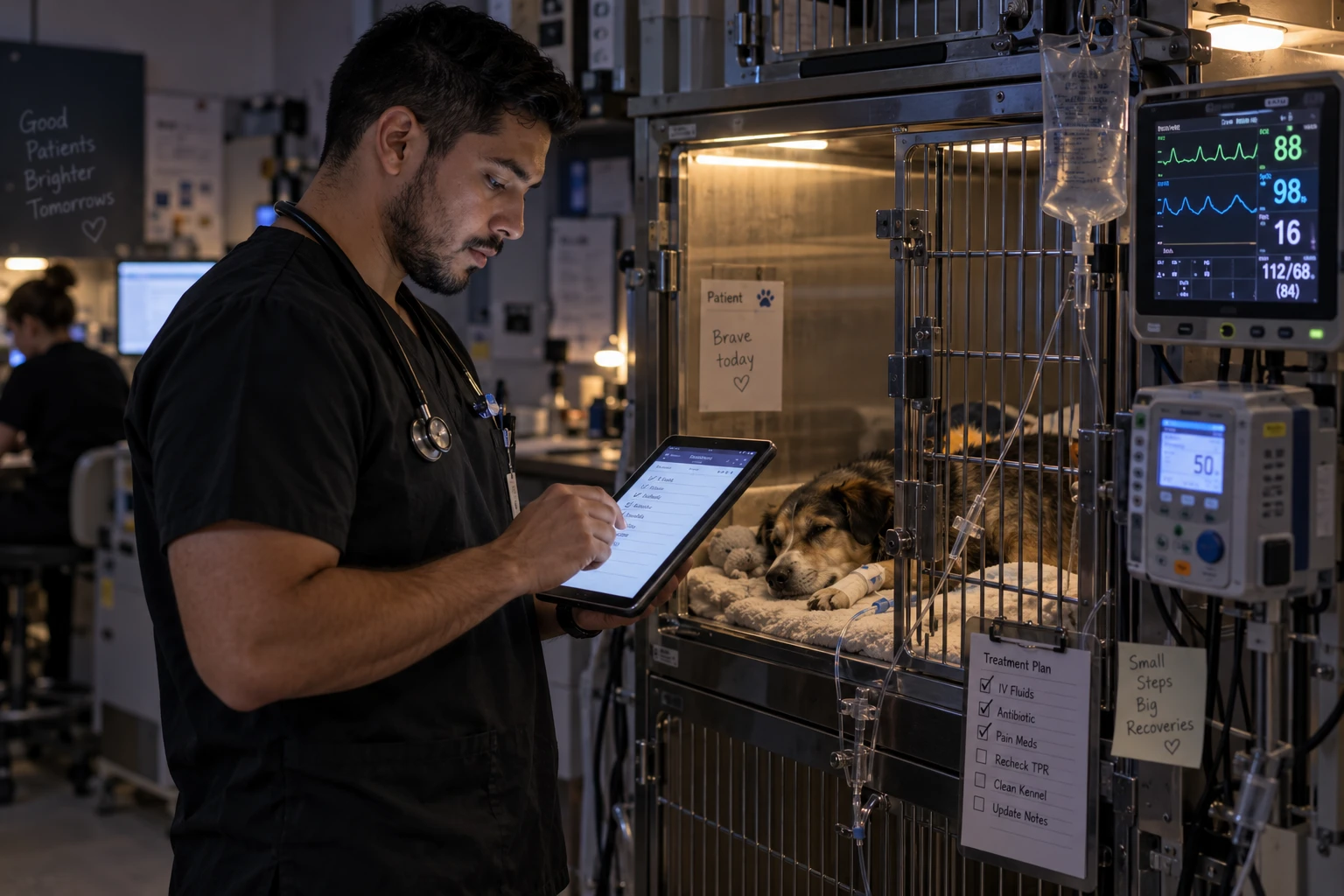
Every vendor in this space will show you a clean demo of a SOAP note. The differences that matter for a specialty or referral hospital sit elsewhere. These are the seven we see separating systems in real evaluations.
Referral inbox management
Look at how a referral arrives and what happens next. Can referring veterinarians submit through a web or mobile form? Do attachments land in the patient record automatically, or in a holding queue that someone has to sort? Does the system match the referring clinic and doctor to an existing record, or create duplicates? Can referrals be routed by department and flagged by urgency? The metric to watch is touch time: how many minutes of staff work does each incoming referral require from arrival to booked appointment?
Closed-loop communication with the referring veterinarian

The outbound side matters just as much. Can the hospital send automated status notifications (patient checked in, procedure complete, patient discharged)? Can a specialist generate a referring veterinarian summary from the record without retyping? Can referring practices view records, imaging, and lab results through a portal without phoning? The metric here is time from discharge to summary received, and the target most specialty hospitals aim for is same day.
Multi-doctor and multi-department scheduling
Scheduling needs to handle doctors, rooms, equipment, and anesthesia teams as bookable resources, with appointment types that reserve the right combination automatically. Watch for how the system handles a same-day add-on that bumps a procedure, and whether every department can see the full hospital schedule in one view.
Inpatient treatment sheets and charge capture
This is where category two systems have historically led. The questions are whether treatments are scheduled and visible by shift, whether completing a treatment posts the charge automatically, whether CRI rate changes are recorded cleanly, and whether overdue treatments are visible on a status board. If the PIMS lacks this, the integration with a separate treatment sheet becomes the most important integration in the hospital.
Anesthesia, surgical, and ICU recordkeeping
Specialty hospitals need anesthesia records with timed vitals, drug administration logs, and controlled substance tracking, plus surgical reports with structured templates. ICU teams need monitoring data that does not have to be hand-copied from a monitor to a sheet. Ask specifically which patient monitors the system integrates with, and whether vitals flow in automatically or are transcribed.
Imaging and diagnostics integration
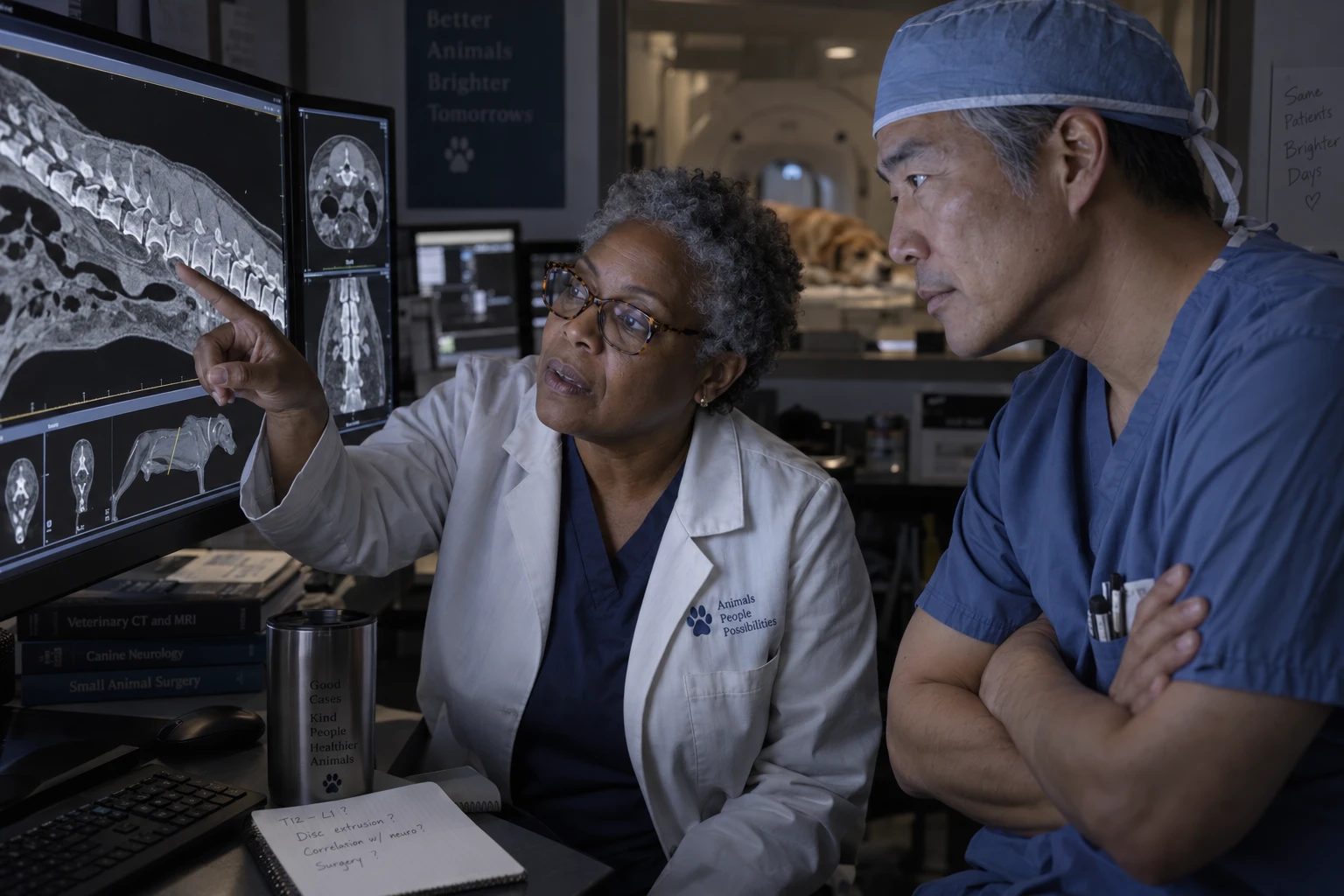
A neurologist should be able to open the MRI from the patient record. A cardiologist should be able to attach an echo report and images to the summary sent to the referring veterinarian. Confirm the PACS integrations, lab integrations (in-house and reference), and how outside imaging sent with a referral is imported.
Specialty templates and multi-location reporting
Finally, look at template depth for each department (oncology protocols, orthopedic surgical reports, dermatology follow-up) and at reporting. Specialty leaders need referral source reporting: which primary care practices send how many cases, of what type, and what revenue they generate. For hospital groups, that reporting needs to work across locations. If a system cannot tell you which referring practices sent fewer cases this quarter than last, it cannot help you protect your most valuable relationships.
What practices typically pay
Specialty and referral hospitals typically pay more than general practices, for three reasons: more users, more modules, and more integrations. The honest answer is that very few vendors in this segment publish list prices, and quotes vary widely based on doctor count, staff count, location count, and which modules are included. What we can describe are the pricing patterns.
Common pricing models
Most cloud platforms in this space price per user, per full-time veterinarian, or as a base monthly fee plus per-user charges. Provet Cloud, for example, publishes that its subscription is a monthly fee plus a per-user fee, with the price driven by user count, add-ons, and integrations. Vetspire is typically priced per full-time veterinarian with volume discounts for groups. Specialty hospitals feel per-user pricing more acutely than GP clinics, because a 14-doctor referral hospital may have 80 or more staff members who need accounts.
On top of the core subscription, expect separate line items for referral portal tools (rVetLink, for instance, charges the hospital a setup fee plus a monthly subscription), electronic treatment sheets if they are not native, PACS and imaging integrations, payment processing, AI scribe tools, and one-time implementation and data migration fees. Migration fees can be substantial for hospitals with a decade or more of records and imaging.
An illustrative ROI model
Here is a simplified way to think about the math. These figures are illustrative, not vendor quotes.
Imagine a 12-doctor referral and emergency hospital with $9 million in annual revenue, of which $2.5 million is inpatient billing. Assume its new software and add-ons cost $120,000 a year more than its current system, plus $60,000 in one-time implementation costs.
On the benefit side, suppose improved charge capture recovers 3 percent of inpatient billing, which is $75,000 a year. Suppose automated referral intake and outbound summaries save five staff hours a day across the referral desk and medical records team; at a loaded cost of $28 an hour across 300 working days, that is $42,000 a year. And suppose better communication retains just one mid-sized referring practice that was drifting away, worth $120,000 a year in specialty revenue.
That adds up to roughly $237,000 in annual benefit against $120,000 in added annual cost, with the one-time cost recovered in well under a year. Change the assumptions and the answer changes, which is exactly the point: build your own version of this model with your own numbers before you sign. Our 5-year TCO calculator is a useful starting point for the cost side.
Implementation considerations
Implementation in a specialty hospital is harder than in a GP clinic, because the hospital never closes, more departments are involved, and the referring veterinarian network experiences the change too. Five things deserve deliberate planning.
Document every department's workflow before you start
Specialty hospitals often run five or six distinct workflows under one roof, and each department has its own informal workarounds. Map them before you evaluate, not after you sign. Our guide on how to document your current workflows before replacing software walks through a practical method. Pay special attention to the referral desk, the ICU, and anesthesia, because those are where hidden manual steps live.
Plan the go-live around 24-hour operations
An emergency hospital cannot close for a weekend to cut over. Plan for overnight shift training, on-site vendor support during the first several nights, and a clear protocol for patients who were admitted under the old system and discharged under the new one. Hospitalized patients mid-stay at cutover are the most common source of billing errors in the first month.
Decide what happens to historical records and imaging
Referral hospitals rely heavily on history, both their own and what came in from referring practices. Decide which records will be migrated as structured data, which will move as attachments, and which will stay in a read-only archive. Imaging archives in particular need a plan. Our PIMS migration playbook covers the general approach in more detail.
Bring the referring veterinarians along
If the referral portal is changing, every referring practice has to learn a new login, a new submission form, and a new way of receiving records. Communicate early, offer short training sessions or a one-page guide, and keep the old channel open in parallel for a defined transition period. A confusing switch is one of the fastest ways to lose referrals during an implementation.
Treat integrations as part of the go-live, not a later phase
Imaging, lab, monitor, payment, and referral integrations should be tested and live on day one. A hospital that goes live on a new PIMS while its treatment sheet integration is "coming next month" will spend that month double-entering inpatient charges, and some of them will be missed.

Ten questions to ask vendors during a demo
Bring your referral coordinator, an ICU or inpatient technician lead, and a specialist to every demo. Then ask the vendor to show (not describe) the following.
-
Walk us through a new referral from submission by the referring veterinarian to a booked appointment. How many manual steps does our staff perform along the way?
-
How does the system match an incoming referral to an existing client, patient, and referring clinic, and how does it prevent duplicate records?
-
Show us how a specialist generates a summary for the referring veterinarian at discharge. How long does it take, and what is sent automatically versus manually?
-
What can referring veterinarians see and do in your portal without calling us? Is the portal native to the PIMS or a third-party integration, and who supports it?
-
Show us a single-day booking that requires a consult, an anesthetized imaging study, and a results appointment across three departments. How are equipment and anesthesia resources reserved?
-
When a technician marks a treatment complete on the inpatient sheet at 3:00 a.m., what happens to the invoice? Show us a CRI rate change and how it is billed.
-
Which patient monitors, PACS systems, and reference labs integrate today, in production, at specialty hospitals of our size? Can we speak to one of those hospitals?
-
Show us your anesthesia record and a surgical report template. How is controlled substance usage recorded and reconciled?
-
What referral source reporting is available out of the box? Can we see referral volume and revenue by referring practice, trended over time, across multiple locations?
-
Itemize every cost we will pay in year one and year five: subscription, per-user fees, referral portal, treatment sheets, imaging, payments, implementation, migration, and support. What changes when we add a doctor or a location?
Common mistakes practices make
We see the same patterns repeat across specialty and referral evaluations. Five come up most often.
Evaluating on the GP demo
Vendors default to the demo they give most often, which is usually a general practice appointment. If your evaluation committee watches a vaccine visit and a sick exam, you have learned almost nothing about how the system handles a three-day ICU stay or a referral packet. Send the vendor your scenarios in advance and insist on seeing them.
Leaving the referral desk out of the decision
Software decisions in specialty hospitals are often made by medical directors and hospital administrators. The people who will live with the referral inbox all day are frequently not in the room. They are the ones who will tell you, within ten minutes of a demo, whether the system will save them time or create more of it.
Assuming "integrates with" means "works well with"
An integration that exists on a vendor's partner page may be one-directional, may require manual sync, or may work smoothly only at hospitals with a particular configuration. Ask for a reference at a hospital running the exact integration you need, and ask that reference what broke in the first 90 days rather than whether they are happy.
Underestimating per-user cost growth
A per-user price that looks reasonable for 40 staff members looks different at 90, and specialty hospitals tend to add staff as they add departments. Model costs at your three-year headcount, not your current one.
Treating referring veterinarians as an afterthought
The referring veterinarian experience is often evaluated last, if at all. Yet it is the part of the system most directly tied to revenue. Ask two or three of your most important referring practices what they wish your hospital did better in communication, and test each finalist against those answers.
A simple framework for narrowing the shortlist
When you strip away the feature lists, most specialty and referral hospitals can narrow the field by answering four questions in order.
First, what does your organization look like? A standalone specialty or emergency hospital has different needs than a group that runs GP clinics and a referral center under one ownership. If one client record across GP and specialty care is a priority, category one platforms deserve a serious look. If inpatient and emergency depth is the dominant need, category two platforms belong on the list. Our 2026 veterinary PIMS buyer's guide covers the broader market if you need to start wider. And if your specialists also work in the field (mobile surgery, ambulatory imaging, or house-call oncology), the considerations in our mobile veterinary software guide apply as well.
Second, how much of the inpatient workflow must be native? If you already run a separate treatment sheet that your team trusts, you may be choosing a PIMS that integrates with it well. If you want one system, native inpatient depth becomes a requirement rather than a preference.
Third, how will referral communication be delivered? Decide whether you want a native referral portal, an established third-party portal, or both, and make sure the finalists support your choice in production.
Fourth, what can you afford over five years, including growth? Model per-user costs at your projected headcount, include every add-on, and compare against the ROI model above.
Hospitals that work through these four questions usually end up with two or three serious finalists, which is the right number for scripted demos and reference calls. You can browse vendors across the category on our Practice Management category page.
Closing thought
Specialty and referral medicine runs on trust in two directions: pet owners trust the specialist with a complex case, and primary care veterinarians trust the hospital with their clients. The software either reinforces that trust or quietly erodes it. Every manual referral, every late discharge summary, and every missed overnight charge is a small cost that compounds over a year. The hospitals that choose well are the ones that evaluate the referral loop, the inpatient workflow, and the five-year cost with the same rigor they apply to clinical decisions, and that insist on seeing their own scenarios rather than the vendor's.
If your hospital is working through this decision and wants a structured, vendor-neutral process for scoping requirements, scripting demos, and comparing finalists, the PIMS Selection Navigator was built for exactly that kind of evaluation.
About the Author

Adam Wysocki
Contributor
Adam Wysocki, founder of VetSoftwareHub, has over 35 years in software and almost 10 years focused on veterinary SaaS. He creates practical frameworks that help practices evaluate vendors and avoid costly mistakes.
Connect with Adam on LinkedIn


