What Is ezyVet? A Plain-Language PIMS Overview (2026)
What is ezyVet? A vendor-neutral overview of the cloud-native veterinary PIMS: what it does, who it's best for, pricing, and how it compares before you buy.

It is 7:40 on a Tuesday morning at a busy specialty and emergency hospital. Three doctors are already mid-shift, a referral packet just landed in the inbox, and the front desk is juggling two walk-ins while an overnight patient waits on a discharge summary. Somewhere in the middle of all that motion sits the software that is supposed to hold the whole operation together: the appointment book, the medical record, the invoice, the lab result, the client's phone number. For a growing number of larger practices, that software is ezyVet.
So, what is ezyVet? ezyVet is a cloud-native veterinary practice management system (PIMS) built to run the clinical, financial, and operational side of a veterinary hospital from any internet-connected browser. It originated in New Zealand, grew into one of the more full-featured cloud platforms in the category, and was acquired by IDEXX in 2021. Today it is one of the most-searched veterinary PIMS by name, which is usually a sign that a lot of practices are trying to figure out whether it belongs on their shortlist. This page is the short version of that answer.
This article is published by VetSoftwareHub, an independent vendor-neutral directory with no financial relationship with any of the companies covered here. We do not accept referral fees or equity positions, and we do not steer practices toward any particular product. What follows is a plain-language overview of the landscape.
What ezyVet does
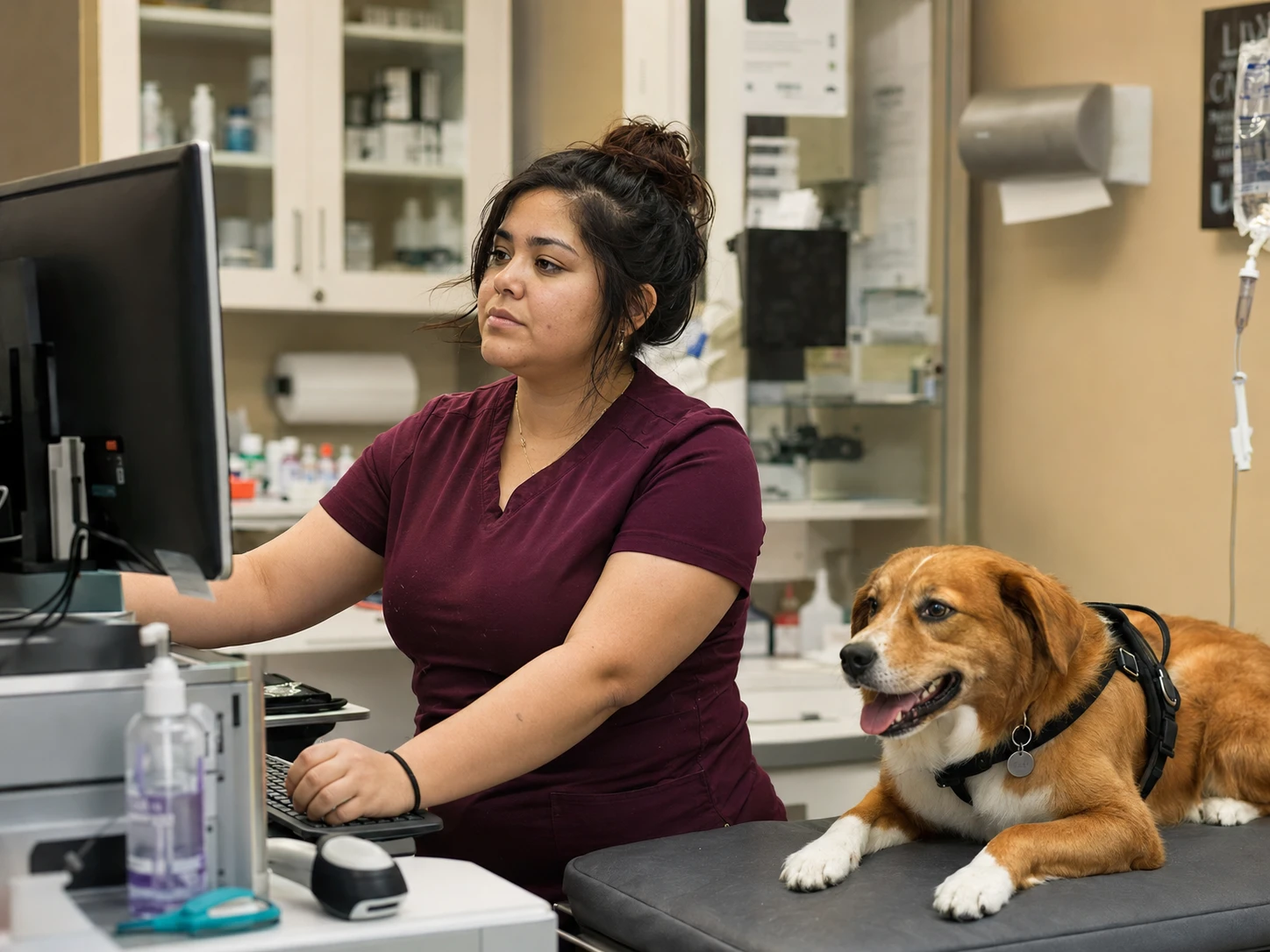
At its core, ezyVet is a practice information management system, which means it is the system of record for the day-to-day running of a veterinary practice. It handles scheduling, patient and client records, clinical notes, treatment plans, invoicing and billing, inventory, and reporting. If a task touches a patient, a client, or money, it generally lives inside the PIMS, and ezyVet is designed to be the place all of that comes together rather than a collection of disconnected tools.
The part that distinguishes ezyVet from lighter-weight systems is depth. It is highly configurable, which means a practice can shape workflows, templates, billing triggers, and clinical records around how it actually operates instead of bending its operations to fit rigid software. Reviewers who run complex hospitals tend to single out that flexibility, especially the ability for a "super admin" to build templates for procedures, surgeries, and therapeutics so that charges get captured accurately in a fast-moving environment. That same depth is why the platform shows up frequently in emergency, specialty, and university settings where the workflows are anything but simple.
The honest answer on the tradeoff is this: the flexibility that larger hospitals value is also what makes ezyVet more involved to set up. A system with this many configurable levers takes real time to configure well, and that shows up in longer implementation timelines than you would expect from a simpler product. It is capable software once a team is up to speed, but "up to speed" is a project, not a weekend.
How ezyVet fits in the veterinary software stack
ezyVet sits in the practice management category, and specifically in the cloud-based corner of it. Because it runs entirely in the browser, staff can access the record from a phone, tablet, or computer without a local server humming in a back room, and updates roll out without anyone installing anything. If you are still deciding whether cloud is the right foundation for your practice at all, our cloud PIMS guide walks through the architecture question in more detail.

Around that central PIMS, ezyVet connects to a broad ecosystem of integrations. There are more than 100 third-party connections spanning diagnostics, payment processing, communication tools, imaging, inventory suppliers, and accounting platforms such as Xero. Since the IDEXX acquisition, the diagnostics side of that story is especially tight: ezyVet integrates natively with IDEXX diagnostics through VetConnect PLUS, so lab orders and results can flow into the patient record without manual re-entry. For a practice already running IDEXX in-house and reference lab work, that native connection is often a large part of the appeal.
One point of common confusion is worth clearing up here, because the two products get mixed together constantly. ezyVet is the full PIMS. Vello is a separate IDEXX product focused on client engagement and communication, things like reminders, two-way texting, and the client-facing app. They are not the same tool, and Vello is not a replacement for the practice management system. If your interest is really about client communication rather than a full records-and-billing platform, the client communication category is the better place to start.
Who ezyVet is best suited for
There are roughly three categories of practice that tend to land on ezyVet. The first is mid-sized to larger general practices that have outgrown a simpler system and want more control over workflows and reporting. The second is specialty and emergency hospitals, where referral management, multi-team access to a single record, and detailed charge capture matter enormously. The third is corporate and multi-site groups, where consistency and visibility across locations is the whole point; ezyVet's enterprise offering is aimed squarely at that portfolio-level need.

A common thread runs through all three: these are practices with enough complexity, and enough people, to justify the configuration effort. The depth of the feature set rewards a practice that is willing to invest in onboarding and to designate someone internally who owns the system. A very small clinic that wants to be running by next week, with minimal setup, may find that same depth to be more machine than it needs. That is not a knock on the software; it is a question of fit. Practices making a first move off paper, or off an aging desktop system, sometimes prioritize speed-to-live over configurability, and that is a legitimate priority to weigh.
One more clarification on fit: you do not have to be an all-IDEXX practice to use ezyVet. Practices that use other diagnostic providers can still run the platform. The IDEXX integration is a strength if you are in that ecosystem, not a requirement that locks out everyone else.
How ezyVet compares to alternatives
Within the cloud PIMS category, ezyVet is usually evaluated alongside a handful of other names. Cornerstone and Neo, both also under the IDEXX umbrella, occupy different points on the spectrum: Cornerstone is the established server-based option, and Neo is positioned as the simpler, lighter-weight cloud system for practices that want minimal setup. Outside the IDEXX family, practices frequently compare ezyVet with platforms like Shepherd and Digitail, which tend to emphasize a faster learning curve and appeal to independent and smaller clinics.
The useful way to think about these comparisons is on a depth-versus-simplicity axis rather than a better-versus-worse one. ezyVet generally sits toward the deep, configurable end, which is a feature for a complex hospital and a burden for a small one. A cleaner, faster-to-learn system sits at the other end, which is a feature for a two-doctor practice and a limitation for a specialty referral center. Neither end is correct in the abstract; the correct answer depends entirely on the workflows you actually run. For a broader head-to-head across the category, our 2026 veterinary software buyer's guide lays out the field, and if you are weighing a switch from an existing system, the PIMS migration playbook covers what that transition actually involves.
Pricing and how to evaluate
ezyVet is priced on a per-user, per-month subscription model, and it sits toward the higher end of the cloud PIMS category. Public listings put the entry plan in the neighborhood of $260 per user per month, with product updates and support included, though real-world pricing depends on your user count, the integrations you turn on, and the terms you negotiate. Because per-user pricing scales with headcount, the sticker figure is only the starting point. The number that actually matters is the total cost of ownership across several years, including implementation, data migration, and any add-on integrations, which is why we built a 5-year TCO calculator to model the real figure rather than the headline one.

When you get to a demo, resist the polished tour and steer the conversation toward your own workflows. Ask the vendor to walk through a real scenario from your practice, an emergency intake or a referral discharge, using your actual charge structure, and watch how many clicks it takes. Ask directly which third-party tools connect without restriction, since "integrates with everything" and "integrates freely with the specific tools you use" are not the same claim. Ask what a realistic implementation timeline looks like for a practice your size, and ask to speak with reference practices that resemble yours. Our guides on documenting your current workflows and checking references go deeper on how to run both of those steps well.
Where to go from here
ezyVet is a mature, deep, cloud-native PIMS that earns its place on the shortlists of larger and more complex practices, and it can feel like more than a small clinic needs. That tension is the whole story, and it is why the real question is never "is ezyVet good software" but "is ezyVet the right fit for the way this specific practice runs." Depth is an asset or an obstacle depending entirely on who is holding it. The practices that thrive on ezyVet are the ones that had the complexity to justify it and the internal ownership to configure it well.

If you are trying to figure out where a platform like ezyVet fits among your options, and you would rather compare systems against your own workflows than against a sales deck, that is exactly the kind of decision the PIMS Selection Navigator engagement is built to support: independent, vendor-neutral, and grounded in how your practice actually operates.
About the Author

Adam Wysocki
Contributor
Adam Wysocki, founder of VetSoftwareHub, has over 35 years in software and almost 10 years focused on veterinary SaaS. He creates practical frameworks that help practices evaluate vendors and avoid costly mistakes.
Connect with Adam on LinkedIn


