What Is Avimark? A Plain-Language Guide (2026)
What is Avimark? A plain-language guide to the legacy veterinary PIMS: who owns it now, who it fits, what its cloud option really is, and what to ask vendors.

It is 7:15 on a Monday morning and the practice manager at a four-doctor small animal hospital is standing in a utility closet with a flashlight, on the phone with an IT contractor, because the server did not come back cleanly after a weekend Windows update. Two workstations show a database connection error. The first surgery drop-off is in forty-five minutes and nobody can pull a patient record. The software on that server is Avimark, and it has been running the practice since 2009. If you have ever had that morning, or you are shopping for software and keep seeing the name, the question you are probably asking is a simple one: what is Avimark, and does it still make sense in 2026?
This article is published by VetSoftwareHub, an independent vendor-neutral directory with no financial relationship with any of the companies covered here. We do not accept referral fees or equity positions, and we do not steer practices toward any particular product. What follows is a plain-language overview of the landscape.
What Avimark does
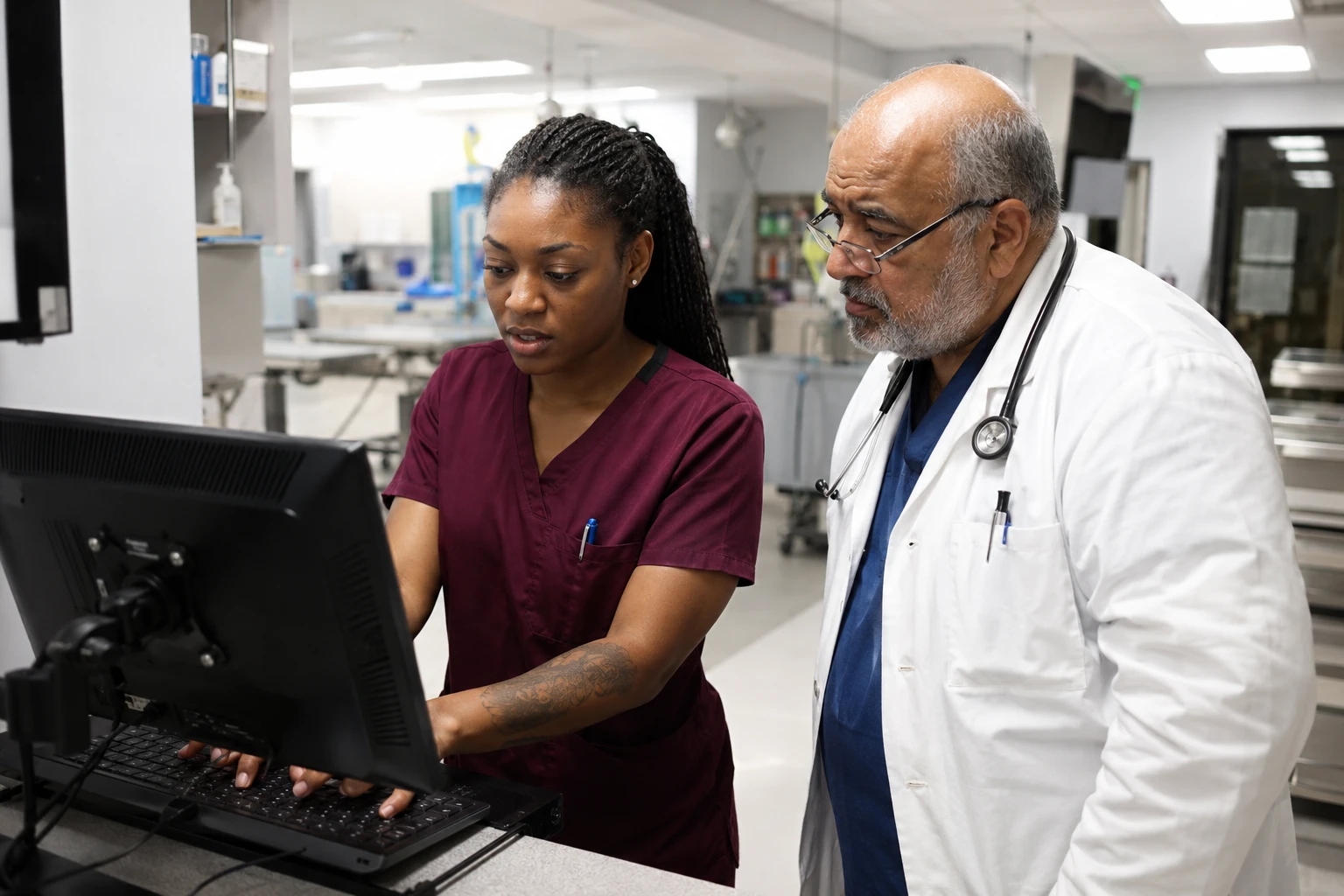
Avimark is a veterinary practice management system, or PIMS, built for companion animal general practice. It handles the operational core of a hospital: appointment and boarding calendars, client and patient records, medical history and SOAP notes, estimates and invoicing, inventory and prescriptions, reminders, and financial reporting. It is the system of record. Everything else in the building either feeds it or reads from it.
The product has a long history. It was developed in the late 1980s by McAllister Software Systems in Missouri, distributed and later owned by Henry Schein, and moved to Covetrus when Henry Schein Animal Health was spun off and merged with Vets First Choice in early 2019. Covetrus itself was taken private in October 2022 by Clayton, Dubilier & Rice and TPG. If your brief or your sales rep still says Henry Schein, that has been out of date for seven years. Covetrus reports that Avimark is used by more than 11,000 veterinary hospitals worldwide, which makes it one of the largest installed bases in North American small animal practice.
Architecturally, Avimark is a Windows desktop application with its database on a server. In the traditional deployment, that server sits in your building. Covetrus also offers a hosted option, and this is where a lot of confusion starts. When someone says "Avimark cloud," they usually mean the same Windows application running on a remote server that your team reaches through a hosted desktop session. The hardware moved. The application did not get rewritten for the browser. That distinction matters more than almost anything else on this page, and it is covered in more depth in our guide to cloud-based veterinary practice management software.
How Avimark fits in the veterinary software stack
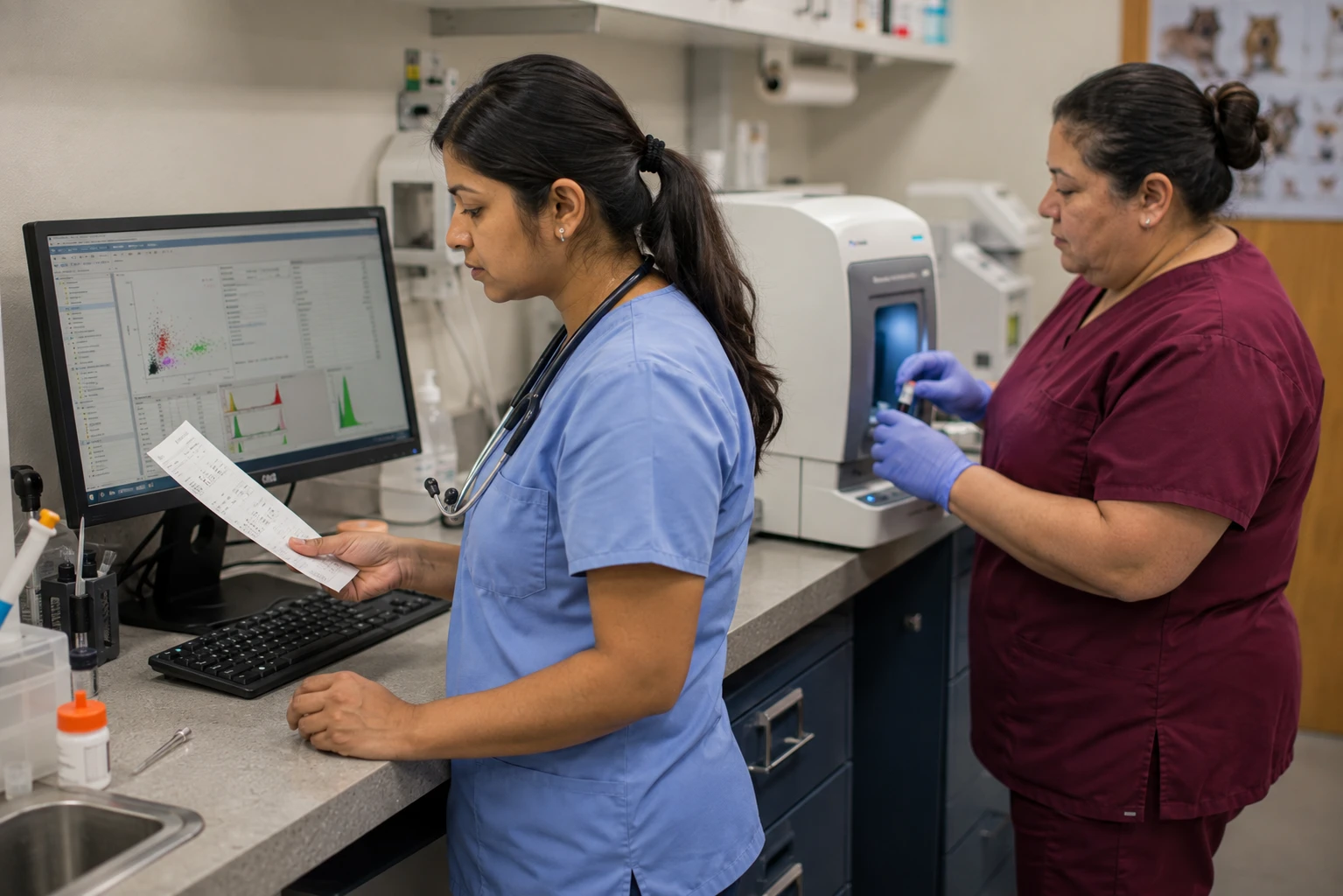
There are three categories of PIMS deployment in companion animal practice today. Cloud-native platforms were designed for the browser from the start. Cloud-hosted legacy systems are desktop applications that have been lifted onto someone else's server. Server-based systems run on a physical machine inside the hospital. Avimark spans the last two and originates in the third. It is legacy server software with a hosting option, not a browser-first product, and any evaluation that treats those as equivalent will produce a bad decision.
Inside the stack, Avimark occupies the practice management slot and connects outward from there. It has diagnostic integrations through Covetrus Axis-Q for in-house analyzers and reference labs, prescription and pharmacy workflow through Covetrus vRxPro, client communication through Covetrus Comms, and inventory tooling including Intelligent Inventory and CUBEX. It also has a long tail of third-party connections built up over decades, which is one of the practical reasons practices stay: the AI scribe, the reminder platform, the payment processor, and the imaging system are all already talking to it.
The tradeoff is what the architecture cannot do. There is no native browser or mobile experience for the full application. Remote access means remote desktop, not a phone in your pocket at a farm call. Practices that need genuine mobility usually end up bolting on separate tools, which is a different problem covered in our mobile veterinary software buyer's guide.
Who Avimark is best suited for
Avimark tends to fit established small animal general practices, typically one to five doctors, that already run it and have staff who know it deeply. Independent-practice user data skews heavily toward small business, and that matches what we see in the field. The system is highly customizable, which experienced practice managers use to shape workflows the software never shipped with. That accumulated configuration is real institutional value and it is the single most underestimated cost of leaving.
It also fits practices that prefer local control of their data and hardware, and practices with a stable IT relationship already in place. Historically the license model appealed to owners who wanted to buy software rather than rent it.
The fit gets weaker in a few identifiable situations. Multi-location groups that need one database across sites, practices where doctors want to chart on a tablet or finish records from home, mobile and relief-heavy operations, and practices without dependable IT support all tend to feel the constraints quickly. Practices in that position are usually not asking what Avimark is anymore. They are asking what comes next.
How Avimark compares to alternatives
In the legacy server-based category, the two closest comparisons in North America are Cornerstone, owned by IDEXX, and Impromed, also owned by Covetrus. All three have large installed bases, deep diagnostic integrations, and decades of accumulated workflow knowledge, and all three now offer hosted deployment of the same underlying desktop software.
On the cloud-native side, the products practices most often evaluate against Avimark include Covetrus Pulse, which Covetrus positions as the forward path for its own customers, along with Shepherd, ezyVet, and Digitail. These are browser-first systems with different tradeoffs: less configurability in some areas, no server to maintain, continuous updates you do not schedule, and subscription pricing that never converts to ownership. Our 2026 veterinary software buyer's guide works through the category in detail.
One piece of current context belongs in any comparison. In February 2026, Covetrus and MWI Animal Health announced a merger valuing MWI at $3.5 billion, and in May 2026 the FTC issued a second request for information on the deal. It remains under review. Corporate ownership does not change what the software does on Tuesday morning, but it is fair to ask any vendor about roadmap and support commitments during a pending transaction.
Pricing and how to evaluate

Avimark does not publish pricing, and the honest answer is that what you pay depends on your deployment, your practice size, and what you negotiate. Historically the model was a license purchase plus an annual support fee, with add-on modules and hardware sold separately. Hosted deployments shift more of that into a recurring per-month cost. Comparing a legacy quote to a cloud-native quote on monthly price alone is the most common evaluation mistake we see, because the server refresh cycle, Windows licensing, backup, IT support hours, data conversion, and integration fees live outside the software line item. Model the whole thing with our five-year total cost of ownership calculator before you compare anything.
In a demo, the questions that separate a real answer from a sales answer are narrow and specific:
-
Is this deployment the Windows application on a hosted desktop, or a browser-native product, and what exactly does each workstation need to run it?
-
What is the current support commitment and release cadence for this product, in writing?
-
Which of our existing integrations carry over, and what does each one cost annually?
-
If we export our data in three years, what format do we get, and how much history comes with it?
-
Who performs the data conversion, what is the fixed price, and what typically does not convert?
Ask the same five questions of every vendor on your list and the differences become obvious fast.
Before any of that, document how your hospital actually works today, because a demo will otherwise be judged on screen appearance rather than fit. Our walkthrough on documenting your current workflows before replacing software covers how to do it in a week without stopping the schedule.
Avimark is not a failing product and it is not a modern one. It is a mature, deeply configurable system with an enormous installed base, running on an architecture the rest of the market has been moving away from for a decade. For a practice that runs it well, has staff fluency, and has no pressing need for browser or mobile access, that is a reasonable place to be for a while longer. For a practice that has outgrown the server closet, the real work is not deciding whether Avimark is good. It is deciding what your workflows require, what your data will survive, and what a move actually costs, which is the ground covered in our PIMS migration playbook. If you would rather work through that with someone who has no stake in the outcome, the PIMS Selection Navigator is a fixed-fee, practice-side engagement built for exactly that decision.
About the Author

Adam Wysocki
Contributor
Adam Wysocki, founder of VetSoftwareHub, has over 35 years in software and almost 10 years focused on veterinary SaaS. He creates practical frameworks that help practices evaluate vendors and avoid costly mistakes.
Connect with Adam on LinkedIn


