WVC 2026: A practical booth game plan for veterinary practices shopping for software
WVC 2026 booth playbook: what to say, what to ask, how to compare vendors, and what to do after you get home.

WVC 2026 is one of those conferences where you can learn a ton, meet great people, and still fly home thinking, “Wait… what did that vendor actually say about pricing and integrations?”
If your hospital is heading to the Western Veterinary Conference with software evaluation on the agenda, this article is your friendly, field-tested plan for getting real answers (without getting trapped in a 20-minute pitch while your next CE session starts in five). If you want to keep your inbox clean, use the Call For Me concierge service and let us collect answers without the spam.
WVC Vegas 2026 runs February 15 to 18, 2026 in Las Vegas, and it’s hosted by the Viticus Group. The exhibit hall hours are Monday and Tuesday 9:00am to 5:00pm, and Wednesday 9:00am to 2:00pm, which sounds like plenty of time until you remember you’re also juggling education, team dinners, and the fact that Mandalay Bay is big.
So let’s make the exhibit hall time count.
Start with the mindset shift that changes everything
Most practices treat the exhibit hall like browsing. That’s understandable, the booths are shiny, the swag is plentiful, and you might not even be sure what category you’re shopping for yet.
But if you want WVC 2026 to actually move your software decisions forward, treat booth conversations like “discovery calls in fast-forward.”
Your goal is not to get a full demo at the booth. Your goal is to quickly answer:
-
Is this worth deeper evaluation when I’m back home?
-
If yes, what do I need to schedule, collect, and confirm before I forget?
That’s it. Everything in the rest of this article supports that outcome.
Before you walk the floor at WVC 2026, do 20 minutes of prep
You don’t need a huge project plan. You just need clarity.
1) Pick your “top 3 pain points”
Not “we need better software.” More like:
-
“We lose too much time on the phone, our callback volume is crushing us.”
-
“Refills and approvals are messy, and we’re leaking revenue.”
-
“Our scheduling templates don’t match how we actually practice.”
When you can say your pain point out loud, vendors either light up with a relevant answer, or they politely reveal they are not a fit. If you’re not sure what category you’re really shopping, start by browsing VetSoftwareHub categories and circle the 1 to 2 sections you’ll prioritize.
2) Decide what you are willing to change this year
This matters more than people think.
Are you willing to switch your PIMS, or are you looking for add-ons that integrate with your current one? Are you willing to retrain the whole team, or do you need a tool that can be adopted in small slices? The booth is not the place to discover you are actually not ready for a major change.
3) Set a simple output
A great output for WVC 2026 is:
-
a shortlist of 3 to 6 vendors worth a real demo
-
a “watch list” of 5 to 10 vendors that were interesting, but not urgent
-
a clear “no” list (yes, this is valuable)
If you want a fast pre-show method, use this 10-minute shortlist framework to pick which booths matter most.
1) What to say when you approach a vendor at a booth
If you’ve ever walked up to a booth and instantly regretted it because the conversation got weirdly intense, here’s the fix.
You want to be friendly, direct, and time-bound.
A simple opening script that works almost every time
“Hi, I’m [Name]. I’m a [practice manager, owner, lead tech] at [Hospital]. We’re exploring options for [category] in the next [timeframe]. Can I ask you two quick questions to see if it’s worth scheduling a deeper demo after WVC 2026?”
That sentence does three important things:
-
It signals you are a serious buyer (not just collecting pens).
-
It sets a time boundary so the rep does not launch into the full pitch.
-
It frames the booth chat as a qualifier for a follow-up demo, which is exactly what it should be.
If you’re overwhelmed and just need a quick filter
Try this instead:
“Can you tell me, in one minute, who this is best for, and what makes you different?”
If they cannot answer that cleanly, you just saved yourself 30 minutes later.
If the booth is busy
Respect the moment, and still get what you need:
“You all look slammed, totally understood. Is there a better time today for a quick 5-minute chat, or is there someone specific I should come back and find?”
This is where visiting booths more than once becomes a secret weapon (we’ll get there).
2) The top questions to ask at the booth (no matter what software you’re evaluating)
At WVC 2026 you might be looking at PIMS, client communication, phones, payments, AI scribes, online booking, inventory, analytics, reminders, forms, marketing, the list goes on.
The mistake is asking only category-specific questions too early.
Instead, start with universal questions that uncover the stuff that becomes painful later: integrations, implementation, pricing structure, support, and data.
Here are the questions I’d ask at almost any booth, in roughly this order.
“What problem do you solve best, and what practices are you not a fit for?”
This question is gold because it invites honesty.
A strong vendor will tell you who they are best for and where they are weaker. A weaker vendor will claim they are perfect for everyone, which usually means the onboarding will be messy.
“How do you integrate with my current systems?”
Don’t accept “we integrate with everything” as an answer.
Follow it with:
-
“Is it a real integration, or is it export-import?”
-
“Is it one-way or two-way?”
-
“Who built it, and who supports it?”
-
“What breaks most often?”
If you use a PIMS, ask specifically how they connect to it. If the vendor cannot speak confidently here, your future self will suffer.
“Walk me through implementation like I’m busy (because I am)”
You want specifics:
-
Typical timeline
-
Who does what (vendor vs practice)
-
How training works
-
What you need ready before kickoff
-
What makes implementations fail
If they say “it depends,” that’s fine. Ask what it depends on.
“What does pricing actually look like in the real world?”
At the booth, you’re not trying to negotiate. You’re trying to understand the pricing model:
-
per doctor, per user, per location, per transaction, per message, per appointment, per device?
-
setup fee vs implementation fee vs training fee?
-
contract term length?
-
price increases and renewal expectations?
Even if they won’t give exact pricing at WVC 2026, they should be able to describe the structure clearly.
“What does support look like after go-live?”
Ask how support actually works:
-
hours and channels (phone, chat, email)
-
response time expectations
-
who gets priority support
-
what escalations look like
-
whether they have a dedicated CSM
Then ask the question nobody asks:
“What do your customers complain about the most?”
A good rep will answer this without getting defensive.
“If we ever leave, how do we get our data out?”
This is not an aggressive question. It is a professional one.
Ask about:
-
data export formats
-
who owns the data
-
how long exports take
-
any fees involved
-
whether you can get a full historical export
You are not planning to leave, you are simply making sure you are not trapped.
If you want the longer version, keep this Vendor Interview Cheatsheet open while you walk the floor.
3) Should you visit the booth more than once during WVC 2026?
Yes, and you should do it intentionally.
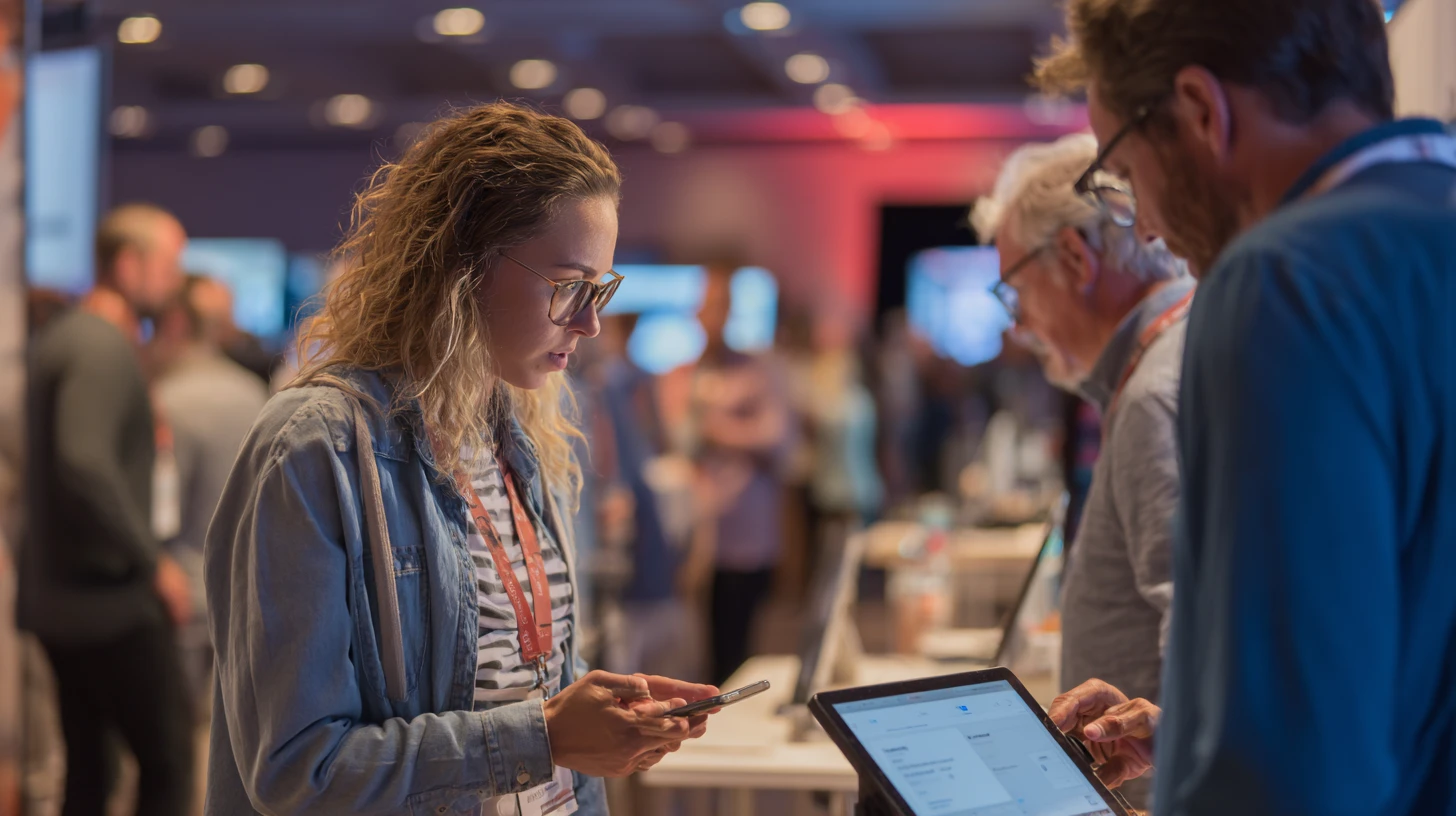
The best strategy I’ve seen for veterinary practices at big conferences like WVC 2026 is a two-pass approach.
Pass 1: Fast qualification
This is where you do the short script, ask the universal questions, and decide:
-
no
-
maybe
-
yes, book a follow-up demo
Keep these conversations short. Think 5 to 8 minutes.
Pass 2: Deeper clarity (with better questions)
Come back later when:
-
you’ve heard competing claims from other vendors
-
you’ve attended a session that changed how you think about the problem
-
the booth is less crowded
-
you have a teammate with you (especially if the tool affects tech workflow)
The second visit is where you ask sharper, comparative questions:
-
“We talked to two other vendors in this category. Here’s what they claim. Where are you truly different?”
-
“Show me the one workflow you’re proudest of, in 2 minutes.”
-
“What does this look like when it fails, and how do you handle that?”
Also, booth staffing shifts. Sometimes the person you meet on day two has a deeper product understanding than the person you met on day one. That alone can change your evaluation.
4) How to keep track of everything you discussed (especially across categories)
This is the part that makes or breaks the ROI of WVC 2026.
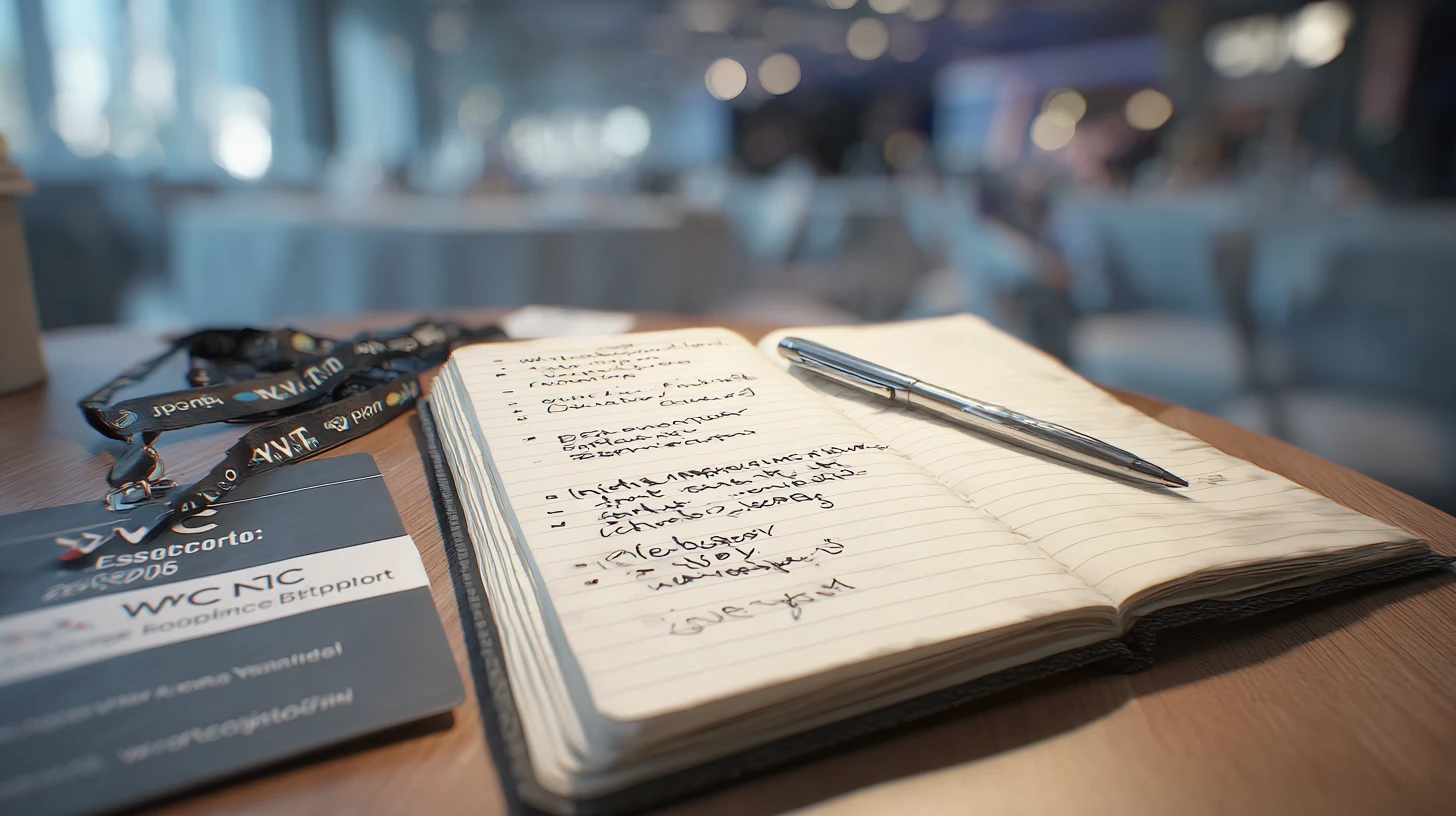
Most practices bring home a bag of brochures, a pile of business cards, and a vague sense that five things were interesting, and then real life swallows it all.
You need a lightweight capture system that takes less than two minutes per booth.
The 90-second vendor note (do this immediately after you walk away)
Open a note on your phone (or a shared doc) and capture:
-
Vendor name + category
-
One sentence: “They solve X for practices like Y.”
-
The one thing that seemed genuinely different
-
Integration reality (real, partial, not sure)
-
Pricing structure (even if rough)
-
Next step (demo, follow-up email, no)
If you do nothing else at WVC 2026, do this.
Add one simple scoring rule
Your brain will lie to you later because the show is a blur.
Give each vendor a quick 1 to 5 score for:
-
Fit for our practice
-
Confidence in integration
-
Confidence in implementation
-
Pricing feels plausible
You’re not producing a scientific study, you’re helping future-you remember.
Use tags so categories don’t melt together
If you are evaluating multiple categories (say PIMS, phones, client comms, and payments), add tags like:
#pims, #phones, #clientcomms, #payments, #scribe, #forms
That way you can later filter quickly and shortlist within each category.
Take photos, but take the right photos
Photos of logos and banners do not help later.
Instead, photograph:
-
pricing handouts (if they share them)
-
a “how it works” one-pager
-
a slide or diagram showing integrations
-
the rep’s badge (with permission) if you need to remember who you spoke with
You can also voice-memo yourself for 10 seconds. It feels silly. It works.
5) Should you sign a contract at the show?

In almost all cases, no.
Not because vendors are bad, but because trade shows are designed to create momentum, and momentum is not the same as good decision-making.
At WVC 2026 you are sleep-deprived, overstimulated, and running on hallway coffee. Even if the product is excellent, that is not the state in which you want to sign something that impacts your team every day.
When signing at WVC 2026 might make sense
There are exceptions:
-
You already demoed the product before the show
-
You have internal alignment (clinical, admin, IT, ownership)
-
You have reviewed the contract language
-
The show incentive is meaningful and clearly documented
If that’s you, great. But even then, consider signing a short letter of intent, or securing the discount in writing with a signature later, rather than committing on the spot.
A safer alternative
If a vendor pushes for a signature, try this:
“We don’t sign at the conference, but if you can put the show terms in writing and hold them for us, we’ll schedule a decision call when we’re home.”
Professional vendors will respect this.
If you want a practical way to pressure-test terms, use the Veterinary Software Contracts review checklist.
6) Should you schedule a follow-up demo for when you get home, while at the show?

Yes, if the booth conversation passes the “worth it” test.
This is one of the highest leverage moves you can make at WVC 2026, because once you get home, calendars fill and urgency fades.
How to ask for the right kind of demo
A generic demo is a waste of everyone’s time, there's a hidden costs of “free” demos. Ask for a demo that mirrors your reality:
“Can we schedule a follow-up demo for the week after WVC 2026? We’d like you to focus on these two workflows: [workflow 1] and [workflow 2]. Also, we’ll want to cover integration with [your system] and implementation steps.”
Now the vendor knows you are serious, and you get a demo that actually helps decision-making.
Book the demo with the right people in the room
If the tool affects technicians, make sure a technician is present. If it affects finances, include whoever owns billing decisions. If it touches your PIMS, include the person who understands your current configuration.
You do not need a big committee for everything, but you do need at least one person who will live with the software every day.
7) Asking about show discounts (and how long they last after WVC 2026)
Ask about discounts, absolutely. Just ask the right way.
Here’s what you want to learn:
-
What exactly is discounted (subscription, implementation, training, add-ons)?
-
What is required to qualify (contract signed, kickoff scheduled, first payment)?
-
How long is it valid after WVC 2026?
-
Is it tied to a contract term length?
-
Is the discount real, or is it just “we’ll waive the setup fee” (sometimes still valuable, sometimes not)?
And then the key move:
“Can you email me the show offer with the expiration date in writing?”
If it’s not written down, it’s not real.
Also, remember that official conference details and schedules can change, so it’s worth checking the Viticus Group’s WVC Vegas 2026 pages for the latest timing as you plan your booth strategy.
8) What to do when you return home from WVC 2026
This is where the value is either captured or lost.
The biggest mistake is waiting two weeks to do anything because you’re catching up.
Instead, aim for a 48-hour “debrief sprint.”

Step 1: Debrief while the memory is fresh
Schedule a 30-minute meeting with whoever attended WVC 2026 from your team.
Each person shares:
-
top 3 vendors
-
top 3 insights (even if they are “we learned we don’t want this”)
-
any red flags
Then consolidate into one shortlist.
Step 2: Decide who owns next steps
For each shortlisted vendor:
-
one person owns scheduling the demo
-
one person owns collecting questions from the team
-
one person owns reviewing pricing and contract terms (even if that is you)
Ownership prevents “we should look at that later” from becoming “we never did.”
Step 3: Turn booth notes into a comparison you can actually use
You don’t need a complex spreadsheet. You need clarity.
For each vendor, capture:
-
problem solved
-
must-have features covered (yes, partial, no)
-
integration confidence
-
implementation effort
-
pricing structure
-
contract term expectations
-
support reality
-
next step
Now you can compare vendors without relying on vibes.
Step 4: Run demos like a buying process, not like a show
In the demo, ask vendors to show:
-
your workflows
-
your edge cases
-
what happens when something goes wrong
-
how reporting works
-
how onboarding will actually happen
If they refuse to go off-script, that’s a signal.
Step 5: Make a decision window
Even if your decision is “not this quarter,” set a window for your next checkpoint.
Otherwise the evaluation drifts, and the problem remains unsolved for another year.
A few extra WVC 2026 tips that practices rarely hear
Use the schedule to create “booth windows”
WVC 2026 has a full education program and a packed calendar, plus on-site logistics like badge pickup at Mandalay Bay Convention Center. Build predictable exhibit hall blocks into your day so the vendor visits do not become random.
Remember that WVC is education-first
Viticus Group promotes WVC as a major education conference, including hundreds of RACE-approved CE hours across the event. Use that to your advantage: attend one or two sessions related to your software pain points, then hit the exhibit hall with sharper questions.
Give yourself permission to say “not now”
A product can be good and still not be right for your hospital this year. The exhibit hall is full of temptation. Your job is to choose what matches your priorities, not what has the best booth.
Closing thought
WVC 2026 is a rare moment where the entire veterinary software ecosystem is in one place, and you can compress months of discovery into a few focused conversations.
Approach booths with a clear opening line, ask universal questions that reveal the truth, visit twice when it’s useful, capture notes in the moment, and protect your team by refusing to sign anything just because the show energy is high.
If you do that, you won’t just “attend WVC 2026.” You’ll come home with clarity, momentum, and a plan.
About the Author

Adam Wysocki
Contributor
Adam Wysocki, founder of VetSoftwareHub, has over 35 years in software and almost 10 years focused on veterinary SaaS. He creates practical frameworks that help practices evaluate vendors and avoid costly mistakes.
Connect with Adam on LinkedIn


